Gaming
Zelda: Ocarina of Time Returns on Switch 2, Rebuilt From Scratch and Crowned 2026's Best-Reviewed Game So Far
By Darrell Wallen
Would you prefer to listen?
 The title logo of The Legend of Zelda: Ocarina of Time. Logo: Nintendo (trademark); text-logo rendering by WikiPhoenix, via Wikimedia Commons, public domain (PD-textlogo)
Nintendo has rebuilt one of the most famous video games ever made. The Legend of Zelda: Ocarina of Time came out on Nintendo Switch 2 on November 5, 2026. It is a full remake of the 1998 Nintendo 64 classic, and critics love it. Review sites rank it as the best-reviewed game of 2026 so far.
The Ancient Sky · November 7, 2026
§ 1What Nintendo released
The new game keeps the plain name of the original: The Legend of Zelda: Ocarina of Time. It plays only on the Nintendo Switch 2. Nintendo lists the regular price at $59.99.
Nintendo announced the launch on its website on November 5. The company said the game was "built from the ground up for Nintendo Switch 2." That phrase matters. It means Nintendo did not just copy the old game onto a new machine.
There is a simple difference between two words gamers use a lot. A port moves an old game to new hardware and keeps most of its old parts. A remake builds the game again with new art, new code and new sound. This one is a remake.
Nintendo said the new version has "completely overhauled visuals, voiced cutscenes, expanded dialogue, symphonic orchestral music, reworked camera and movement controls, and more." Cutscenes are the short movie-like scenes that tell the story. For the first time, characters speak out loud in them.
The company also listed two new extras. Players can fight strong enemies again in a place called the Hall of Fallen Foes. They can also hunt for "fairy thoughts" hidden around the land of Hyrule. Each one shares a small fact about the world.
§ 2Playing the ocarina with your own voice
The ocarina is a small, round wind instrument. In the game, the hero, Link, plays songs on a magic ocarina. The songs change the world. One song turns night into day. Another calls his horse, Epona.
On the Nintendo 64, players pressed buttons on the controller to play each note. That still works. But Nintendo added a new way to play. The Switch 2 has a built-in microphone. Nintendo said it "lets you play the in-game ocarina by humming or playing your own instrument."
So a player can hum a tune, or blow a real ocarina, and Link plays it on screen. NPR's review noted the feature too. It said songs can be played "by pressing buttons or humming directly into the Switch 2's microphone."
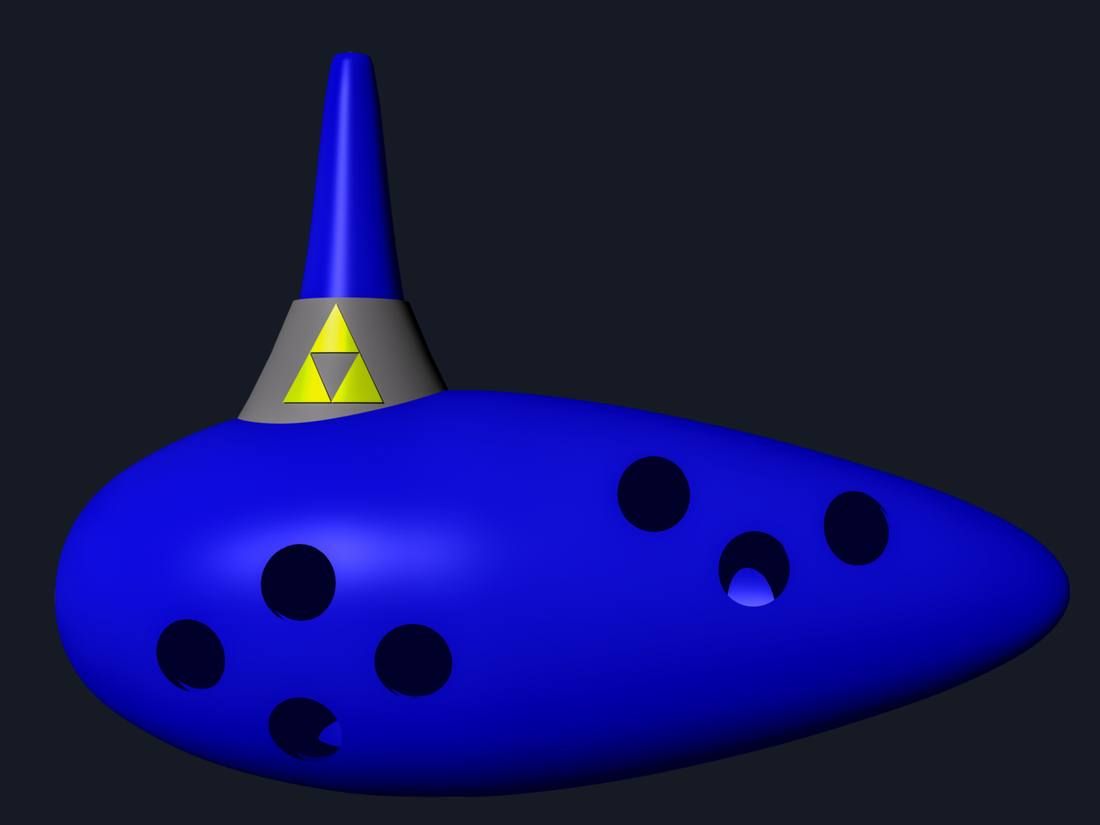

 A computer model of the blue Ocarina of Time from the game, the instrument Link plays to change the world. Image: PantheraLeo1359531, via Wikimedia Commons, CC0 1.0
§ 3Who made it
Fans spent months guessing which team built the remake. Some thought it was Grezzo, a studio that made the 2011 Nintendo 3DS version. Others pointed to Monolith Soft, a Nintendo studio that has helped on recent Zelda games.
Nintendo answered in its own interview series, called Ask the Developer. GameSpot reported on November 2 that the people in the interview came from Nintendo's main Zelda group. Its name is Nintendo Entertainment Planning and Development Production Group No. 3. In plain words, the usual Zelda team made this Zelda game.
Eiji Aonuma, the longtime producer of the Zelda series, took part. So did producer Hidemaro Fujibayashi. HokWai Ng served as director. Ng said his job was to "propose the core development approach for this full remake" and "oversee the project as a whole."
Ng said he played the Nintendo 64 game in high school. "I was blown away by it," he said. He said the team followed one rule: "the visuals may change, but the experience does not."
§ 4Rebuilding a 28-year-old world
Program director Hiroki Taguchi explained why the team started over. He said one common way to make a remake is to port the old code and data, then update it. But he said, "because 28 years had passed since the release of the original game, we needed to recreate everything from scratch this time."
The team built each feature again. Then they compared it with the old game. They did that over and over, Taguchi said, so the new game would not turn "into something completely different."
Art director Aya Shida said the team wanted Hyrule to feel real but still dreamlike. Early on, the artists used phrases like "a puppet-show feel" to guide their work. Shida said the team even studied cloth in museums. They wanted Young Link's clothes to look like something forest children had woven by hand.
Some big parts stayed the same on purpose. The original game split the world into separate areas, not one giant open map. Ng said the team kept that design. They wanted each new area to bring the same thrill that players felt in 1998.
§ 5New controls for modern players
The biggest changes are in how Link moves. The Nintendo 64 controller had only one control stick. Today, most controllers have two. The second stick lets players turn the camera, which is the player's view of the world.
In the old game, the camera often sat in fixed spots. Now players can spin it freely. Aonuma said that freedom helps players spot things and think, "What's that? Maybe I'll go check it out."
Jumping changed too. In 1998, Link jumped by himself when he ran off certain edges. There was no jump button. Ng said newer players might wonder why Link could jump in one place but not another. So the team added a jump button that works almost anywhere.
That one change created a lot of work. Aonuma said the team had to rethink the land so players could not break the game by jumping where they should not. Link also now has a sprint. Players hold down the roll button to dash across Hyrule Field.
§ 6The Water Temple gets a fix
Many players remember one place with a groan: the Water Temple. A temple in Zelda is a large maze full of puzzles, called a dungeon. The Water Temple was famous for being confusing. Players had to keep stopping the game to put iron boots on and take them off.
Aonuma designed that dungeon. In the interview, he joked that he had "some overdue homework." He said, "I wanted to do something about the Water Temple I created 28 years ago."
The team made it much easier to switch items. They also turned some solid walls into open, lattice-style walls. Ng said that lets players see the rooms beyond, so they get lost less often. NPR's reviewer agreed that the Water Temple "is much more tolerable this time around."
A new feature called Threads of Time also helps lost players. It works as a quest log, a list that points players toward what to do next. It also tells the story like a picture book. Ng said he hoped parents and children would talk about the game together.
§ 7What critics are saying
Reviews arrived on November 4. Polygon reported that the game had a score of 96 on Metacritic and 95 on OpenCritic. Both sites gather reviews from many critics and average the scores. Polygon called it "the best-reviewed game of the year by far."
That score sits just under the 99 that the Nintendo 64 original holds on Metacritic. It is two points above the 94 for the 2011 3DS remake, Polygon said. GameSpot reported that the 96 came from 81 reviews.
Nintendo Life rounded up the top scores. Eurogamer, VGC and GamesRadar+ each gave the game five out of five. Game Informer gave it 9.25 out of 10. IGN, GameSpot and Nintendo Life each gave it 9 out of 10.
VGC called the game "the definitive way to discover – or rediscover – a masterpiece." Eurogamer said it has "a vibrancy and clarity that makes it feel like it was just created last Wednesday." Game Informer's reviewer wrote that the final hour of the game made him cry.
Not every review was a rave. RPG Site gave the game an 8 out of 10. Nintendo Life called it "a very safe remake." It also said the game falls short of "definitive" because it leaves out Master Quest, a harder version of the dungeons that came out years ago.
NPR's James Perkins Mastromarino wrote one of the more mixed reviews. He praised the new jump and sprint buttons and called the game "one of the most faithful adaptations I've seen." But he said some new cutscenes "drag down the pacing," and some characters look odd up close. He wrote that the game left him "feeling oddly bereft," which means feeling a sense of loss.
§ 8Why the 1998 game mattered so much
To see why so many people care, it helps to go back to 1998. Ocarina of Time came out on the Nintendo 64 that November. NPR's reviewer said the game "helped launch a new 3D era." In a 3D world, players can move in every direction, not just left, right, up and down.
That freedom brought hard problems. How do you aim a sword at an enemy in 3D space? How do you keep the camera pointed the right way? How do you fight five enemies without getting surrounded?
Nintendo's team found a fix in an unlikely place: a samurai show at a theme park in Kyoto, Japan. The story comes from Iwata Asks, a series of interviews led by the late Nintendo president Satoru Iwata. In 2011, he spoke with the original developers.
Yoshiaki Koizumi, who made the model for Link, said the team chose to always show Link on screen. "Link is cool, so I wanted to always be able to see him," he said. But that choice made the camera and fights much harder to design.
§ 9The samurai show behind Z-targeting
Developer Toru Osawa suggested a trip to Toei Kyoto Studio Park. It is a film studio in Kyoto that is open to the public. It puts on sword-fighting shows in the style of old samurai movies. Osawa said they visited on a very hot summer day and ducked into a playhouse to cool off.
Inside, actors put on a ninja show. One hero faced a crowd of enemies. Koizumi noticed something strange. "There was no way one person could fight and win when surrounded by 20 opponents," he said.
So he watched closely. The trick was simple. "The enemies don't all attack at once," Koizumi said. "First, one attacks while the others wait."
That idea became Z-targeting. On the Nintendo 64, players held the Z button to lock onto one enemy. Lock-on targeting means the camera and the hero stay pointed at that one foe. The other enemies wait their turn. "Z Targeting flags one particular opponent, telling the other enemies to wait," Koizumi said.
Osawa saw a different lesson in the same show. One ninja threw a chain weapon, and the samurai caught it. The ninja then circled around him on the tight chain. Osawa imagined an invisible chain between Link and his target. Push the stick to the side, and Link circles the enemy, looking for an opening.
Nintendo's notes say Z-targeting also let Link talk to people from far away. Lock-on fighting is still part of big games today. NPR's review compared the remake to Elden Ring, where players can flick a stick to switch between targeted foes.
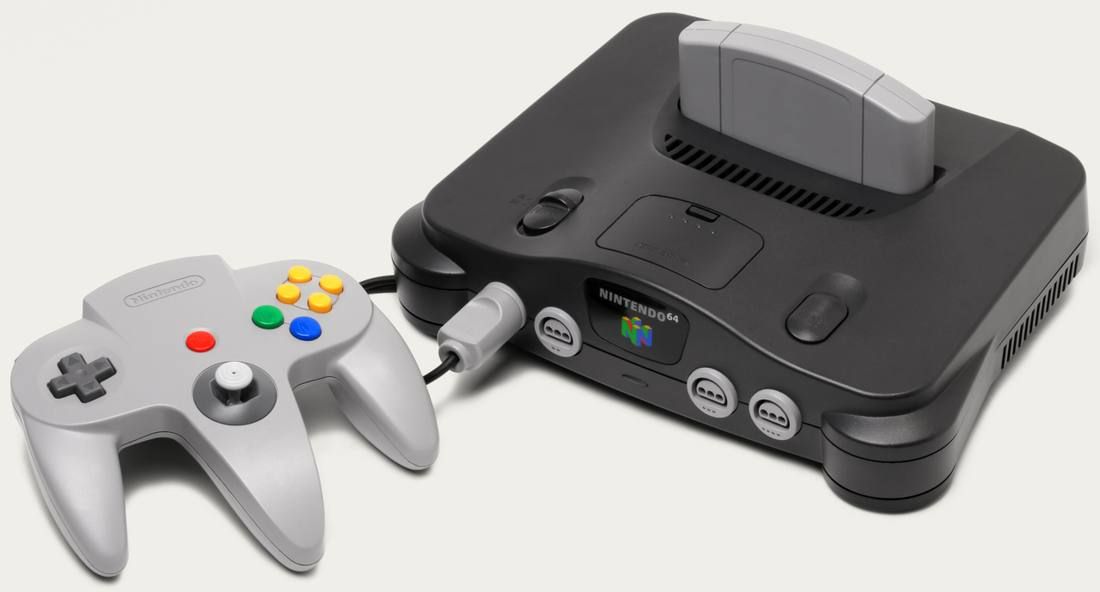

 The Nintendo 64 and its controller. Players held the Z button on the back of this controller to lock onto enemies in 1998. Image: Evan-Amos, via Wikimedia Commons, public domain
§ 10Music at the heart of the game
Music is built into how the game works. Koji Kondo wrote the original score. Ohashi, the music lead on the remake, spoke about that legacy in the new interview. He said he "was very conscious of the significance of Kondo-san's work." He said players have memories tied to the game's sound, and the team was careful "not to disturb" them.
The new version uses what Nintendo calls "symphonic orchestral music." That means the songs are played by a large group of real instruments, like violins and horns.
§ 11Nearly three decades of re-releases
Ocarina of Time has come back many times. Nintendo Life has traced its history. In the early 2000s, Nintendo put the game on a bonus disc for the GameCube. That disc also held Master Quest, with new, harder dungeons.
The first true remake came in 2011. Grezzo built Ocarina of Time 3D for the Nintendo 3DS handheld. Nintendo Life said it used the touch screen to make items like the Iron Boots easier to use. It also ran at 30 frames per second, up from the original's 20. Frame rate means how many pictures the screen shows each second. More frames look smoother.
In 2021, the game joined the Nintendo Switch Online Expansion Pack, a paid add-on to Nintendo's online service. This version used emulation. Emulation is software that makes a new machine act like an old one. The launch went badly.
The Verge reported in October 2021 that players shared side-by-side pictures of the Water Temple. The Switch version was missing fog. The Verge also noticed input lag, which is a delay between pressing a button and seeing the result. GameSpot reported stutters and frame rate problems.
Nintendo slowly patched the game. GamesRadar+ reported in February 2022 that an update brought the missing fog back.
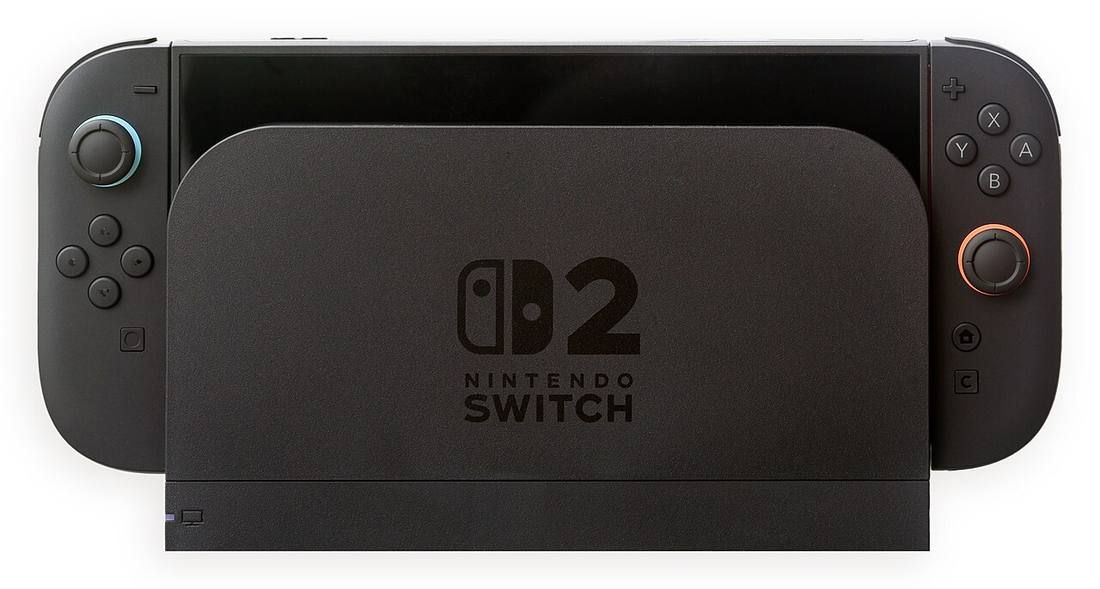

 The Nintendo Switch 2, the only system that runs the new Ocarina of Time. Image: Crisco 1492, via Wikimedia Commons, CC BY-SA 4.0
§ 12From copies to a full rebuild
That history shows why this release stands out. For years, Nintendo mostly sold the old game again, with small fixes. The 3DS remake was a bigger step, but it was still on a small handheld screen.
The Switch 2 version goes much further. Nintendo's team rebuilt the art, the code, the music and the controls. It also runs faster. Digital Foundry's William Judd, quoted by Polygon, wrote that the original ran at 20 frames per second, while "the Switch 2 remake targets and holds a fluid 60." Ng said he wanted to give "players across generations a fresh opportunity" to enjoy the game.
Timing matters too. Nintendo said 2026 is the 40th anniversary of the Legend of Zelda series. NPR also noted that a Zelda movie is due next year.
The Legend of Zelda: Ocarina of Time changed how 3D games are played back in 1998. Now Nintendo has rebuilt it from the ground up for a new generation. The new version keeps the same story and dungeons. It adds voices, an orchestra, a free camera, a jump button and a microphone ocarina. Critics have made it the best-reviewed game of 2026 so far. The game that taught many players how to explore a 3D world is ready to teach a new group of players, 28 years later.
Watch & Listen
Hear this entry read aloud. Coming soon — the channels are not live yet.
Sources
- Nintendo – It's time. Experience The Legend of Zelda: Ocarina of Time, reborn exclusively for Nintendo Switch 2! (Nov. 5, 2026)
- Nintendo – Ask the Developer Vol. 24: The Legend of Zelda: Ocarina of Time, Part 2 (Nov. 2, 2026)
- Nintendo – Ask the Developer Vol. 24: The Legend of Zelda: Ocarina of Time, Part 3 (Nov. 3, 2026)
- NPR – James Perkins Mastromarino, review of The Legend of Zelda: Ocarina of Time remake (Nov. 4, 2026)
- Polygon – The Zelda: Ocarina of Time remake is the best-reviewed game of the year by far (Nov. 4, 2026) (site blocks automated checks)
- Nintendo Life – Round Up: The Reviews Are In For The Legend Of Zelda: Ocarina Of Time On Switch 2 (Nov. 2026)
- GameSpot – The Ocarina Of Time Remake Has Claimed 2026's Review Crown (Nov. 4, 2026) (site blocks automated checks)
- GameSpot – We Finally Know Who Made The Zelda: Ocarina Of Time Remake (Nov. 2, 2026) (site blocks automated checks)
- Nintendo UK – Iwata Asks: The Legend of Zelda: Ocarina of Time 3D, Original Development Staff Part 1: "Let's Go to Toei Kyoto Studio Park!"
- Nintendo Life – A Look To The Past: All The Legend Of Zelda Remasters And Remakes (Sept. 2019)
- The Verge – Nintendo Switch Online finally has N64 games, but it's looking ugly (Oct. 26, 2021)
- GameSpot – N64 Games For Nintendo Switch Online Have Some Issues (Oct. 2021) (site blocks automated checks)
- GamesRadar+ – Nintendo Switch Online patch has made Ocarina of Time foggy again (Feb. 25, 2022)