Science
In Early Trial, Precision T-Cell Drug Invika Halted Cancer Progression in 16 of 27 Patients Treated at Optimal Doses
By Darrell Wallen
Would you prefer to listen?
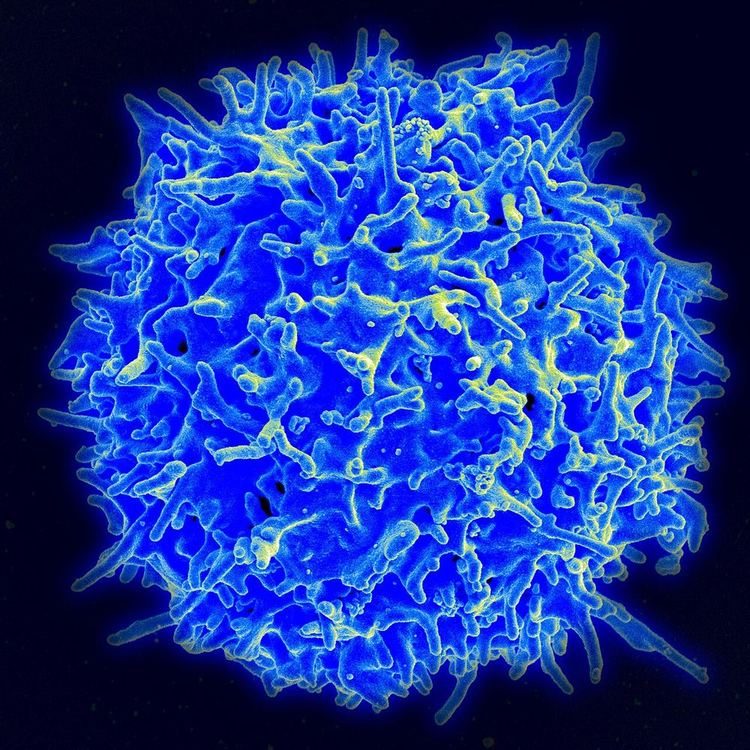
An experimental drug called invikafusp alfa, known as invika, held back cancer progression in 16 of 27 patients treated at its optimal doses in an early human trial, the National Institutes of Health reported. The patients had advanced solid tumors, most of which had not responded well to standard checkpoint immunotherapy. Four of the 27, or 14.8 percent, had tumors that shrank by more than 30 percent. Results were published October 23, 2026, in Nature Medicine, and the National Institutes of Health announced them the same day.
This is a small, early-stage study. It was not randomized, it had no comparison group, and it was designed mainly to answer two questions: is the drug safe enough to keep testing, and what dose should be used next. It does not show that invika helps patients live longer. It does give researchers a reason to keep going.
§ 1What the trial reported
The study is called START-001. It is a phase 1/2 trial, meaning it combines a first-in-human dose-escalation stage with an early efficacy stage. The paper, titled "Bispecific dual T cell agonist invikafusp alfa in solid tumors: the phase 1/2 START-001 trial," lists Ryan J. Sullivan, Nicholas P. Tschernia of the National Cancer Institute, and Claire F. Friedman as its first three authors. The NIH says the work was led by researchers at the NIH, Mass General Brigham and Memorial Sloan Kettering Cancer Center. The trial is registered at ClinicalTrials.gov as NCT05592626 and is still enrolling patients.
According to the paper's abstract, the data cut-off was March 12, 2025. By that date, the phase 1 stage had finished dose escalation with 34 participants, working through six dose levels from 0.01 up to 0.16 milligrams per kilogram. The investigators never reached a maximum tolerated dose. An initial phase 2 stage had enrolled another 18 participants.
Two participants had dose-limiting toxicities, one at 0.08 and one at 0.16 milligrams per kilogram. The authors describe both as reversible. The most common treatment-related side effect was cytokine release syndrome, which the paper says was mainly grade 1 or grade 2. The authors report no treatment-related deaths and no grade 4 adverse events outside of laboratory values.
The efficacy numbers come from the patients treated at the two doses the authors call the optimal biological doses, 0.08 and 0.12 milligrams per kilogram, with phase 1 and phase 2 patients combined. In that group of 27, the objective response rate was 14.8 percent, which is four patients. An objective response means a tumor shrank by a set amount, in this trial more than 30 percent. The abstract says the confirmed partial responses occurred in what it calls immunologically cold tumors, including microsatellite stable colorectal cancer and lung cancer that tested negative for the protein PD-L1. No objective responses were seen at doses below 0.08 milligrams per kilogram.
The second figure, that disease did not progress in 16 of the 27 patients, or 59.3 percent, comes from the NIH news release. It is worth being plain about what it means. The 16 patients presumably include the four whose tumors shrank, which by simple subtraction would leave twelve whose disease held roughly steady. The release does not break the 16 down further. Holding steady is a real and useful outcome in people with advanced cancer. It is also a softer measure than shrinkage, and it is hard to interpret without a comparison group, because some tumors grow slowly on their own.
§ 2The patients and the cancers
The NIH release says two of the four responders had metastatic colorectal cancer of a notoriously treatment-resistant type, and that they were receiving invika as their seventh-line therapy. A seventh-line therapy is the seventh different treatment regimen a patient has tried. A further responder had stage 4 non-small cell lung cancer, again with tumors that had resisted several therapies, including immune checkpoint blockade.
The NIH also published CT scans of a participant with colorectal cancer that had resisted checkpoint blockade. The scans were taken six months before invika treatment, at the start of treatment, and after more than nine months of treatment, with arrows marking metastases in the lungs. The scans come from a single patient. They illustrate one case. They do not describe the typical outcome.
The trial deliberately enrolled people with what it calls antigen-rich tumors. In plain terms, these are cancers with many genetic mutations, which should in theory give the immune system more abnormal proteins to recognize. Doctors measure this in a few ways, including tumor mutational burden, abbreviated TMB-H when it is high, and a feature called microsatellite instability. The reasoning is that a drug which rallies T cells needs targets for those T cells to find.
§ 3Why checkpoint blockade leaves so many patients behind
To see why invika exists, it helps to start with the drugs it is meant to follow. Immune checkpoint inhibitors are among the most important cancer advances of the past two decades. The National Cancer Institute explains that immune checkpoints are a normal part of the immune system, a set of off switches that stop an immune response from growing strong enough to damage healthy tissue. Some tumors exploit this. They display proteins such as PD-L1 that bind to a receptor called PD-1 on T cells and tell those cells to stand down. Checkpoint inhibitors block that signal.
The idea earned the 2018 Nobel Prize in Physiology or Medicine for James P. Allison and Tasuku Honjo. The Nobel Assembly's announcement describes how Allison developed an antibody that blocks CTLA-4, a brake on T cells, and set out to test whether releasing that brake could unleash the immune system against tumors. It describes how Honjo, working at Kyoto University, showed over many years of experiments that a second protein, PD-1, is also a T cell brake, but one that works by a different mechanism. The Nobel text says that the approach, often called immune checkpoint therapy, has fundamentally changed the outcome for certain groups of patients with advanced cancer.
One of the first drugs to block PD-1 reached patients on September 4, 2014, when the U.S. Food and Drug Administration granted accelerated approval to pembrolizumab, sold as Keytruda, for advanced melanoma that had progressed after other treatment. Today the National Cancer Institute says checkpoint inhibitors are approved for people with a variety of cancers, among them melanoma, kidney cancer, bladder cancer, and head and neck cancer.
Still, the NIH release makes a sober point. Many patients benefit from these drugs for only a short time, or not at all. Tumors frequently adapt to checkpoint blockade. In the paper's terms, that is called resistance, and it can be present from the start, which is called primary resistance, or it can develop after an initial response, which is called secondary resistance.
Some cancers are especially difficult. A 2023 review in the journal Frontiers in Oncology notes that about 90 to 95 percent of metastatic colorectal cancers are microsatellite stable. In those tumors, immunotherapy has generally failed to show meaningful clinical results. The review describes them as immune-cold tumors, with low mutation levels and few T cells inside them. It cites an early trial of pembrolizumab in which none of the microsatellite stable colorectal patients had an objective response. That is the setting in which two of invika's four responders were treated.
§ 4How invika works
Invika takes a different route. Rather than lifting a brake on all T cells, it is built to switch on a small and specific group of them.
T cells recognize their targets through a receptor on their surface, called the T cell receptor. Most T cell receptors are made of two protein chains, an alpha chain and a beta chain. The beta chain is assembled from gene segments, and one of those segments, the variable segment, comes in a limited menu of inherited versions. Immunologists name them Vβ followed by a number. Each T cell carries one version, so the Vβ type works like a coarse label that sorts the body's T cells into families.
Invika is an engineered protein that binds two of these, Vβ6 and Vβ10, on T cells. In the NIH's words, it is designed to engage a small subset of T cells, two groups of tumor-infiltrating lymphocytes. A research paper describing the earlier laboratory work, published in Science Translational Medicine in 2023, says the molecule joins an antibody that targets Vβ6 and Vβ10 to human interleukin-2, a signaling protein that T cells use to grow and multiply. The paper calls the molecule STAR0602, which is the same drug under its laboratory name.
The pairing is the point. An antibody binding to the receptor gives the T cell one signal. The interleukin-2 portion gives a second, growth-promoting signal. The 2023 paper says that in solution, the molecule binds interleukin-2 receptors in cis with the Vβ6 or Vβ10 receptors, meaning on the same T cell. In that way, the drug delivers both signals to one cell at once, and only to cells carrying those Vβ chains. The authors describe this as a non-clonal mode of T cell receptor activation combined with costimulation. Non-clonal means that the drug does not care which specific target a T cell was built to recognize. It cares only which Vβ family the cell belongs to.
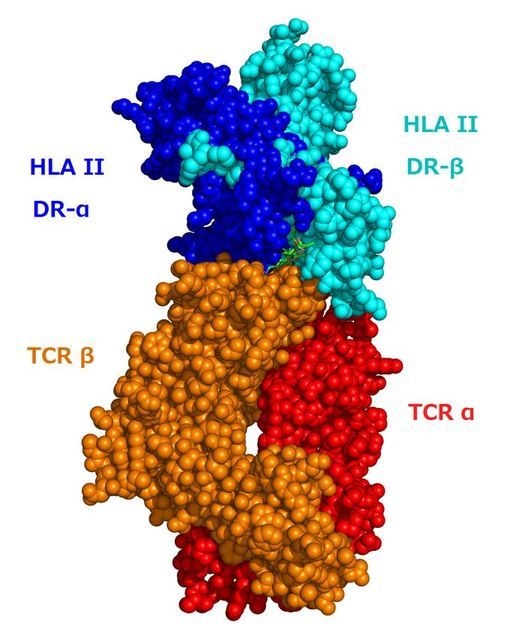

The authors of that earlier work report that in laboratory cultures, the drug expanded human Vβ6 and Vβ10 T cells, both the CD4 helper type and the CD8 killer type, and that these cells took on an unusual central memory profile. In mice, a mouse version of the drug produced durable tumor regression across six solid tumor models, including several that did not respond to anti-PD-1 treatment. The paper says these effects were also seen in studies in nonhuman primates and in human ex vivo models, where the drug boosted antigen-specific T cell responses and the killing of tumor organoids, which are small lab-grown tumor models. Results in mice and monkeys often fail to carry over to people. That is the reason a human trial was needed.
The clinical paper reports that, in patients, invika expanded Vβ6 and Vβ10 T cells in the blood and inside tumors in a dose-dependent way, with the effect peaking at the optimal doses. These T cells mostly had a memory-like profile. Blood levels of two immune markers, interferon-gamma and soluble CD25, followed the same pattern. The NIH release adds that the drug fostered growth in the target T cell populations without affecting other T cells, and that the four cases of tumor reduction were linked to the largest shifts in those target populations. It also notes that, as expected at this stage, immune activity did not always produce a measurable clinical response.
§ 5An old idea, with a careful modern twist
The concept behind invika has a long history. The key idea is that a molecule can activate T cells by grabbing the Vβ region of the receptor rather than the exact target a T cell was built to see.
Nature has already done this. Bacterial toxins known as superantigens bind to the Vβ part of the receptor and to a separate immune molecule on other cells. They can switch on T cells regardless of the cells' specific targets, which immunologists call polyclonal activation. The Italian national encyclopedia Treccani notes that the term superantigen was proposed in 1989, and that most of what is known comes from studies of bacterial enterotoxins. Compared with an ordinary antigen, which must be chopped into small peptides and presented to a matching T cell, a superantigen can stimulate a far larger share of the body's T cells. In an infection, the result can be a flood of inflammatory signals, a cytokine storm.
So the concept of broad T cell activation carries a known hazard. The effort to use it in medicine has had hard lessons. The best-known came in 2006, when six healthy young men were enrolled in the first human trial of an antibody called TGN1412, a so-called superagonist of a T cell receptor named CD28. As reported in the New England Journal of Medicine, all six had a systemic inflammatory response within 90 minutes of a single intravenous dose. Within 12 to 16 hours they were critically ill, with lung injury, kidney failure and disseminated intravascular coagulation, a clotting disorder. Two needed intensive organ support for 8 and 16 days. All six survived. That episode is widely remembered as a turning point in how first-in-human trials of immune-activating drugs are approached.
Interleukin-2 has its own history. A form of it called aldesleukin is approved by the FDA for metastatic melanoma and metastatic kidney cancer, and the National Cancer Institute lists it that way. It can produce responses in some patients. Its use has been limited in part because it acts on many kinds of cells.
Invika's design tries to keep the benefits and shed the risks. It narrows the activation to a defined slice of T cells, and keeps the interleukin-2 signal on the same cell as the receptor that has been engaged. Whether that narrowing works in people is the question the trial begins to answer.
§ 6What the safety data show
Cytokine release syndrome was the most common treatment-related adverse event, per the paper. The National Cancer Institute describes the syndrome as a condition that can cause flu-like symptoms, rash, a rapid heartbeat, low blood pressure and trouble breathing, and says doctors may refer to severe cases as a cytokine storm. In this trial, the authors report that the syndrome was mainly mild to moderate, meaning grade 1 or 2.
The NIH release says several participants had flu-like side effects, and that these were expected and generally manageable with additional medication and supportive care. In phase 1 the drug was given every two weeks.
The company's own summary of a larger safety group is more detailed. In a press release on October 23, Marengo Therapeutics said that among 104 patients evaluated for safety, cytokine release syndrome was mainly grade 1 and 2, that there was no immune effector cell-associated neurotoxicity syndrome, and that there were no grade 5 treatment-related events. Grade 5 means death. That figure comes from the sponsor and a conference presentation rather than from the peer-reviewed paper, so it should be read as company-reported.
§ 7What the trial does and does not show
Much of the careful reading comes down to what a phase 1/2 study can say.
It can show whether a drug is tolerable, and it did so in this case, at least for the doses and the patients tested. It can show that the drug does what its designers said it would do in the body, and the expansion of the target T cells supports that. It can give a first read on whether tumors respond, and four of 27 patients responding in a group with few remaining options is a signal worth following.
It cannot show that the drug extends life. Survival was not the endpoint. It cannot separate the drug's effect from the natural course of the disease, because there was no control group. The paper's abstract itself calls the anti-tumor evidence preliminary. The size of the key group is small, 27 people, so a change of one or two patients moves the percentages substantially. One patient is 3.7 percent.
There are other points a careful reader should hold in mind. The data cut-off was March 12, 2025, so the data are older than the October 2026 publication. The patients were a mix of cancer types, which makes it harder to say which cancers are most likely to respond. The optimal doses were chosen using the trial's own safety, pharmacokinetic, immune and early anti-tumor data, so the 27-patient group is defined partly by how the trial itself unfolded. And the sponsor shaped the study. The paper states that Marengo Therapeutics was responsible for study design, data collection and analysis, the decision to publish, and preparation of the manuscript, with the NCI, which holds a cooperative research agreement with the company, involved in the design, conduct, data collection and manuscript preparation. Several authors are Marengo employees. Others report consulting or research funding from the company. None of this invalidates the findings. It is the usual structure of early drug development, and it is disclosed in the paper. It does mean that independent confirmation matters.
The authors and the NIH are measured in their language. Nicholas Tschernia of the National Cancer Institute said, "These results are early, and although signs of immune activity don't always translate into benefit to patients at this stage, it is new and exciting to see activity in patients whose cancers had stopped responding to immunotherapy — a group of people with very few options left." James Gulley, clinical director at the NCI Center for Cancer Research and a co-corresponding author, said the results "highlight a more precise means of stimulating anti-tumor immunity that could provide another solution."
§ 8The company's phase 2 data
On the same day as publication, Marengo presented new phase 2 data at the European Society for Medical Oncology congress in Madrid. These data come from a separate analysis from the one in the Nature Medicine paper, and the release does not say how closely the two patient groups overlap. They are also company-reported and come from a conference presentation, not from a peer-reviewed article, so they should be treated as preliminary.
The company said that among 62 evaluable patients with heavily pretreated, TMB-high solid tumors across eight tumor types, tumor shrinkage was seen in 56 percent, the objective response rate was 18 percent, and the disease control rate was 60 percent. Disease control combines responses with stable disease. The company said responses were seen in patients who had previously received checkpoint inhibitors and in those who had not, and that response and disease control were numerically higher in the checkpoint-experienced group, 20 percent versus 14 percent for response, and 68 percent versus 43 percent for control. The tumor types included breast, colorectal, endometrial, gastroesophageal junction, gastric, head and neck, non-small cell lung and bladder cancers.
The principal investigator, Elena Garralda of the Vall d'Hebron Institute of Oncology, was quoted in the release as saying the results show a tissue-agnostic efficacy signal across multiple heavily pretreated tumor types. Tissue-agnostic means the drug is being evaluated by a biological feature of the tumor rather than by where in the body it began. The company also said that a more complete clinical dataset is expected in 2027.
§ 9What comes next
The NIH release says the FDA granted Fast Track designation to invika for antigen-rich metastatic colorectal cancer, and has more recently granted the same designation for similar solid tumors regardless of tissue type. According to Marengo, the first designation came in January 2025 and the second in October 2026. The FDA explains that Fast Track is a process meant to facilitate development and speed review of drugs for serious conditions with an unmet medical need. It allows more frequent meetings with the agency. It is not an approval and does not say that a drug works.
The path from here is the usual one, and it is long. The phase 2 expansion is ongoing, with cohorts defined by tumor features. Marengo says it is pursuing combinations with other therapies, and plans to present interim results from a separate study, called STARt-002, which pairs invika with an antibody-drug conjugate in breast cancer, at the Society for Immunotherapy of Cancer annual meeting. Tschernia said in the NIH release that the findings give a reason to keep studying this new type of immunotherapy, particularly by combining it with other cancer treatments.
A randomized trial, with a comparison group and measures such as survival, would be needed to know whether invika improves outcomes for patients. That is a question for years, not months. For now, the honest summary is modest. A carefully designed drug did what its designers hoped on the immune side, was tolerated at its chosen dose, and was linked to tumor shrinkage in four of 27 patients with few options left. That is a good reason to keep testing it.
Watch & Listen
Hear this entry read aloud. Coming soon — the channels are not live yet.
Sources
Primary sources
- Sullivan, Tschernia, Friedman et al., "Bispecific dual T cell agonist invikafusp alfa in solid tumors: the phase 1/2 START-001 trial," Nature Medicine, October 23, 2026
- NIH news release, "A precision T-cell therapy stalls treatment-resistant cancers in clinical trial," October 23, 2026
- Same release on the NCI Center for Cancer Research site
- ClinicalTrials.gov, study NCT05592626 (START-001)
- Marengo Therapeutics, ESMO 2026 phase 2 press release, October 23, 2026 (company-reported)
Background and history
- Hsu et al., "A T cell receptor β chain-directed antibody fusion molecule activates and expands subsets of T cells to promote antitumor activity," Science Translational Medicine, 2023 (PubMed Central copy)
- Same paper, PubMed record
- The Nobel Assembly, 2018 Nobel Prize in Physiology or Medicine press release
- National Cancer Institute, Immune Checkpoint Inhibitors
- FDA approval package, Keytruda (pembrolizumab), September 4, 2014
- Ros et al., "Advances in immune checkpoint inhibitor combination strategies for microsatellite stable colorectal cancer," Frontiers in Oncology, 2023
- Treccani encyclopedia, entry on superantigens (in Italian)
- Suntharalingam et al., "Cytokine Storm in a Phase 1 Trial of the Anti-CD28 Monoclonal Antibody TGN1412," New England Journal of Medicine, 2006 (PubMed record)
- National Cancer Institute, Aldesleukin (interleukin-2)
- National Cancer Institute, Flu symptoms and cancer treatment (cytokine release syndrome)
- FDA, Fast Track
Images
- Healthy human T cell: NIAID/NIH, via Wikimedia Commons (public domain).
- T-cell receptor and HLA class II complex (PDB 1FYT): Takuma-sa, via Wikimedia Commons (CC0).
