Space
Sir Patrick Stewart, 1940–2026: From a Yorkshire Mill Town to the Captain's Chair
By Darrell Wallen
Would you prefer to listen?
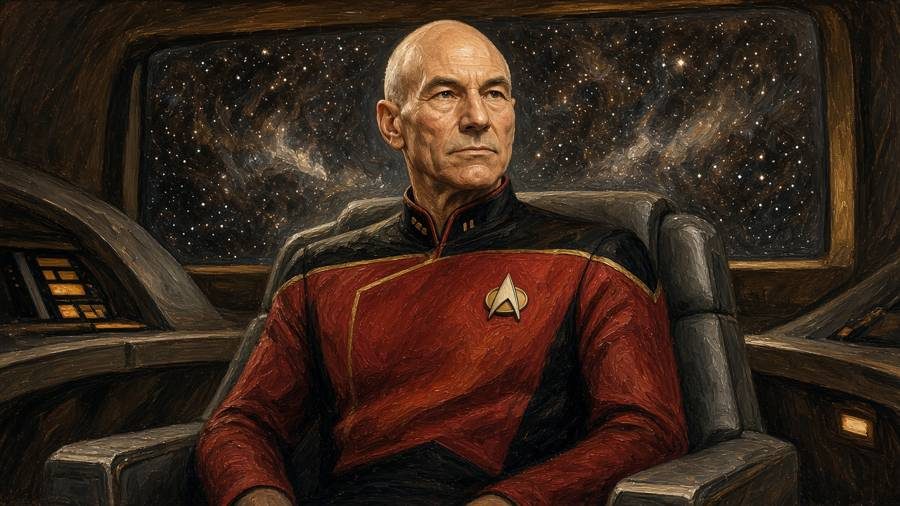
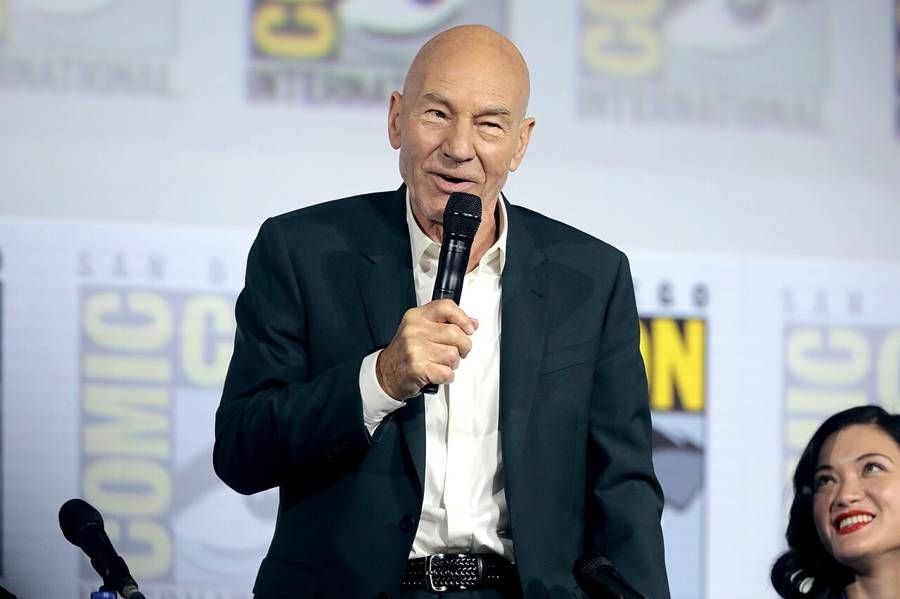
Sir Patrick Stewart, the Shakespearean actor who became Captain Jean-Luc Picard of the starship Enterprise and Professor Charles Xavier of the X-Men films, has died. He was 86.
A statement posted to his social media accounts on Thursday, October 29, 2026, said he died the day before, Wednesday, October 28, at his home in Los Angeles, "in the loving care of his beloved wife Sunny, following a brief and poignant journey with Alzheimer's Disease and Lewy Body Dementia." The BBC, the Associated Press and Extra all reported the announcement. The BBC reported that he is survived by his wife, Sunny Ozell, and his two children, Daniel and Sophie.
His career ran for more than six decades. It began in the repertory theatres of England, ran through sixteen years with the Royal Shakespeare Company, and then, almost by accident, took him to Hollywood and into the captain's chair of a television starship. That role made a working-class boy from a small Yorkshire town one of the most recognizable faces on the planet. He never stopped going back to the stage.
This is the story of that life, drawn from his own words, his 2023 memoir Making It So, contemporary reporting and the tributes that arrived from around the world within hours of the news.
§ 1The news and the tributes
The tributes came quickly and from every part of his career.
Sir Ian McKellen, his close friend and his Magneto opposite Xavier in the X-Men films, recalled on social media that his "first strong memory" of Stewart was the moment Stewart told him he was thinking about taking a role in a new Star Trek series. McKellen said he advised against it and told him to think of his stage career. "Well, he took the risk, and thank goodness for us all that he did," McKellen wrote, according to the BBC. He added that Stewart "told you what he thought and felt. He wore his heart on his sleeve, which made him a man to rely on, to admire and, in my case, love."
William Shatner, the original Captain Kirk, wrote on X that Stewart brought "intelligence, grace, and a deep sense of humanity to everything he did," and that "Captain Picard stood for the best of us, and so did the man who played him." George Takei, the original Sulu, said Stewart "inspired a whole next generation of star-gazers who looked longingly ahead to a brighter future for all humanity." Hugh Jackman, who played Wolverine beside Stewart's Xavier for nearly two decades, wrote, "We lost one of the greats of stage and screen today."
Wil Wheaton, who played the teenage Wesley Crusher on The Next Generation, told BBC Radio 4 that Stewart brought "gravitas" to the show and "made me a better actor just by being there." The official Star Trek account posted, "A voice. A presence. A captain unlike any other."
The Royal Shakespeare Company called him "a colossus of both stage and screen" and "one of the finest classical Shakespearean actors of his generation," and said his contribution to the company was "beyond measure." Dame Harriet Walter, who played Cleopatra to his Mark Antony, told BBC Newsnight, "It's like [a] huge giant tree has fallen in the forest."
Marvel Studios called him "a singular talent, a generous collaborator, and a true gentleman." Huddersfield Town, the Yorkshire football club he supported all his life, called him "a titan of his craft" and said he "was a Terrier in every sense." The Alzheimer's Society in the United Kingdom said his death was "a heartbreaking reminder of the devastating impact dementia has on people and families across the globe."
In Los Angeles, fans gathered at his star on the Hollywood Walk of Fame, which he received on December 16, 1996. The Walk of Fame said it would place flowers on the star on Thursday afternoon.
§ 2A small house in Mirfield
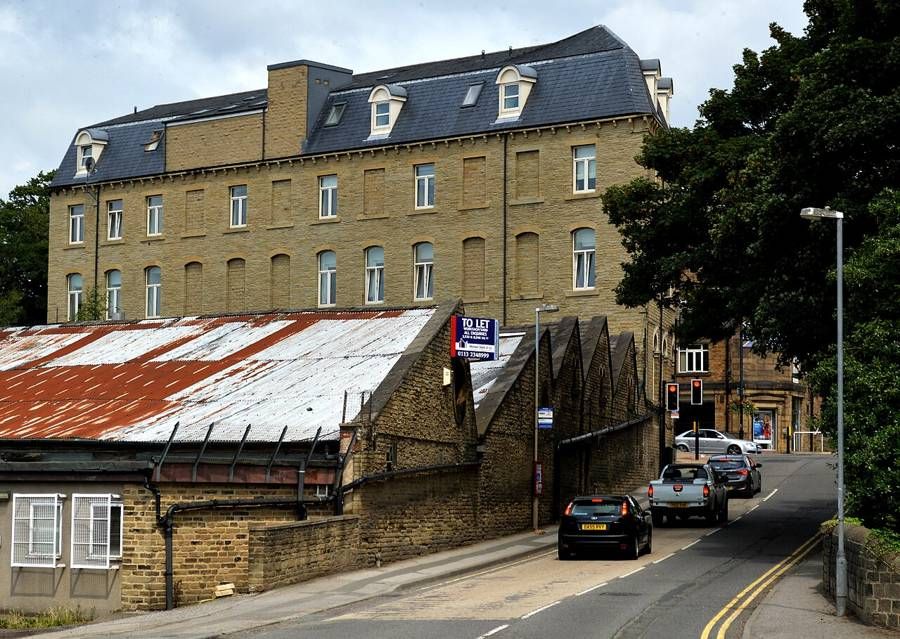
Patrick Stewart was born on July 13, 1940, in Mirfield, a mill town in what was then the West Riding of Yorkshire. Wikipedia's account of his life, which draws on his own interviews, says his mother, Gladys, was a weaver and textile worker, and his father, Alfred, was a regimental sergeant major in the British Army during the Second World War who later worked as a labourer and a postman. He had two older brothers, Geoffrey and Trevor.
The family was poor. In a 2023 interview with The Guardian, Stewart described a small terraced house with no running hot water, no indoor toilet and no central heating. For years he shared a bed with his brother Trevor, five years older. The family owned just four books, he said: an old encyclopedia from his grandfather, a couple of his father's war volumes and a tattered dictionary. "That was until I found the library," he told the paper, "which was critical." Books and, later, the cinema "became escapism."
The house also held something darker. Stewart spoke publicly for many years about his father's violence toward his mother. In the Guardian interview he called his father "a weekend alcoholic." "Rigorously, from Monday to the end of the working day on Friday, he never drank," he said. "But Friday nights, the drinking through the weekend would begin, which made weekends always perilous, never fun." He told the paper, "You know, I didn't talk about my family for decades."
Later in life, while researching his family history for the BBC genealogy series Who Do You Think You Are?, Stewart learned more about his father's war. Accounts of that research say his father had served through the Dunkirk evacuation and suffered from what was then called combat fatigue, now understood as post-traumatic stress disorder. That discovery shaped how Stewart came to see his father, and it shaped the causes he took up.
His father found his way into Stewart's work, too. In a 2008 quote preserved in Wikipedia's biography, Stewart said, "My father was a very potent individual, a very powerful man, who got what he wanted. It was said that when he strode onto the parade ground, birds stopped singing." Preparing to go on as Macbeth, he said, he looked in the mirror and "saw my father's face staring straight back at me."
§ 3The teacher who handed him Shakespeare
The turning point came in a classroom. Writing for the education magazine Tes, Stewart described the day his English teacher at Mirfield Secondary Modern, Cecil Dormand, handed out copies of The Merchant of Venice to a class of 12-year-olds and cast the trial scene. Stewart was given Shylock. The students began reading silently. "No, no," Dormand told them. "Out loud, this is drama, not just poetry." "And from that moment on," Stewart wrote, "Shakespeare became a part of my life."
Dormand also put him in his first play with adults, and he was the first person to ask Stewart whether he had thought of becoming a professional actor. "I hadn't," Stewart wrote. "It seemed a crazy and impossible idea." The West Riding County Council ran residential courses every spring for amateur actors, directors and designers. Stewart went on his first one, and he wrote that only many years later did he realize Dormand and the school had paid his fees. "So no Cecil Dormand, no acting career for Patrick Stewart," he wrote. Decades later, when he was knighted, he told the BBC he owed "literally everything" to that teacher.
On one of those drama courses he met another Yorkshire boy who would become a well-known actor, Brian Blessed, and the two became friends.
Stewart left school at 15. According to Wikipedia's account, he worked for about a year as a junior reporter on a local newspaper, a job that ended when his editor told him to choose between journalism and the theatre; one of his brothers later said he sometimes skipped assignments for rehearsals. He then sold furniture, which he said let him practise reading people and tailoring his pitch to each customer. The BBC reported that his first public performance was in a local church production of Cinderella, and that he threw himself into the busy amateur theatre scene around him. "I used to recite Shakespeare from memory," he said. "I just learned all these big speeches."
He went bald early, losing his hair around the age of 19 or 20, as he told interviewers for decades. It would later become one of the most famous heads in television.
With help from a grant from the West Riding council, Stewart went to the Bristol Old Vic Theatre School. Brian Blessed went too.
§ 4The Royal Shakespeare Company years
Stewart's first professional stage appearance came on May 19, 1959, at the Theatre Royal in Bristol, playing a cutpurse in Cyrano de Bergerac. He spent the next several years in repertory theatre, including a stretch with the Library Theatre in Manchester, the kind of grinding, play-a-week apprenticeship that trained a generation of British actors.
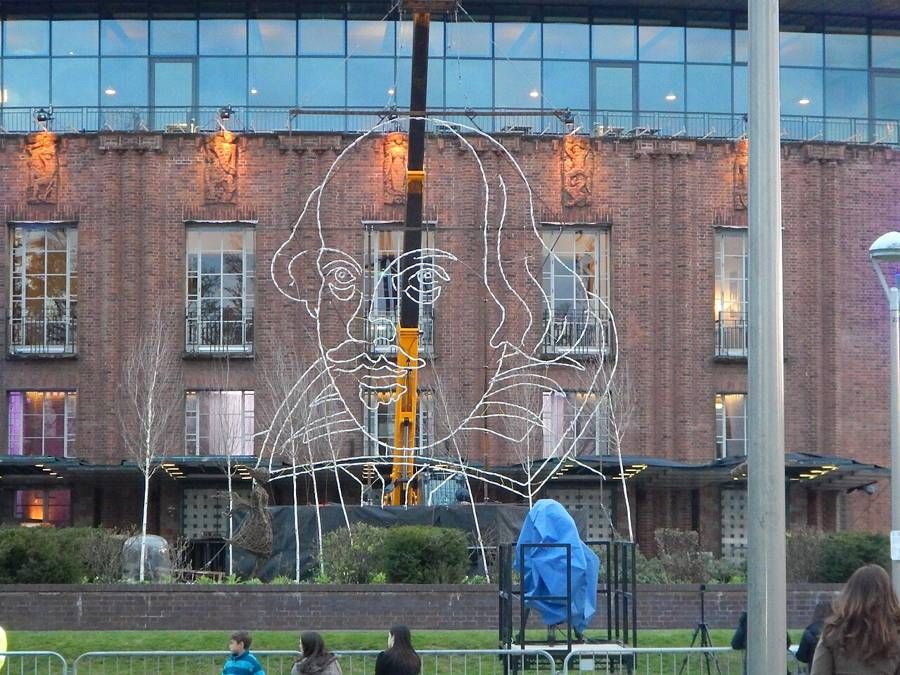
In 1966 he joined the Royal Shakespeare Company. He stayed until 1982. Wikipedia's biography says he appeared in more than 60 RSC productions, beginning with The Investigation in 1966, and became a core member of the company, taking three or four major roles a season. The BBC listed among his RSC parts King John, Oberon in A Midsummer Night's Dream and Henry IV. The company later named him an Honorary Associate Artist.
It was in that same year, 1966, that he married his first wife, Sheila Falconer. They had a son, Daniel, who became an actor, and a daughter, Sophie. The marriage ended in divorce in 1990.
The RSC years brought his first trip to Broadway. He played Snout in Peter Brook's celebrated production of A Midsummer Night's Dream, which reached New York in 1971. In the early 1970s he also began teaching Shakespeare to American university students, a connection that would, years later, put him in front of the right audience in Los Angeles.
In 1979 he won a Laurence Olivier Award, Britain's top stage honour, for best supporting actor for his performance in Antony and Cleopatra.
Television came slowly. His first screen role, in January 1967, was a small part as a fire officer on the long-running soap Coronation Street. Over the following years he built up serious credits without ever becoming a household name: Lenin in the BBC drama Fall of Eagles in 1974, the scheming Sejanus in I, Claudius in 1976, and Karla, the Soviet spymaster, in Tinker Tailor Soldier Spy and Smiley's People. On film he played King Leondegrance in John Boorman's Excalibur in 1981 and, in an early brush with science fiction, the warrior-troubadour Gurney Halleck in David Lynch's Dune in 1984.
By his own later account, he did not think much of science fiction. Wikipedia's biography records that he once asked the Doctor Who actress Lalla Ward why she would work in science fiction or on television at all.
§ 5The call from Star Trek
In 1987, Paramount was reviving Star Trek for television, two decades after the original series ended. The producer Robert H. Justman saw Stewart at a literary reading at the University of California, Los Angeles, and brought him to the attention of the show's creator, Gene Roddenberry.
Stewart knew almost nothing about Star Trek or its place in American culture. He was wary of the standard six-year contract. According to Wikipedia's account of his recollections, he signed in part because he, his agent and the people he consulted all expected the show to fail quickly, leaving him free to return to London with some money in his pocket. McKellen, as he himself recalled this week, told him not to do it.
The Los Angeles Times, on his casting, described him as an "unknown British Shakespearean actor." He was 47.
Star Trek: The Next Generation premiered in 1987 and ran for seven seasons, until 1994. Stewart played Captain Jean-Luc Picard, commander of the USS Enterprise. The official Star Trek account noted this week that he played the role in more than 170 episodes.
Picard was a thoughtful, measured commander, and his order to carry out a plan, "Make it so," became the line fans quoted most. Stewart's memoir would borrow those words for its title.
The early days were not easy. Stewart was still living out of a suitcase, sure the show would not last. Television's long days, which began before 5 a.m., came as a shock to a stage actor. He later recalled with some embarrassment lecturing his younger cast mates for being unprofessional, telling them, "We're not here to have fun!" He said his "spirits used to sink" when he had to memorize technical jargon, though he came to have a favourite piece of it: "spacetime continuum."
He relaxed, and the cast became close. Marina Sirtis, who played Counselor Deanna Troi, later credited him with "at least 50%, if not more" of the show's success, because the others copied his discipline. Jonathan Frakes, who played First Officer William Riker, said Stewart "set such a high bar for preparation. We all came to work in the morning completely prepared."
There was also the matter of his head. In an interview with Michael Parkinson, Stewart said he was grateful for Roddenberry's answer when a reporter suggested that surely baldness would be cured by the 24th century. Roddenberry replied that in the 24th century, "they wouldn't care."
§ 6A captain for a new generation
The Next Generation became a hit, and Picard became a cultural fixture. In 1992, Wikipedia records, readers of TV Guide named him television's "most bodacious" man, paired with the model Cindy Crawford, of whom he said he had never heard. In 1993 TV Guide named him the best dramatic television actor of the 1980s, and in 1995 he earned a Screen Actors Guild nomination for the role.
The show made him wealthy, which he had not expected. Wikipedia records his own calculation that, during one break in filming in 1992, he earned more than he had during ten weeks starring in a London production of Who's Afraid of Virginia Woolf.
The series also became a family affair at least once. In the episode "The Inner Light," Stewart's real son, Daniel, played Picard's son.
After the series ended, Stewart led the crew through four feature films: Star Trek Generations in 1994, First Contact in 1996, Insurrection in 1998 and Nemesis in 2002. He also appeared as Picard in the 1993 pilot of Star Trek: Deep Space Nine and voiced the character in a run of Star Trek video games.
Asked in 2011 for the highlight of his career, he chose The Next Generation, because "it changed everything." He spoke often of his pride in the show's social messages and its influence on young viewers. And he offered one line that summed up his whole improbable journey: "The fact is all of those years in Royal Shakespeare Company, playing all those kings, emperors, princes and tragic heroes, were nothing but preparation for sitting in the captain's chair of the Enterprise."
That was not the whole story, and he said so too. He admitted that had he known the show would run for seven years, he would never have signed. "No, no. NO," he said, in remarks preserved in Wikipedia's biography. "And looking back now it still frightens me a little bit to think that so much of my life was totally devoted to Star Trek and almost nothing else." Typecasting followed, and he found it hard at first to get back onto the stage after so long away.
§ 7Professor X
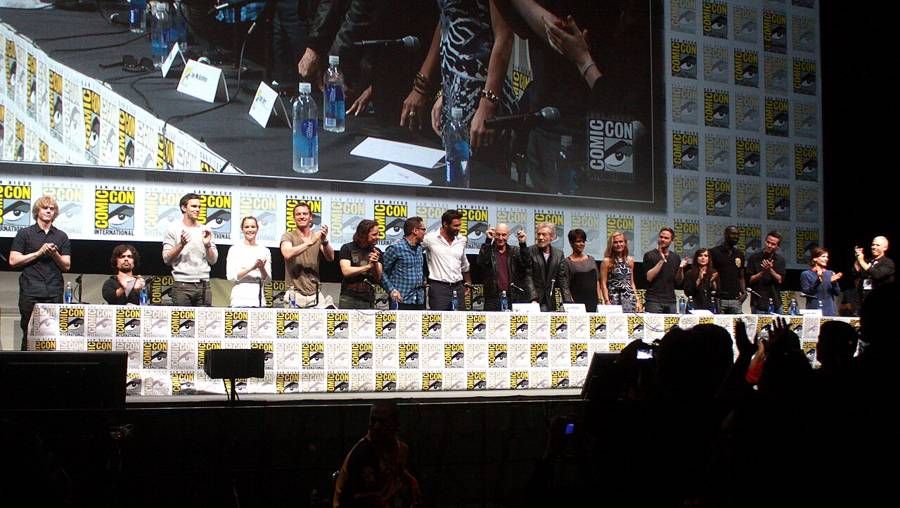
His way out of the Starfleet uniform led into another one. In the late 1990s the director Bryan Singer cast him as Professor Charles Xavier, the telepathic founder and teacher of the X-Men, in the first big-budget film of the Marvel mutants. The role, a wise, bald leader of a team of misfits, was in many ways a cousin of Picard. Stewart was at first reluctant to sign on to another franchise, but the chance to work with Singer persuaded him.
Then came the casting that made it personal. Ian McKellen, the friend who had warned him off Star Trek, was cast as Magneto, Xavier's oldest friend and his ideological enemy. By then, Wikipedia records, McKellen had conceded that Stewart's leap into screen science fiction had been a wise one.
X-Men opened in 2000. Stewart went on to play Xavier in X2, X-Men: The Last Stand, X-Men Origins: Wolverine, The Wolverine, X-Men: Days of Future Past and, finally, Logan in 2017, after which Stewart said he would leave the franchise.
He came back. In 2022 he played an alternate-universe Xavier in Doctor Strange in the Multiverse of Madness, part of the Marvel Cinematic Universe. In 2025 it was announced that he would return as the original Xavier, alongside McKellen's Magneto, in Avengers: Doomsday. According to the BBC's live coverage, Doomsday will be his last on-screen role. Fans at his star this week told the BBC the film "will hit a little different" now.
He and Jackman shared a Guinness World Record for a time for the longest career as a live-action Marvel superhero, for Xavier and Wolverine.
The friendship with McKellen became a public story of its own. The two men had worked together only once on stage before the X-Men films, but they grew close while waiting around on set. In 2009 they starred together in Samuel Beckett's Waiting for Godot in the West End, which Stewart said fulfilled a 50-year ambition dating to when he saw Peter O'Toole in the play at the Bristol Old Vic at 17. In 2013 McKellen officiated at Stewart's wedding to Sunny Ozell.
§ 8Back to the stage
Through all of it, Stewart kept returning to the theatre.
During The Next Generation he could not commit to long stage runs, so he wrote and performed one-man shows. The most famous was his solo version of Charles Dickens's A Christmas Carol, in which he played every one of more than 40 characters. He took it to Broadway in 1991 and brought it back many times, including a 2001 run whose proceeds went to charity. It won him a Drama Desk Award in 1992 and a Laurence Olivier Award in 1994. He produced it through his own company, Camm Lane Productions, named after the street in Mirfield where he was born. In 1999 he played Scrooge again in a television film.
The Shakespeare roles came back too: Prospero in The Tempest on Broadway in 1995 and again for the RSC in 2006; Othello in Washington, D.C., in 1997, in what was called a "photo negative" production, with a white Othello in an otherwise Black cast, a part he had wanted to play since he was 14; Mark Antony opposite Harriet Walter's Cleopatra; and Macbeth in 2007, when a critic called him "one of our finest Shakespearean actors." The Guardian later summed up his classical range in a list: Macbeth, Othello, Prospero, Shylock and Mark Antony.
In 2008 he played King Claudius opposite David Tennant's Hamlet for the RSC, a production that transferred to London. It won him his second Olivier Award. The same year brought his first Tony Award nomination, on Broadway.
In 2014 he and McKellen played Broadway together in two plays in repertory, Waiting for Godot and Harold Pinter's No Man's Land. To promote them, on his wife's suggestion, the two knights toured New York in their Godot bowler hats and posted photographs of themselves at tourist spots. The campaign was cheap and it went viral, and it showed audiences a playful side of the serious Shakespearean. Guest spots on comedy shows followed.
He had already shown that side. In Ricky Gervais and Stephen Merchant's sitcom Extras in 2005, he played a ridiculous, self-obsessed version of himself. In 2003 he guest-starred on Frasier. He voiced CIA Deputy Director Avery Bullock on the animated comedy American Dad! for many years and narrated Seth MacFarlane's Ted films, and he led MacFarlane's sitcom Blunt Talk from 2015 to 2016. Gervais, paying tribute this week, wrote simply, "What an actor."
His voice, deep and precise, carried its own career. He won a Grammy for narrating Prokofiev's Peter and the Wolf. He narrated documentaries and planetarium shows about space, including an astronomical tour of the solar system called Nine Worlds and fulldome films about Mars and the Voyager probes. Gamers knew him as the doomed Emperor Uriel Septim in The Elder Scrolls IV: Oblivion, a role that won him a Spike TV Video Game Award in 2006.
§ 9Arise, Sir Patrick
Britain honoured him twice. He was made an Officer of the Order of the British Empire in 2001 for services to acting and the cinema. In the 2010 New Year Honours he was named a Knight Bachelor. The official government honours list describes him simply: "Mr Patrick STEWART OBE. Actor. For services to Drama." The London Gazette records that the knighthood was conferred on June 2, 2010.
Queen Elizabeth II knighted him at Buckingham Palace. The BBC reported at the time that the 69-year-old used the moment to pay tribute to the English teacher who had first put Shakespeare in his hands, saying he owed him "literally everything."
Other honours tied him back to Yorkshire. In 2004 he became chancellor of the University of Huddersfield, a few miles from Mirfield, and he later became a professor of performing arts there. He stepped down as chancellor in 2015, and in 2016 a university building was renamed the Sir Patrick Stewart Building. McKellen wrote this week that Stewart "never forsook his origins" and that the chancellorship was "the proudest achievement of the most respected and beloved actor of his generation on either side of the Atlantic."
§ 10Return of the captain
For nearly two decades after Nemesis, Stewart said he was done with Picard. Then, on August 4, 2018, CBS and Stewart announced that he would play the character again in a new series. In a prepared statement he said he and the producers would "endeavour to bring a fresh, unexpected and pertinent story to life once more."
Star Trek: Picard ran for three seasons, from 2020 to 2023, and brought an older Picard back to a new generation of viewers, many of whom, the BBC noted this week, discovered his work on streaming platforms.
Stewart was 79 when the first season aired and 82 when the last one did. In July 2026, marking the 60th anniversary of the original Star Trek series, he told TV Insider, as the BBC reported, that he had no intention of retiring. "I can't imagine ever officially 'retiring,'" he said. "I'll always and forever be an actor."
§ 11Making It So
In October 2023, at 83, Stewart published his memoir, Making It So, through Gallery Books, an imprint of Simon & Schuster, with a British edition from Simon & Schuster UK. The title is Picard's catchphrase.
Reviewers found it warm and candid, if long. The New York Times called it a "fond memoir" that "traces the path from the working class to the Shakespearean stage to 'Star Trek' superstardom," and noted "a ruddy blush of modesty" running through it. The Washington Post's review called it "a slightly overlong, mostly chronological account of his sprawling life story," and noted that he devotes several hundred pages to his childhood and stage career before reaching Picard and Xavier.
The book does not look away from his childhood. The Guardian's review of the audiobook, which Stewart narrated himself, says he describes reading in the family's outdoor toilet, wearing gloves and a hat against the cold, and recounts how it took years of therapy for him to process "the impact of the violence, fear, shame and guilt I experienced as a child."
Talking to The Guardian over Zoom from his book-lined Los Angeles study to promote the book, he was in good humour about growing old. "Somehow I've lost 2in over the past two years," he said. "I don't know how the hell it's come about. My wife, who's younger than me, significantly, has said, 'Well, it's ageing, you shrink.' I shrink? When will it stop!"
It is also frank about his private life. Wikipedia's summary of the book says Stewart wrote about an affair with Jennifer Hetrick, a guest actress on The Next Generation, during his first marriage, and that the two were later engaged but never married. He married the producer Wendy Neuss in 2000; they divorced in 2003. He met the American singer and songwriter Sunny Ozell in 2008, while playing Macbeth at the Brooklyn Academy of Music, and they married in 2013. In 2020 he revealed that their Nevada ceremony, with McKellen officiating, had not been legally binding, because McKellen's ministry credentials were not valid in that state, and that the couple had quietly married with McKellen a couple of weeks earlier in a Mexican restaurant in Los Angeles.
§ 12A voice for causes
Stewart used his fame for the issue he knew most personally: violence in the home.
In 2006 he made a short film for Amnesty International about his father's attacks on his mother. "The physical harm was a shocking pain," he said. "But there are other aspects of violence which have more lasting impact psychologically on family members. It is destructive and tainting. As a child witnessing these events, one cannot simply help somehow feeling responsible for them; for the pain, and the screaming, and the misery."
He became a public champion of Refuge, the British domestic abuse charity. The BBC reported this week that he became an ambassador for the charity in 2007. Hetti Barkworth-Nanton, chair of Refuge's trustees, told the BBC she was "privileged to watch his endless devotion and passion to the cause," and said, "He told me he did the work in honour of his mother." He also gave his name to a scholarship at the University of Huddersfield funding postgraduate research into domestic violence, and in 2011 he presented a BBC appeal for Refuge.
Speaking at the launch of a women's rights book in 2009, he put it bluntly: "Violence is a choice, and it's a choice a man makes."
After learning about his father's war trauma, he also supported Combat Stress, a British charity for veterans with mental health problems. As a patron of the United Nations Association UK, he spoke in 2012 about his father's war and said he believed the United Nations was the best legacy of that period.
His politics were open. He called himself a socialist and was a member of the Labour Party, crediting his father's trade unionism. He was an atheist and a patron of Humanists UK, and he campaigned for an assisted dying law through Dignity in Dying. He opposed the Iraq War, backed remaining in the European Union in 2016 and supported campaigns for a further public vote on Brexit. He also, as Wikipedia records, defended the right of a Christian bakery in Belfast to refuse to write a slogan it found offensive on a cake, a stance that cut against many of his usual allies.
He was a dedicated animal advocate, especially for pit bulls. He fostered rescue dogs in Los Angeles, worked with the ASPCA, and received its Pit Bull Advocate and Protector Award in 2021. This week the RSPCA, Britain's oldest animal welfare charity, said he "used his iconic voice to champion every dog, regardless of their breed."
§ 13Yorkshire to the end
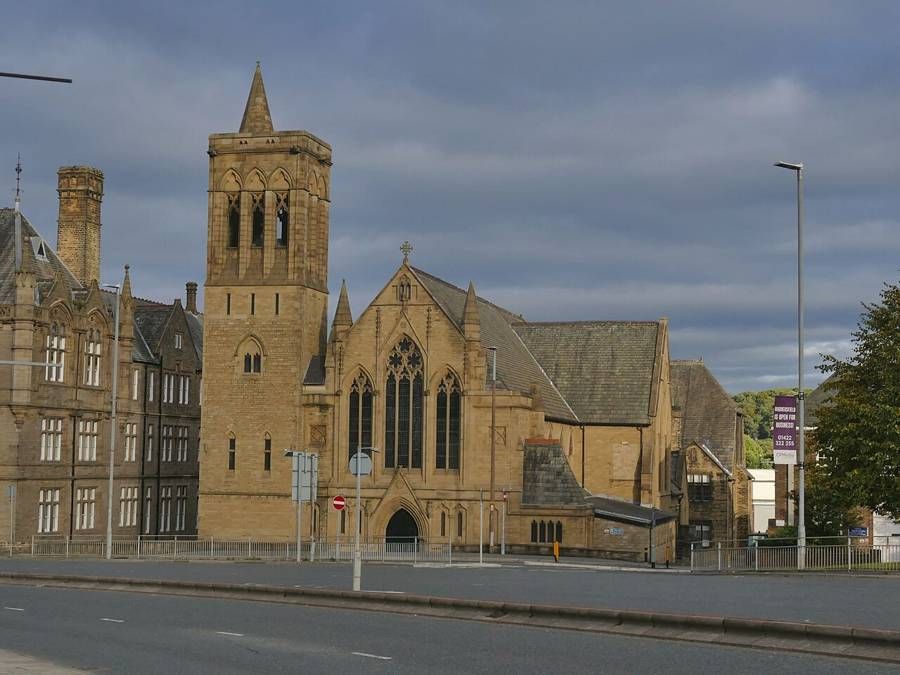
For all his years in California and New York, he stayed a Yorkshireman. He was a lifelong Huddersfield Town supporter and was at Wembley Stadium in 2017 when the club won promotion to the top division for the first time since 1972. From 2010 he was president of the club's youth academy. An entertainment journalist, Sandro Monetti, told the BBC this week that Stewart "always wanted to talk about Huddersfield Town Football Club more than he ever wanted to talk about Star Trek." In a 2018 Yorkshire Day poll, he was voted the third greatest Yorkshireman, behind Michael Palin and Sean Bean.
He loved fast cars, too. He set a lap on the BBC's Top Gear in 2003 and raced in a celebrity race at the Silverstone Classic in 2012, finishing ninth.
§ 14A final word on his illness
His family's statement named two conditions: Alzheimer's disease and Lewy body dementia. The BBC noted that Alzheimer's is the most common form of dementia and has no cure, and that Lewy body dementia, which damages nerve cells in parts of the brain that govern thinking, memory and movement, is believed to account for around one in ten dementia cases in the United Kingdom. The actor Robin Williams also had the condition. The statement described Stewart's illness as "brief," and none of the reports reviewed for this story gave further medical detail, so this article does not speculate on it.
§ 15Why he belongs in the Space section
The Ancient Sky files this story under Space for a simple reason. For millions of people, Patrick Stewart's Jean-Luc Picard was the face of a hopeful future among the stars: a captain who explored rather than conquered, who chose talk over force when he could, and who treated curiosity as a duty. George Takei put it this way this week: Stewart "inspired a whole next generation of star-gazers." The official Star Trek account said he "gave generations of fans an icon who inspired us to look toward the stars."
He also lent his voice to real space. His narration for Nine Worlds took audiences on a tour of the solar system, and his planetarium shows MarsQuest and The Voyager Encounters told the stories of real robotic explorers. In 2022 the Institution of Engineering and Technology named him an honorary fellow for his work promoting science and technology.
He came from a house with four books and no hot water, in a town of mills and terraced streets on the edge of the Pennines. A teacher put a play in his hands and told him to read it out loud. He did, for the rest of his life, on the stages of Stratford and London and Broadway, and on the bridge of a starship that only ever existed in the imagination.
"I've had so much great good fortune in my life," he told The Guardian in 2023.
Sir Patrick Stewart, July 13, 1940, to October 28, 2026.
Watch & Listen
Hear this entry read aloud. Coming soon — the channels are not live yet.
Sources
Books
Making It So: A Memoir, by Patrick Stewart. ISBN 9781982167738.
Links
- BBC News: Star Trek actor Sir Patrick Stewart dies aged 86 (Oct. 29, 2026)
- BBC News live: Sir Ian McKellen leads tributes to Sir Patrick Stewart (Oct. 29–30, 2026)
- AP News: Patrick Stewart, actor best known for "Star Trek" and "X-Men," dies at 86 (link returns 403 to automated checks; bot blocking)
- Extra: Patrick Stewart dies at 86, family statement
- The Guardian: 'On stage, I could escape': Sir Patrick Stewart on childhood trauma and acting success (Oct. 1, 2023)
- The Guardian: Making It So audiobook review (Dec. 8, 2023)
- The New York Times: review of Making It So (Oct. 3, 2023; returns 403 to automated checks, bot blocking)
- Tes: Sir Patrick Stewart, My best Shakespeare teacher
- BBC News: Star Trek star Patrick Stewart knighted at Palace (June 2010)
- GOV.UK: New Year Honours 2010 list
- The London Gazette: Honours and Awards, knighthoods conferred 2010
- Open Library: Making It So, ISBN record
- Wikipedia: Patrick Stewart (biographical cross-reference)