The Weird
Ninety Days Off the Grid: What the Pentagon Has Actually Ordered for America's Military Bases
By Darrell Wallen
Would you prefer to listen?

§ 1The claim and the paper trail
A claim is going around online that every U.S. military base must be able to run on its own for 90 days. Part of that is true. The Pentagon has started a real program to make its bases less tied to the civilian power grid. But the 90-day number has not shown up in any public Pentagon paper.
CONFIRMED: On September 30, 2026, Defense Secretary Pete Hegseth, who now uses the title Secretary of War, announced a program called FORTRESS America. He did it in a speech at Marine Corps Base Quantico in Virginia. The same day, he signed a memo that made it a formal program. The name is short for Federal Operations for Resilience, Troop Resources, Energy, Supply, and Survivability.
CLAIMED, NOT YET OFFICIALLY CONFIRMED: On October 25, Fox News Digital made a bigger claim. It said every major base in the lower 48 states would have to run on its own for at least 90 days. That would cover power, water, fuel and communications. Fox said the figure came from "documents reviewed by Fox News Digital," which have not been made public.
That gap is the heart of this story. The program is real, and so is the memo. Hegseth's promise that big bases will make their own power is on the record. But the 90-day number rests on one news outlet's account of papers no one else has seen.
In this report, CONFIRMED means an official paper, an on-the-record statement or several trusted outlets back it up. CLAIMED means reported but not checked against a public source. The idea of a base that can stand alone is also much older than this fall's news. This report looks at that history too.
§ 2What Hegseth said at Quantico
CONFIRMED: In the speech, carried live by ABC News, Hegseth called FORTRESS a kind of insurance for the homeland. Then he laid out the plan. "Every major military installation in America is going to generate its own power. Independent of the civilian grid," he said. "If an adversary takes down the grid by cyberattack, by sabotage, by any means, our bases stay lit," he added.
He also promised stockpiles "deep enough to fight through disruption," naming weapons, fuel, medicine and blood. He said bases would be guarded against hackers, sabotage and drones.
He closed that part of the speech with a line that has been quoted widely. "We will make certain that America cannot be starved out, shut down, or cut off," he said.
Notice what the speech does not say. It sets a goal of power independence for every major base. It does not set a number of days. The fact-checking site Snopes read it the same way.
§ 3What the memo says
CONFIRMED: The September 30 memo sets up FORTRESS America as a formal program. It rests on five pillars, according to the text as quoted by Snopes, DefenseScoop and others. They are making their own power, safer supply lines, a stockpile, safer bases, and guarding space and radio signals.
The memo calls the effort "the nation's insurance policy" and orders a new program office to be set up within 30 days. That office should start small and grow "within months," "delivering results in weeks, not years," the memo says.
The power pillar calls for steady, independent power at all key bases. That includes microgrids, which are small local power systems that can run apart from the main grid.
NOT FOUND: Neither the memo nor its five pillars, as published, say 90 days. A search of the public text found no number of days at all.
§ 4The program office takes shape
CONFIRMED: On October 6, a top Pentagon official, Michael Duffey, signed a memo to get the program going. DefenseScoop reported it. He named Richard "Matt" O'Malley as interim head of the new office. He also told eight top officials to each name people to help.
DefenseScoop also quoted an unnamed U.S. official. That official said Pentagon chief spokesman Sean Parnell "was the brain child behind FORTRESS," the site reported. Parnell has also reportedly been Hegseth's top pick to lead the Army. That makes Parnell more than a spokesman on this subject, which matters for what came next.
§ 5Where the 90 days came from
CLAIMED: The 90-day figure first appeared on October 25 in a "First on Fox" report. Every major base in the lower 48 states "would be expected to sustain essential operations independently for at least 90 days," the report said. It credited papers Fox had seen.
CONFIRMED (as on-the-record quotes): The same report quoted Parnell at length. "We don't want to rely on standard civilian municipal infrastructure to run our national defense. We just simply can't. It's an intolerable risk," he said. "Power is combat now," he went on. "We have to have a plan," he added.
None of Parnell's quotes mention 90 days. The number shows up in the reporter's own description of the papers. No official said it.
Fox also said the plan includes portable nuclear reactors, big batteries and microgrids. It calls for stockpiles of weapons, fuel, key minerals, electronics, spare parts and medical supplies.
Newsweek and Fortune both leaned on Fox for the 90 days. Newsweek said Hegseth laid out the plan in a memo, which goes further than the public memo supports.
CONFIRMED (as a fact-check finding): Snopes rated the viral claim "mostly true" on October 26. It found that FORTRESS is real and its broad goals match the viral posts. But Parnell, who shared the Fox story on X, "has not confirmed the 90-day requirement," Snopes said. It had asked the Pentagon for official word and was still waiting.
So here is the fairest summary. The direction is confirmed at the top of the department. The 90-day goal is credibly reported. But as of October 28, no public Pentagon paper or on-the-record statement found for this report confirms it.
One more detail matters. Fox listed power, water, fuel and communications. Some social media posts add food to the 90-day list. Fox did not name food, though the wider program does call for several kinds of stockpiles.
§ 6What the Pentagon says about cost and time
CONFIRMED (attributed to an unnamed official): On October 20, a senior defense official talked about FORTRESS with reporters. That was before the Fox report. Air & Space Forces Magazine said he put power first. "This is not a wait-and-see kind of a thing," he said.
He said the department was still studying the needs of about 500 bases in the lower 48 states. "The assessment timeline that we're in right now is trying to determine what is this going to cost," he said. According to the magazine, he admitted the full goal could take decades. Each base would get its own answer, such as solar, natural gas or heat from underground, not only nuclear.

ESTIMATE, NOT OFFICIAL: Air & Space Forces Magazine guessed that FORTRESS could cost tens of billions of dollars, if not hundreds of billions. That is the magazine's own guess. The Pentagon has not released a cost or a schedule.
The official also praised the rebuilt Tyndall Air Force Base in Florida for its microgrid. Hurricane Michael wrecked that base in 2018.
§ 7Before FORTRESS: the 14-day rule
The idea that a base should keep running when the outside world goes dark is not new. What is new is the size of the goal and, if the reports hold, the length of time.
CONFIRMED: The clearest rule on the books is Army Directive 2020-03, signed in 2020. It says the Army will keep its critical missions going through a long outage. The senior commander sets how long. If no one does, there is a default. "When the duration of the critical mission(s) has not been stipulated, the Army will plan to sustain energy and water for a minimum of 14 days," the rule says.
That covers power and water for critical missions, not every building on a base. Army officials said in 2021 that the 14 days came from studies of past outages.
If the 90-day standard is real, it would be a big jump. Ninety days is more than six times the Army's 14 days. It is also broader, because Fox describes the essential work of the whole base. Keeping a command center and a runway powered for two weeks is one problem. Keeping a whole base running for a full season is another.
§ 8The law and the department-wide rules
CONFIRMED: Federal law already treats power at bases as a readiness issue. One section of the law tells the Pentagon to keep power secure and steady for military missions. It lets the defense secretary set standards and require power plans for bases.
CONFIRMED (as reported): Congress has told the Pentagon that 99.9 percent of the power for critical missions must be able to ride out outages, Air & Space Forces Magazine reported. The magazine also said a 2021 Air Force plan warned of outages that could last 30 days or more from storms or cyberattacks.
CONFIRMED: A Pentagon rule on base resilience came out in December 2024 and was updated in August 2025. It tells planners to favor power made and stored on the base over fuel trucked in from outside. It also calls for microgrids that are safe from hacking.
In other words, the building blocks were already in law and policy. The new program adds speed and central control. Its goal is to reach "every major military installation" in the country.
§ 9Pulling the plug on purpose
CONFIRMED: The military has been testing these ideas by switching bases off on purpose. In these drills, a base is cut off from the commercial grid to see what keeps working.
On May 22 and 23, 2021, the Army and Hawaiian Electric cut three Army sites on Oahu off from the main grid, including Schofield Barracks, Army News Service reported. A power plant on Army land brought power back in less than an hour. In January 2024, Fort Moore in Georgia, now again called Fort Benning, ran a similar drill using 15 natural gas generators.
The Air Force runs the same kind of test. In April 2025, at Royal Air Force Lakenheath in England, the 48th Fighter Wing cut power and switched to backup systems. Air traffic controllers kept talking to incoming planes the whole time, Air Force photos show.
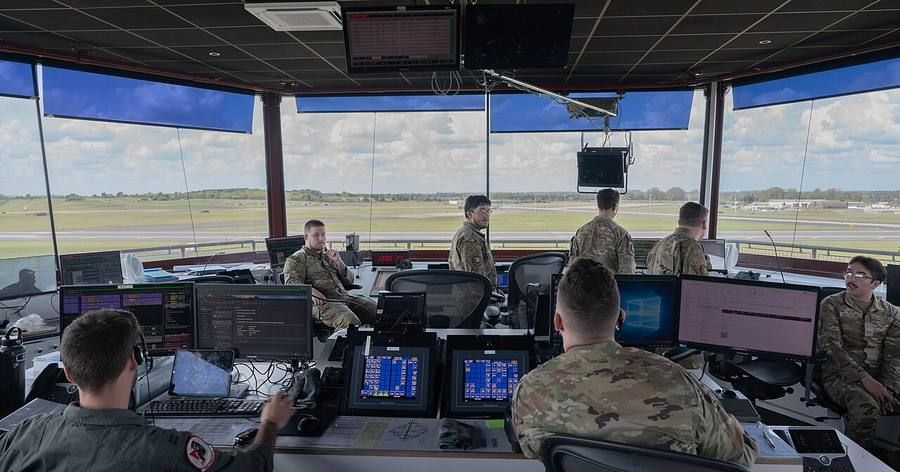
These drills tend to last hours or a day or two. Nothing in the public record shows a U.S. base running fully cut off for anything close to 90 days. That is one reason the reported standard caught people's attention.
§ 10The nuclear piece
CONFIRMED: The most solid hardware tied to FORTRESS is already under contract. On August 26, 2026, the Army said it had picked five companies to build and run tiny nuclear reactors at five Army posts. That was about a month before Hegseth's speech. MeriTalk reported it, and a Fort Campbell press release confirmed it.
The posts are Fort Bragg in North Carolina, Fort Campbell in Kentucky, Fort Hood in Texas, Fort Benning in Georgia and Fort Drum in New York. In the same order, the companies are Antares Nuclear, BWXT, General Atomics, Radiant and Westinghouse.
The Army said it will pay up to $2.2 billion in all from 2027 through 2031, as the companies meet set goals. The companies will own and run the reactors. The Army hopes to have the first one running by September 2028, a goal set by a presidential order.
Officials were careful about hopes. "We don't expect all five of these companies are going to turn on a reactor in 2028. In fact, they definitely will not," Jeff Waksman, a senior Army energy official, told reporters, according to MeriTalk.
The Fort Campbell release shows the timing for one site. BWXT plans one reactor there, on less than five acres. Work on the ground is set to start in late 2028, with power expected in the early 2030s. The plant could keep key buildings running when cut off from the grid, the release says.
That is real progress. But one reactor at one post, if all goes well, starts making power early in the next decade. And there are about 500 bases to study.
§ 11Why the Pentagon worries about the grid
CONFIRMED (as reported): Officials and experts give a familiar list of reasons. Fortune pointed to a February 2024 warning from three federal agencies, including the FBI. It was about a hacking group called Volt Typhoon that had broken into networks for power, water, transportation and communications.
Ravi Chaudhary, a former top Air Force energy official, put it bluntly to Air & Space Forces Magazine. "The attack, as we know it, will not look like an attack," he said.
Weather is the other big worry, and it has a price tag. CONFIRMED: The Government Accountability Office is Congress's watchdog. In a February 2026 report, it said bad weather has done more than $15 billion in damage to bases in ten years. That is the Pentagon's own estimate. Hurricane Michael alone led to about $4.5 billion in repairs at Tyndall. At Fort Hood, a 2021 winter storm cost about $48.3 million, including a $35.9 million heating bill.
The same report shows how much planning is left. By law, bases must build these risks into their long-range plans. As of April 2025, only 47 of more than 500 bases had done so, the Pentagon said.
§ 12What remains unknown
Several basic questions still have no public answers.
First, is the 90-day standard an official rule, a planning goal or a draft number? Fox called it a requirement. Snopes said the department had not confirmed it.
Second, what counts as a "major" base? The Pentagon has not published a list. The figure of about 500 bases refers to the study, not to the bases that would face a 90-day rule.
Third, what does "essential operations" cover? Running a headquarters, an airfield and a hospital for three months is very different from also running housing, schools and stores. The Army's current rule draws that line around critical missions.
Fourth, the cost. The Pentagon has not released one.
Fifth, the effect on nearby towns. Many bases share water, roads and power lines with the towns around them. Whether stronger bases help those towns, or just stand apart, will depend on choices no one has made public yet.
§ 13The bottom line
The Pentagon has ordered a program to help its bases stand on their own. The goal is to rely far less on outside power, fuel, water and supplies. A signed memo, a follow-up order and the secretary's own words confirm it. Money and hardware were already moving before the program had a name, including small nuclear reactors at five Army posts.
The claim that every major base must run on its own for 90 days comes from one news report about papers that have not been released. A spokesman tied closely to the program shared that report but did not confirm the number. Until the Pentagon publishes the rule or confirms it on the record, the 90 days is best called reported, not proven.
For scale, the Army's clearest current rule asks bases to plan for 14 days of power and water for critical missions. The headline figure would ask for a full quarter of a year, for far more than just the lights. That is a fortress-sized jump, and the Pentagon says it is still working out the cost.
Watch & Listen
Hear this entry read aloud. Coming soon — the channels are not live yet.
Sources
Official documents and statements
- Hegseth, Pete, State of the Force address, Marine Corps Base Quantico, Sept. 30, 2026 (ABC News live video): youtube.com/live/UZdp3pFHJXI?t=1906s
- Department of the Army, Army Directive 2020-03, Installation Energy and Water Resilience Policy, 2020: armypubs.army.mil/epubs/DR_pubs/DR_a/pdf/web/ARN21689_AD2020_…
- ArmyNG.com repost of Army Directive 2020-03, March 2020: armyng.com/2020/03/army-dir-2020-03-installation-energy.html
- 10 U.S. Code § 2911, Energy policy of the Department of Defense (Legal Information Institute): law.cornell.edu/uscode/text/10/2911
- U.S. Government Accountability Office, GAO-26-107786, Military Installations: extreme weather resilience, Feb. 23, 2026: files.gao.gov/reports/GAO-26-107786/index.html
- Fort Campbell Public Affairs, Press Release 26-012, Fort Campbell selected to host next-generation advanced energy resilience project, Aug. 2026: home.army.mil/campbell/6517/8779/2228/PRESS_RELEASE_26-012_Fo…
- DoD Instruction 4715.28, Military Installation Resilience, Dec. 17, 2024, Change 1 Aug. 4, 2025 (Executive Services Directorate; not linked, site blocks automated access)
- Army News Service report on the Oahu energy resilience test, July 9, 2021, and Fort Moore Public Affairs, energy resilience readiness exercise report, January 2024 (army.mil; not linked, site blocks automated access)
News reports and fact-checks
- Phillips, Morgan, Fox News Digital, Oct. 25, 2026: foxnews.com/politics/inside-pentagons-doomsday-plan-keep-amer…
- Christensen, Laerke, Snopes, Oct. 26, 2026: snopes.com/fact-check/pentagon-fortress-initiative-90-days/
- Vincent, Brandi, DefenseScoop, Oct. 7, 2026: defensescoop.com/2026/10/07/pentagon-memo-operationalize-fort…
- Hadley, Greg, Air & Space Forces Magazine, Oct. 20, 2026: airandspaceforces.com/pentagon-resilient-energy-fortress-amer…
- Lin, Bilin, Fortune, Oct. 26, 2026: fortune.com/2026/10/26/pentagon-fortress-bases-90-days-off-gr…
- Newsweek, Oct. 2026: newsweek.com/what-is-fortress-pentagon-90-day-plan-12617804
- MeriTalk, Army selects 5 vendors, 5 sites for Janus program, Aug. 2026: meritalk.com/articles/army-selects-5-vendors-5-sites-for-janu…
Image sources
- RAF Lakenheath power switch, U.S. Air Force/Airman 1st Class Sierra Casteel, April 22, 2025, public domain: commons.wikimedia.org/wiki/File:Amped_up_and_ready-_48th_Figh….jpg)
- RAF Lakenheath air traffic control, U.S. Air Force/Airman 1st Class Sierra Casteel, April 22, 2025, public domain: commons.wikimedia.org/wiki/File:Amped_up_and_ready-_48th_Figh….jpg)
- Fort Hunter Liggett solar microgrid, U.S. Army Corps of Engineers Sacramento District, April 20, 2012, public domain: commons.wikimedia.org/wiki/File:Ribbon_cutting_for_new_solar_….jpg)


