SpaceX-Tesla
Starlink Is Now Approved in More Than Half of Africa
By Darrell Wallen
Would you prefer to listen?
SpaceX's Starlink satellite internet is now approved in 30 of Africa's 54 countries, Elon Musk said on Tuesday night. The milestone means fast internet from space can now be sold legally in more than half of the continent, from the coast of Nigeria to islands in the Indian Ocean. It also puts a spotlight on the places that still say no.
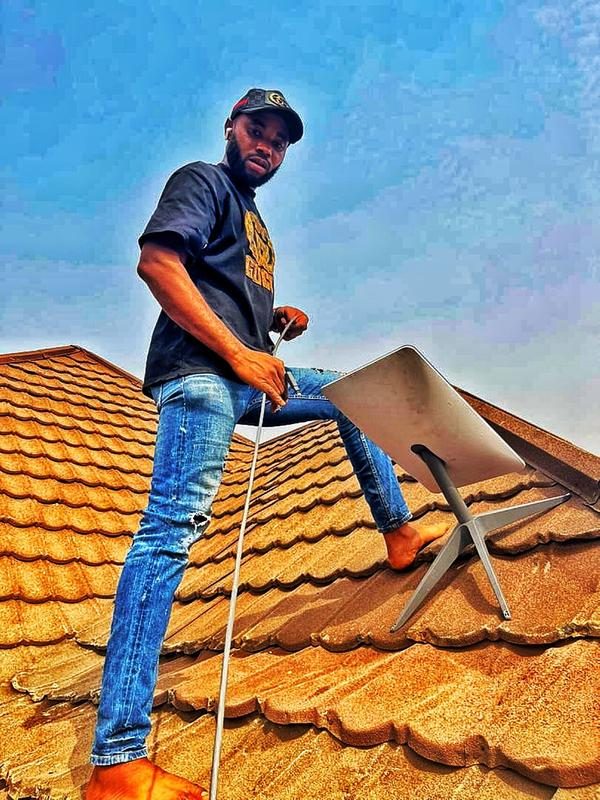
Benjamin Blessing, via Wikimedia Commons (CC BY-SA 4.0)
Musk posted the news on X at 7:19 p.m. Eastern time on Tuesday, November 24, 2026. "Starlink is now approved in 30 of 54 countries in Africa!" he wrote. He was quoting a post by the X account X Freeze, which shared a map of the continent. That post said the service started in Nigeria in 2023 and now reaches West, East, Central and Southern Africa. By midday Wednesday, Musk's post had been seen more than 1.6 million times, according to X's own count.
The number matches an earlier tally. On November 18, the news site News9 Africa went through Starlink's official availability map and counted 30 African countries where the service was working. A French satellite news site, Telesatellite, reported the same figure on Wednesday. It noted that no country in the Maghreb, the part of North Africa that includes Morocco, Algeria and Tunisia, has approved Starlink yet.
So the news is not a single new country switching on this week. It is a round-number milestone that has been building for almost four years. But it is a big one. A little over half of a whole continent can now buy internet service that comes straight down from satellites, without phone towers or buried cables.
§ 1How Starlink Works
Starlink is a network of small satellites that fly in low orbit, much closer to Earth than older TV and internet satellites. SpaceX now has more than 11,000 of them in space, Fortune reported this week. A customer sets up a flat dish that looks up at the sky. The dish talks to whichever satellite is passing overhead. The satellites pass the signal to ground stations that connect to the rest of the internet.
That design matters in Africa. Laying fiber cable across long distances, rivers and mountains costs a lot of money and takes years. Many villages and small towns never got it. A Starlink dish only needs power and a clear view of the sky. That is why governments, schools, clinics and farmers in remote places have been interested.
The satellites already fly over every country in Africa. What decides whether people can actually buy the service is a license from each country's government. Each nation sets its own rules. That is why the map looks like a patchwork, with some countries lit up and their neighbors still waiting.
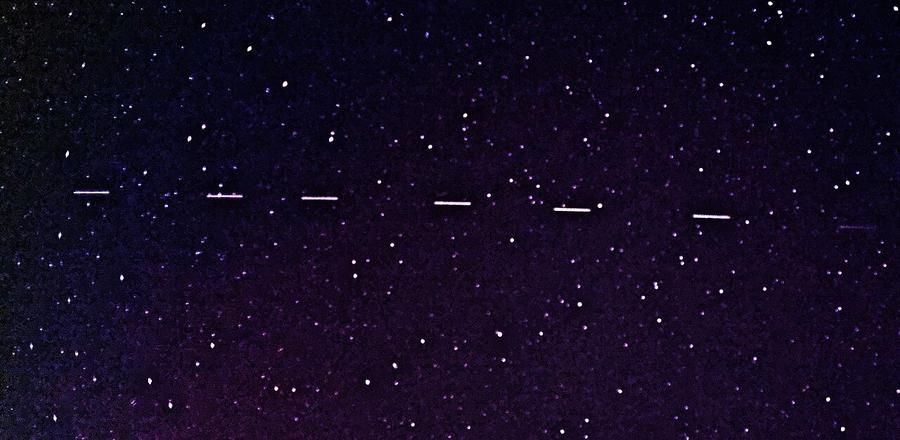
Jud McCranie, via Wikimedia Commons (CC BY-SA 4.0)
§ 2The 30 Countries
News9 Africa's list, based on Starlink's map as of November 18, includes Benin, Botswana, Burundi, Cape Verde, the Central African Republic, Chad, Ivory Coast, the Democratic Republic of Congo, Equatorial Guinea, Eswatini, Ghana, Guinea-Bissau, Kenya, Lesotho and Liberia. It also includes Madagascar, Malawi, Mozambique, Niger, Nigeria, Rwanda, São Tomé and Príncipe, Senegal, Seychelles, Sierra Leone, Somalia, South Sudan, Uganda, Zambia and Zimbabwe.
Nigeria came first, in early 2023. The newest country on the list is Equatorial Guinea, a small nation on Africa's west coast. Starlink went live there on August 29, 2026, and became the service's 30th African market, the trade sites Space in Africa and Technext reported. That launch came under a temporary approval, not a permanent license. The country's regulators are still weighing the terms of a longer-term license, the reports said.
The map also marks 15 more countries as coming next, News9 Africa reported. They are Angola, Burkina Faso, Cameroon, Comoros, Gabon, Gambia, Guinea, Mali, Mauritania, Mauritius, Namibia, the Republic of the Congo, Tanzania, Togo and Tunisia. "Coming next" on Starlink's map is a hope, not a promise. Each of those countries still has to sign off.
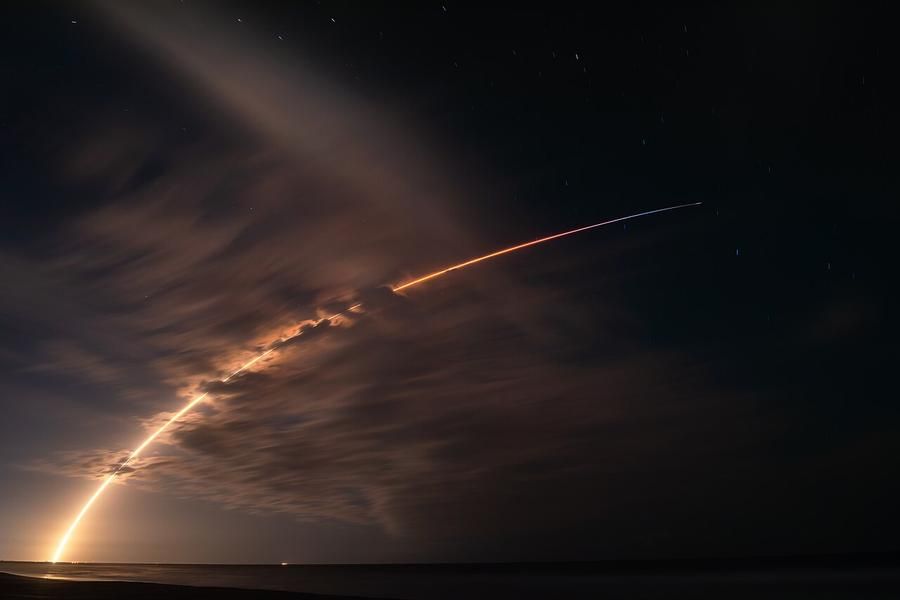
U.S. Space Force photo by Joshua Conti, via Wikimedia Commons (public domain)
§ 3Nigeria: The Biggest Market
Nigeria shows how quickly the service can grow. Nigeria's telecom regulator, the Nigerian Communications Commission, publishes counts of internet customers for each company. Using those numbers, Space in Africa reported in August that Starlink had 98,642 active subscribers in Nigeria at the end of June 2026.
That made Starlink the country's second-largest internet provider. It sat just 12,742 customers behind the leader, a company called Spectranet, which had 111,384. Three years earlier, the gap was huge. In the third quarter of 2023, Starlink had only 11,207 Nigerian customers, while Spectranet had 113,865.
Growth has not been smooth, though. Space in Africa said Starlink lost customers in early 2025 after a price change. It also said Starlink stopped taking new home orders in parts of Lagos and Abuja in September 2025, because the network had hit its limits in those busy areas. It reopened there in February 2026, but only for a business "priority" plan costing 159,000 naira a month. Many home users in the most crowded neighborhoods have stayed locked out, the site reported. Satellites can cover wide open spaces well. Packed cities can still fill them up.
§ 4Clinics in Zambia
Some of the most important uses are in health care. Zambia approved Starlink's license in June 2023, and the service went live that October, ITWeb Africa reported.
This month, Zambia began sending Starlink kits to clinics across the country. ITWeb Africa reported on November 12 that the Smart Zambia Institute, the government's electronic services office, is working with the United Nations Development Programme on the project. The plan covers 751 Starlink kits for selected health facilities in all 10 of Zambia's provinces. The first 90 kits went to the health office in Western Province.
"The deployment is expected to enhance access to digital health services, improve communication and information sharing, facilitate the use of electronic health information systems and strengthen the delivery of healthcare services," said Brian Nawa Nawa, an assistant director at the institute, according to ITWeb Africa.
The rollout is happening now, one province at a time. On November 23, Lusaka Times reported that Muchinga Province received 49 Starlink devices, 30 Starlink Mini kits and 19 standard kits. A provincial official said installation had already started and should be finished by Wednesday of next week.
Separately, an internet company called Paratus Zambia said in October that it had connected 250 health facilities in three northern provinces using Starlink. It did that with Right to Care Zambia, a health group supported by the U.S. State Department. The connection helps clinics use SmartCare, Zambia's electronic health record system. That system replaces paper files, so nurses and doctors can pull up patient records, lab results and referrals on a screen. Posts on X this week put the number of connected Zambian clinics at more than 600. The reports we checked give the 250 figure and the 751-kit plan. They do not confirm a single total.
§ 5Schools in Mozambique
Mozambique was one of the earliest countries to welcome Starlink. In October 2023, its telecom regulator, known by the initials INCM, launched a program called "Internet in Schools," working with a Starlink partner company. The first phase aimed to put dishes at 10 technical schools, 360 Mozambique reported at the time. Four schools in Maputo, Gaza, Inhambane and Sofala provinces were connected first. The plan for the next phase was to cover more than 300 schools. The average speed at each school was about 32 megabits per second, the report said.
That 300-school figure was a plan, not a finished count. In October 2026, Mozambique's communications minister said 418 schools in the country were now connected to the internet, We Are Tech Africa reported. He did not say how many of them use Starlink. The government's new goal is 1,000 connected schools by 2029.
§ 6Starlink on Phones
The next step may not need a dish at all. In August 2026, the phone company Airtel Africa and Starlink launched a satellite-to-phone service in the Democratic Republic of Congo. Airtel called it the first commercial launch of its kind in Africa.
The service, called Starlink Mobile, lets some regular smartphones send text messages and use light apps such as WhatsApp in places with no cell tower, as long as the phone can see the sky. For now, it works on compatible Android phones, Airtel said, with Apple phones to come later. New users get a free 30-day trial through Airtel's app. The service was tested in Kenya in March 2026 before it went live in Congo.
"By combining Airtel's terrestrial network with Starlink's satellite technology, we are extending essential connectivity beyond the limits of conventional mobile infrastructure," said Airtel Africa chief executive Sunil Taldar. Airtel works in 14 African countries. It said it will expand the service country by country, as each government approves it.
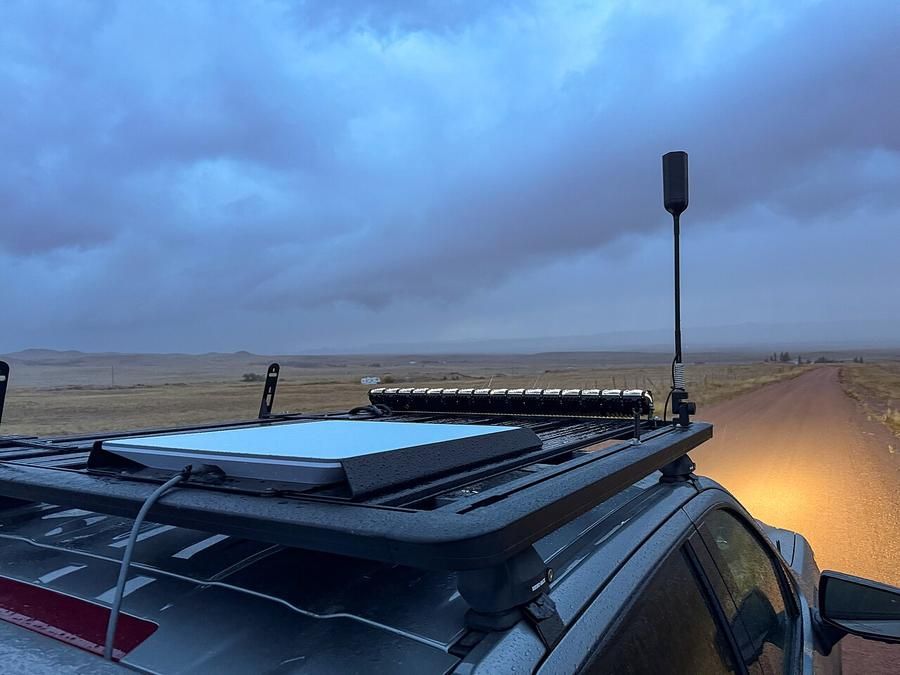
Tony Webster, via Wikimedia Commons (CC BY 2.0)
§ 7Where the Answer Is Still No
Not every country is on board, and not every approval has held.
Senegal is one example. Its government gave Starlink a five-year license to sell fixed satellite internet in a decree dated November 6, 2025. The government also planned to buy 5,000 Starlink kits at a discount for community Wi-Fi, schools and areas with no coverage, according to court papers published by the legal site Lexenegal. But Sonatel, Senegal's biggest phone company, challenged the license in court. Sonatel argued that Starlink was selling service under lighter rules than other operators face, which it called unfair competition.
On September 7, 2026, Senegal's Supreme Court suspended Starlink's license for now while the case goes on. On November 3, the court turned down the government's request to lift that suspension, the Senegalese news sites Seneweb and SeneNews reported. The court has not yet ruled on the main case. Senegal still appears on the map-based list of 30 countries.
South Africa is the biggest country missing from the list. It is also where Musk was born. News9 Africa reported that South Africa's communications regulator, known as ICASA, sent SpaceX a notice on October 14, 2026, ordering it to stop offering unauthorized service in the country.
The sticking point is a rule about ownership. South African law says a company holding this kind of telecom license must be at least 30% owned by people from historically disadvantaged groups. SpaceX has refused to give up 30% of its local business, the South African tech site TechCentral reported. Communications Minister Solly Malatsi issued a policy in December 2025 asking the regulator to consider other options. One option is letting companies invest in skills training and local businesses instead of selling shares. ICASA answered in May that it could not fully do that without a change in the law.
Now the fight has moved to court. On November 9, a business group called Sakeliga asked the high court in Pretoria to overturn ICASA's position, TechCentral reported. Sakeliga argues that the law already allows "other conditions" besides the 30% rule. ICASA has said it will oppose the case, according to TechCentral. ICASA's position is that the law "requires a minimum 30% ownership by historically disadvantaged groups" for these licenses. Sakeliga says the fixed rule shuts out foreign companies that cannot sell shares in local branches, which it says leads to "less investment, less competition and slower broadband roll-out." No ruling has been made.
§ 8Why It Matters
For many people in rural Africa, a Starlink dish can be the first fast internet connection they have ever had. That can mean a clinic sending a test result in minutes instead of days, or a student watching a lesson that used to be out of reach. Starlink has also become a business partner for some of Africa's own phone companies, rather than only a rival.
There are limits. The service costs money, and the dish costs more up front. Busy cities can fill up the network, as Nigeria has shown. And every country keeps the final say. A license can be paused by a court, as in Senegal, or held up by a long fight over ownership rules, as in South Africa.
To sum up, Starlink has gone from one African country in 2023 to 30 approved countries today, a little more than half the continent. Musk marked the milestone on Tuesday night, and the official map backs up the count. Clinics in Zambia and schools in Mozambique show what the service can do in remote places. Courts in Senegal and South Africa show that each nation still decides for itself. The satellites are already overhead everywhere. Whether people below can use them is still up to their own governments.
Watch & Listen
Hear this entry read aloud. Coming soon — the channels are not live yet.
Sources
- Elon Musk on X: "Starlink is now approved in 30 of 54 countries in Africa!" (Nov 24, 2026, 7:19 p.m. ET)
- X Freeze on X: Starlink across Africa map post (Nov 24, 2026)
- News9 Africa: South Africa bans Starlink: List of African countries using Elon Musk's satellite internet (Nov 18, 2026)
- Telesatellite: Starlink autorisé dans 30 des 54 pays d'Afrique (Nov 25, 2026, in French)
- Starlink: Availability Map
- Fortune: Gwynne Shotwell, SpaceX president (Nov 24, 2026)
- Space in Africa: Starlink Is Live in Equatorial Guinea (Aug 31, 2026)
- Technext: Starlink launches in Equatorial Guinea, its 30th African country (Aug 2026)
- Space in Africa: Starlink Narrows the Gap to Under 13,000 as Nigeria's ISP Market Fragments Further in Q2 2026 (Aug 26, 2026)
- ITWeb Africa: Zambia connects clinics via Starlink (Nov 12, 2026)
- Lusaka Times: Muchinga Health Office receives 49 Starlink devices (Nov 23, 2026)
- Paratus Zambia: Taking patient health care monitoring to new heights (Oct 29, 2026)
- 360 Mozambique: INCM Launches "Internet in Schools" Initiative in Partnership With Starlink (Oct 31, 2023)
- We Are Tech Africa: Mozambique Aims to Connect 1,000 Schools to Internet by 2029 (Oct 27, 2026)
- Zawya (Airtel Africa press release): Airtel Africa becomes the first operator in Africa to commercially launch Starlink Mobile in DRC (Aug 2026)
- Business Insider Africa: Airtel and Elon Musk's Starlink launch Africa's first satellite-to-phone service in DRC (Aug 2026)
- Lexenegal: Cour suprême, Ordonnance n° 38 du 7 septembre 2026 (in French) (Lexenegal returned HTTP 403 to an automated link check, which is likely bot blocking; the ruling text was read during reporting.)
- Seneweb: Starlink in Senegal: the Supreme Court has ruled (Nov 2026)
- SeneNews: Starlink Sénégal, la Cour suprême annonce sa décision (Nov 4, 2026, in French)
- TechCentral: Court bid could open the door to Starlink in South Africa (Nov 11, 2026)
- TechCentral: Icasa to fight Sakeliga's court bid over 30% ownership rule (Nov 2026)
Read next

More in SpaceX-Tesla
Five Directors Are Guiding Tesla-SpaceX Merger Talks, the FT Says
The Financial Times reported on Tuesday that five independent board members, three from Tesla and two from SpaceX, are now leading talks on a possible all-stock merger of Elon Musk's two biggest companies. Reuters said it could not immediately confirm the report, and neither company commented right away.

More in SpaceX-Tesla
Tesla Rolls Out FSD v15 as Italy Says Yes to Its Assisted Driving
Tesla says the new software handles dangerous moments 25 times better and redraws the road like a video game. A day earlier, Italy became the biggest European country to approve the system, with a driver still in charge.

On the front page
Sony Says GTA VI Is the Biggest Launch in PlayStation History, With More Than 39 Million Players
Sony says more than 39 million people played Grand Theft Auto VI on PlayStation 5 in just four days. The company called it the biggest game launch in PlayStation history.