SpaceX-Tesla
Tesla Rolls Out FSD v15 as Italy Says Yes to Its Assisted Driving
By Darrell Wallen
Would you prefer to listen?
Tesla says the new software handles dangerous moments 25 times better and redraws the road like a video game. A day earlier, Italy became the biggest European country to approve the system, with a driver still in charge.
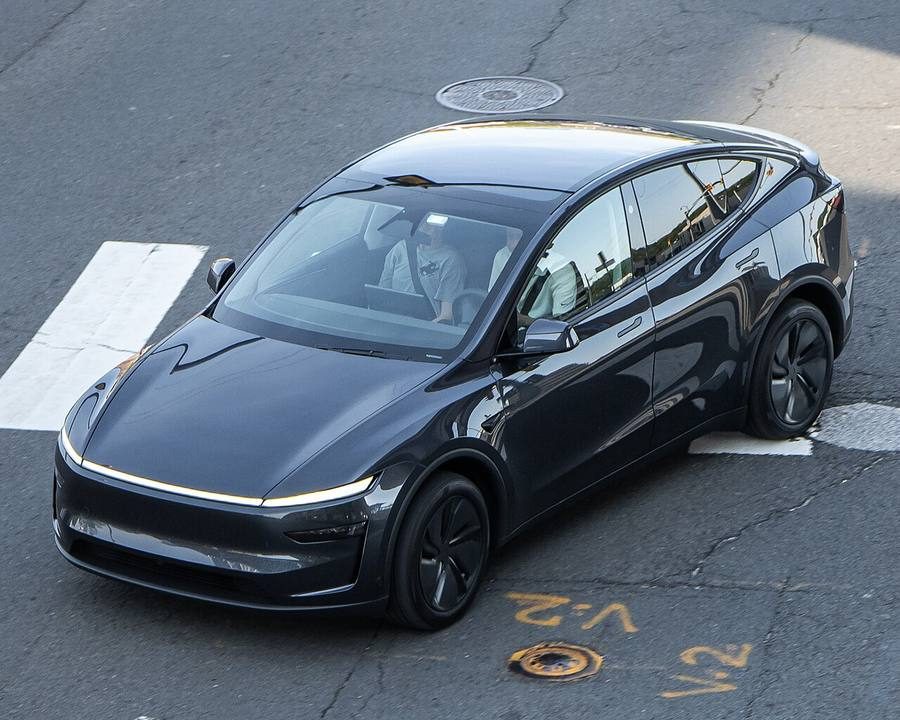
Tesla has started sending a major new version of its driver-assist software to cars. It is called Full Self-Driving (Supervised) version 15, or FSD v15 for short. Tesla says it handles dangerous moments 25 times better than before. It also adds a new screen view that redraws the street around the car almost like a video game. One day earlier, on Friday, November 20, 2026, Italy became the largest country in Europe to approve the same kind of system for its roads. Together, the two moves push Tesla's driver-assist plans forward on both sides of the Atlantic. But the driver still has to watch the road at all times, and the biggest safety claim has not yet been checked by anyone outside Tesla.
§ 1What Tesla Announced
Tesla shared the news on its official X account on Saturday afternoon, November 21. "FSD v15 now starting to roll out," the post said. Tesla said the update upgrades "every part of the end-to-end driving network." End-to-end means one large artificial intelligence program, or AI, takes in camera images and decides how to steer, brake and speed up. Older systems split those jobs among many smaller programs.
The post drew a lot of attention. By midday Sunday, X's public counter showed it had been viewed more than 7.6 million times. Elon Musk, Tesla's chief executive, called it "a banger release" in his own post.
A Tesla AI account on X then posted the full release notes, the list of changes in the update. Electrek, a news site that covers electric cars, printed them in full. The notes begin with a new "vision encoder." That is the part of the AI that turns raw camera pictures into an understanding of the scene, such as where the lanes, cars and people are. Tesla says the same vision encoder is now shared by FSD, its Robotaxi service and its Optimus humanoid robot. Tesla says it was trained on "millions of internet videos."
The notes also list many smaller fixes. Tesla says the car now spots road signs, small animals, road debris and chains better. It says the car is better at finding potholes and steering around deep standing water. It says speed control is better in school zones, in bad weather and for each driver's chosen driving style.
Some changes are about comfort. The car can now learn route choices from the whole Tesla fleet. For now, that only covers the start and end of a trip, and Tesla says later versions will cover the whole route. The car also uses a driver's own parking history to pick a parking spot. The map can show several parking choices at a destination.
Tesla added a few practical features too. FSD will now slow down for speed cameras. Not a Tesla App, a site that tracks Tesla software, reported that drivers can override the slowdown. After two overrides at the same camera, the car remembers and stops slowing there. A new Bike Rack Mode lets owners use FSD with a bike rack or a similar add-on hitched to the back.
§ 2A New Way to See the Road
The flashiest part of the update is something Tesla calls Reality View. Tesla's release notes call it "Tesla Augmented Reality." It replaces the simple gray shapes that Tesla screens used to show. Instead, the center screen shows a lifelike picture of the street, as if a camera were floating above the car.
Not a Tesla App explained how it works. The car stitches together its camera feeds. It places each piece of the picture where it belongs around the car. Generative AI, the kind of AI that can create images, then fills in any gaps. The result shows buildings, sidewalks and people. Tesla's planned path appears as a line drawn on the road ahead.
Musk described it on X. "In FSD V15, the Tesla AI computer re-renders reality with chevrons in the sky for turns like a video game," he wrote. "You can tap any point on the reality revisualizer to make your car go there." Chevrons are arrow shapes, like the ones on road signs that point around a sharp curve.
Tesla says Reality View uses less computer power than the old screen view, not more. Not a Tesla App reported that Ashok Elluswamy, a Tesla vice president who leads its AI work, made that point. Tesla's release notes say the new view replaces many separate signals with "a single end-to-end visualization using less total compute."
Owners quickly began posting videos. Some showed the view in busy city streets. Others showed it in thick fog, where the screen still drew the road clearly. Tesla itself shared a clip of a car steering around a large tree branch lying in the road. These are videos picked by owners and by Tesla, so they show the system at its best. They are not tests.
§ 3What "25 Times Better" Means
The biggest claim in the update is the number 25. Tesla's post promised "25x better handling of safety critical cases." The release notes are more exact. They say the new vision encoder improves the "critical intervention rate" by 25 times.
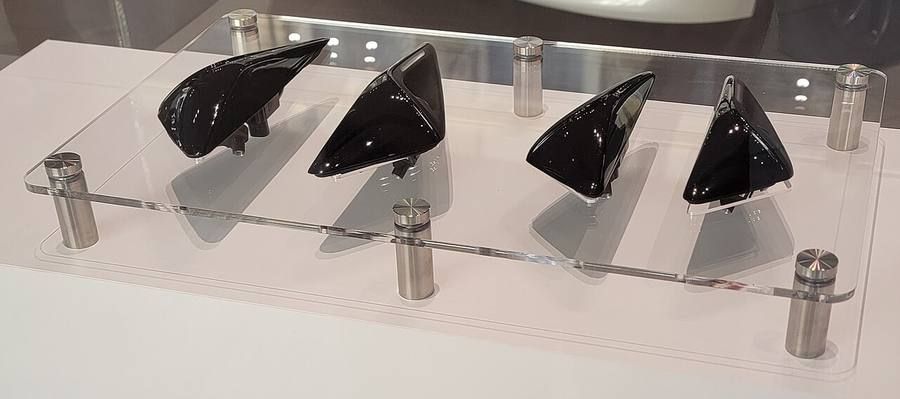

A critical intervention is when the human driver has to take over to stop something bad from happening. So Tesla is saying drivers should need to step in far less often in risky moments. That is not the same as a crash rate.
Phil Duan, whose post Tesla shared on its own account, went further. "v15 is 25x safer than v14 across the fleet," he wrote. He said the change is "hard to notice on any individual drive because most drives are already very safe." He said it only shows up across "millions of miles."
There is a catch. Tesla gave only the multiplier, not the starting number. Electrek pointed this out. It noted that Tesla "still doesn't share the actual number." Without that, no one outside the company can check the claim yet.
Electrek tried a rough estimate of its own. Its earlier data, gathered from owners, suggested version 14 could go a couple of thousand miles between critical interventions. If v15 were 25 times better, Electrek wrote, that would mean about 50,000 miles. That is Electrek's illustration, not a Tesla figure. Electrek has said Tesla would need roughly 10,000 miles between such events to run a limited service with no one behind the wheel.
Electrek also pointed out that big FSD updates have not always gone smoothly. When version 14 arrived in October 2025, Electrek reported problems such as sudden braking and speeding before later updates improved it. In April, Musk wrote that v15 "will far exceed human levels of safety, even in completely unsupervised and complex situations." Electrek noted that he had said similar things about earlier versions.
The update targets some well-known weak spots. In a September test, a Brussels nonprofit called Johanna.be found that FSD went over the limit in 55 percent of the 30-kilometer-per-hour zones it drove through, Electrek reported. That limit is about 19 miles per hour. In the United States, the National Highway Traffic Safety Administration, or NHTSA, opened an investigation in October 2025 into FSD breaking traffic laws, such as running red lights. Electrek reported that NHTSA is also reviewing a petition claiming Tesla's Robotaxis speed through active school zones.
One change goes in a different direction. Tesla says it is making driver monitoring "less strict" in its higher-speed driving profiles. Driver monitoring is the in-car camera that checks whether the driver is paying attention. Tesla also says the camera now works better when drivers wear hats or sunglasses.
§ 4Who Gets It First
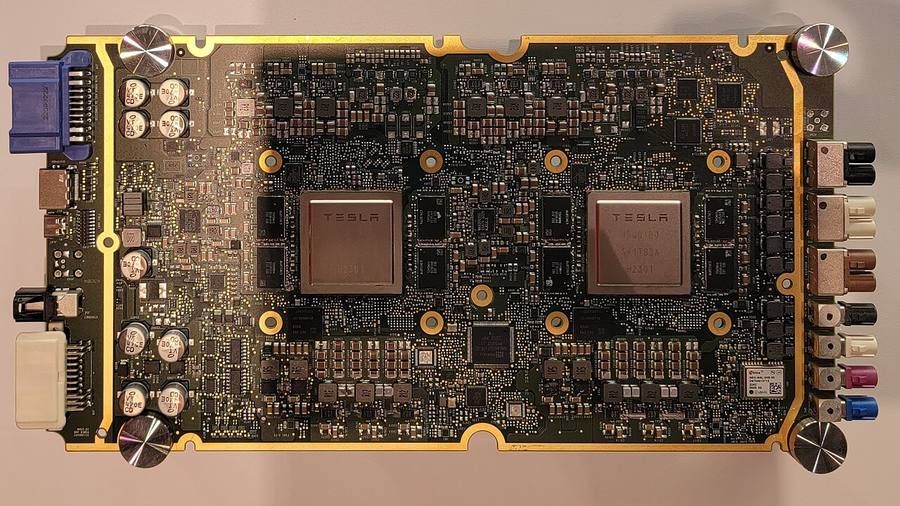
Tesla did not say which cars get v15 first. Not a Tesla App reported that the first build, v15.0.1, is arriving with software update 2026.38.6.11. The site said it appears limited, for now, to the redesigned Model Y sold in the United States and Canada since late 2025. Tesla has previously told investors that its newest car computer, called AI4 or Hardware 4, is enough to run v15.
Older cars are left out for now. Not a Tesla App reported that cars with the older Hardware 3 computer will not get v15. The site said a lighter version of v14 is expected to be the last big update for those cars until a hardware upgrade is offered.
§ 5Italy Says Yes
While v15 was rolling out in North America, Tesla won a big approval in Europe. Italy's Ministry of Infrastructure and Transport gave provisional approval to Tesla Assisted Driving. That is the name Tesla uses in Europe for FSD (Supervised). Tesla changed the name after Germany's transport ministry called "Full Self-Driving" misleading, Electrek reported.
Matteo Salvini, Italy's deputy prime minister and transport minister, announced the decision on X on Friday, November 20. He said he was "proud" of it. He wrote that the ministry acted after a careful technical review of whether the system was workable. He said Italy was moving ahead of the European Union's own approval process, which he described as still being worked out. He called it "another step forward" for innovation, "always putting the safety of citizens first."

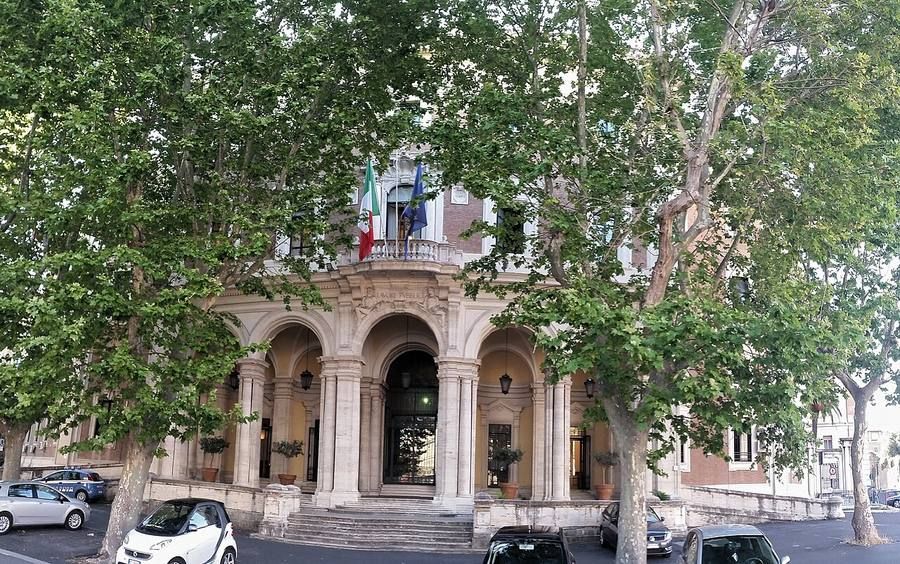
The ministry explained the details on its website, as reported by the Italian news agency ANSA. On November 19, Italy's vehicle office formally recognized a provisional approval first granted by the Netherlands. The ministry said Italy is the 12th European Union country to say yes. It is also the first of the four most populous EU countries, ahead of Germany, France and Spain.
Tesla Europe answered with a playful post. "Mamma, butta la pasta," it said, an Italian phrase that means "Mom, put the pasta on." It added, "Now approved in Italy. Rollout begins soon." The post included a video of a Tesla driving itself through Rome. By Sunday, X's counter showed it had been viewed more than 1.5 million times. Musk replied to Salvini with a short thank-you, ANSA reported.
§ 6How It Will Work in Italy
The system will arrive in Italy as a software update for cars that can run it. Tesla says it will cost 99 euros a month, or about $109, according to the French news agency AFP. Tesla has not given a firm start date.
The newspaper Corriere della Sera reported which cars qualify. They are the ones with Tesla's AI4 computer. That means nearly all Model 3 cars sold since late 2023 and all Model Y cars sold since early 2025. Only the very last versions of the Model S and Model X qualify, the paper said.
The ministry spelled out what the system can do. It can help the driver in city traffic, steering and adjusting speed to follow the planned route. It can handle an intersection, go around a traffic circle and change lanes. But the ministry was clear about who is in charge. "Even when the system performs the maneuver, the driver remains responsible for driving," it said. The driver must always keep hands on the wheel, keep eyes on the road and be ready to take over.
This is what experts call a Level 2 system. Level 2 means the car can help with steering and speed, but a human must supervise at every moment. It is not "hands-off" driving, AFP noted. Tesla's own Italian description says the system does not make the car autonomous. Autonomous means able to drive itself with no human needed.
Not everyone in Italy cheered. The newspaper La Repubblica reported criticism of the decision from the Democratic Party, Italy's main opposition party.
§ 7The Road to a Europe-Wide Decision
Italy's approval did not come out of nowhere. The Dutch vehicle agency, the RDW, approved FSD Supervised first, on April 10, 2026. It used a European rule that lets one country approve a new technology for a limited time. Other EU countries can then accept that approval one by one, while the whole EU decides. The ministry said the Dutch certificate is valid until April 10, 2029.
Ten countries accepted the Dutch approval before Italy, according to Electrek. They are Belgium, Croatia, Czechia, Denmark, Estonia, Finland, Latvia, Lithuania, Slovakia and Slovenia. Most are small. Together with the Netherlands, they hold about 70 million people. That is roughly 15 percent of the EU's population.
Italy alone has about 59 million people. So its decision nearly doubles the share of Europeans who can legally use the system, to close to 30 percent, Electrek reported.

Tesla made changes along the way. Besides the new name, it cut how far over the speed limit the system can be set, from 50 percent over to 10 percent over. On November 16, the RDW approved stricter driver monitoring. That includes keeping hands on the wheel above 130 kilometers per hour, or about 81 miles per hour. Electrek reported that this is the version Italy approved.
Now the whole EU must decide. A committee called the Technical Committee on Motor Vehicles is expected to vote in December at the earliest. To pass, the approval needs at least 15 of the 27 member countries. Those countries must also hold at least 65 percent of the EU's people.
The math is still hard for Tesla. Electrek reported that Germany said in October it would support approval after Tesla agreed to the new name and the speed cap. If Germany does, Germany plus the 12 countries that already approved would cover about 47 percent of the EU's people. That is short of 65 percent. France refused a national approval in July, and Spain has not accepted the Dutch approval, Electrek reported. AFP reported that France is still testing the system. France's transport minister warned in September that it would have to change to meet European rules. Under those rules, a driver-assist system must never be able to go over the speed limit.
§ 8What It Means
Tesla had a big weekend for its driver-assist software. In North America, FSD v15 brings a striking new screen, a long list of fixes and a bold claim of 25 times better handling in dangerous moments. That claim comes from Tesla alone, without the numbers needed to check it. In Europe, Italy opened its roads to a supervised version of the system, bringing nearly a third of the EU's people within reach. Both steps keep a human driver firmly in charge. The next tests come soon: whether owners and outside testers see the safety gains Tesla promises, and whether the rest of Europe follows Italy's lead in December.
Watch & Listen
Hear this entry read aloud. Coming soon — the channels are not live yet.
Sources
- Tesla on X: "FSD v15 now starting to roll out" (Nov 21, 2026)
- Elon Musk on X: Reality View "re-renders reality with chevrons in the sky" (Nov 21, 2026)
- Elon Musk on X: "Tesla FSD V15 is a banger release!" (Nov 21, 2026)
- Phil Duan on X (shared by @Tesla): "v15 is 25x safer than v14 across the fleet" (Nov 21, 2026)
- Tesla on X: "FSD v15 navigating around a tree in the road" (Nov 22, 2026)
- X News summary: Tesla FSD v15 cuts through thick fog in new videos (Nov 22, 2026; summary of posts, not independently confirmed)
- Electrek: Tesla launches FSD v15, targets its biggest weaknesses, from signs to potholes (Nov 21, 2026)
- Not a Tesla App: Tesla FSD v15 Rolls Out With New Reality View and 25x Better Safety (Nov 2026)
- Teslarati: Tesla Full Self-Driving v15 rollout begins: full release notes and improvements (Nov 2026)
- Matteo Salvini on X: announcement of the provisional approval (Nov 20, 2026, in Italian)
- Tesla Europe on X: "Mamma, butta la pasta. Now approved in Italy" (Nov 20, 2026)
- ANSA: Salvini, da Mit via libera a omologazione provvisoria sistema guida assistita Tesla (Nov 20–21, 2026, in Italian)
- ADI News: Guida Assistita, via libera del MIT al Sistema Tesla (ministry statement text, Nov 21, 2026, in Italian)
- Electrek: Tesla FSD approved in Italy, the first big EU market to say yes (Nov 20, 2026)
- AFP: Italy gives green light to Tesla's assisted driving system (Nov 20, 2026) (AFP returned HTTP 403 to an automated link check, which is likely bot blocking; the page loads normally in a browser.)
- Corriere della Sera: Tesla lancia la guida assistita in Italia: costa 99 euro al mese (Nov 20, 2026, in Italian)
- Il Sole 24 Ore: Guida autonoma, il Mit autorizza il sistema di Tesla (Nov 20, 2026, in Italian)
- La Repubblica: Tesla, la guida assistita avanzata arriva in Italia (Nov 20, 2026, in Italian)
- Engadget: Tesla's Assisted Driving System Gets the Green Light for Rollout in Italy (Nov 2026)
Read next
More in SpaceX-Tesla
Top Lawmaker Threatens SpaceX Funding Over Ukraine Satellite Slowdown
Representative Jim Himes, who is set to lead the House Intelligence Committee, wants SpaceX to explain who slowed Ukraine's military satellite service. Ukraine's president says the slowdown was real. Musk says the U.S. government is in charge of the system.
More in SpaceX-Tesla
SpaceX-Tesla Week in Review: A Caught Starship, Cybercabs in Dallas and a Down Week for the Stocks
SpaceX spent the week showing off its first Starship catch while dealing with debris questions, a tax fight and a big chip loan. Tesla took its driverless Cybercab to a second city and won a new approval in Italy, but its stock slipped.
On the front page
Texas Sets a Sea Turtle Record as the World's Most Endangered Sea Turtle Keeps Coming Back
The smallest and most endangered sea turtle in the world just had its best year ever on the Texas coast. Wildlife teams found 697 Kemp's ridley sea turtle nests on Texas beaches in 2026.