SpaceX-Tesla
Top Lawmaker Threatens SpaceX Funding Over Ukraine Satellite Slowdown
By Darrell Wallen
Would you prefer to listen?
Representative Jim Himes, who is set to lead the House Intelligence Committee, wants SpaceX to explain who slowed Ukraine's military satellite service. Ukraine's president says the slowdown was real. Musk says the U.S. government is in charge of the system.
A top lawmaker in Congress is putting pressure on SpaceX. On Friday, November 20, 2026, Representative Jim Himes sent Elon Musk a letter. He wants to know who slowed down a SpaceX satellite service that Ukraine's army uses in its war with Russia. Until he gets answers, Himes said, it is "difficult" for him to keep backing government money for some SpaceX systems. The same day, Ukraine's president said on TV that he told the truth about the slowdown, after Musk said he was "not always truthful." The fight matters because SpaceX is one of the U.S. military's most important partners in space.
§ 1What Himes Asked For
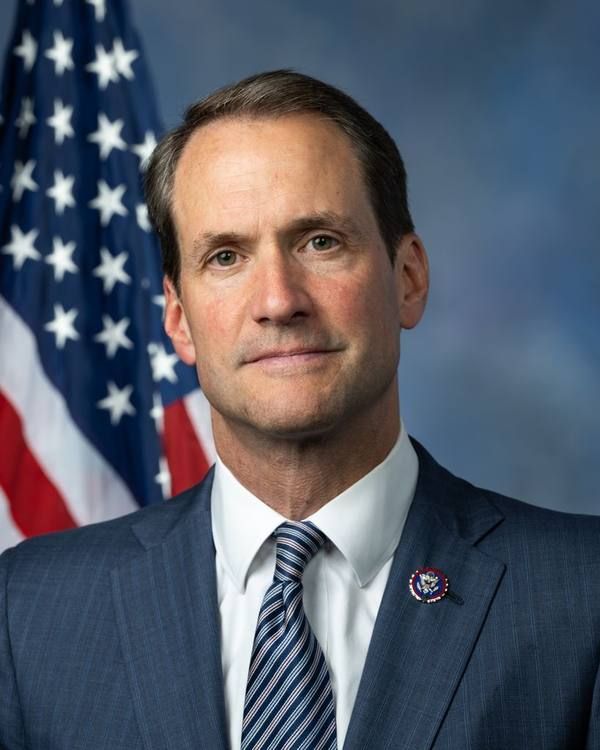
Himes is a Democrat from Connecticut. He is the top Democrat on the House Intelligence Committee. That group of lawmakers watches over America's spy agencies. Democrats won control of the House and Senate in this month's elections. So in January, Himes is expected to become the committee's chairman.
His letter went to Musk at SpaceX's home base of Starbase, Texas. Committee Democrats posted it online. In it, Himes asked senior SpaceX leaders to meet with him. He wrote that his staff had asked SpaceX for a briefing "on multiple occasions." He said they got "no substantive response," which means no real answer.
"My ask to you is straightforward," Himes wrote. He asked Musk to explain three things. What changed in the service in October 2026? Why did it change? And did SpaceX make the change on its own, or did a U.S. government official tell it to?
Himes also asked for a map of sorts. He wants a "precise technical explanation" of which parts of Ukraine get the service now and which parts do not. He wrote that he understands SpaceX has "restored some" of the service.
Then came the warning. Himes wrote that SpaceX's "potentially unilateral modification of a U.S. Government contract" calls into question "every contract the U.S. Government has with SpaceX." Unilateral means one side acting alone. "It is difficult for me to continue supporting the authorization of funding for these SpaceX developed, government-owned systems until I receive satisfactory answers," he wrote.
§ 2A Second, Secret Message
CNN first reported the story. It said Himes also sent a classified message, which means a secret one, to Jay Clayton. Clayton is the Director of National Intelligence. He leads all of America's spy agencies.
CNN said it saw part of that message. "Simply, our committee cannot authorize funds for the development of government systems that the government will not fully control," Himes wrote to Clayton, according to CNN.
Himes spoke with CNN this week, too. He said the facts could go two ways. "There is an outcome where it was actually really bad activity and contravention of a Pentagon contract," he said. Contravention means breaking the rules of a deal. "Or maybe (SpaceX) did something they were entitled to do but just did not give anybody any warning," he added. "But we are going to get to the bottom of it. There is a lot at stake here."
§ 3What Is Starshield?
To follow this story, it helps to know two names. Starlink is SpaceX's internet service from space. It uses thousands of small satellites flying low around Earth. Regular people buy it for homes, boats and RVs.
Starshield is the military version. SpaceX built it for the U.S. government and for national security work. It runs on the same group of Starlink satellites. The U.S. government pays for Starshield service and has shared some of it with Ukraine. Ars Technica reported that the rules for Ukraine's use are mostly secret.
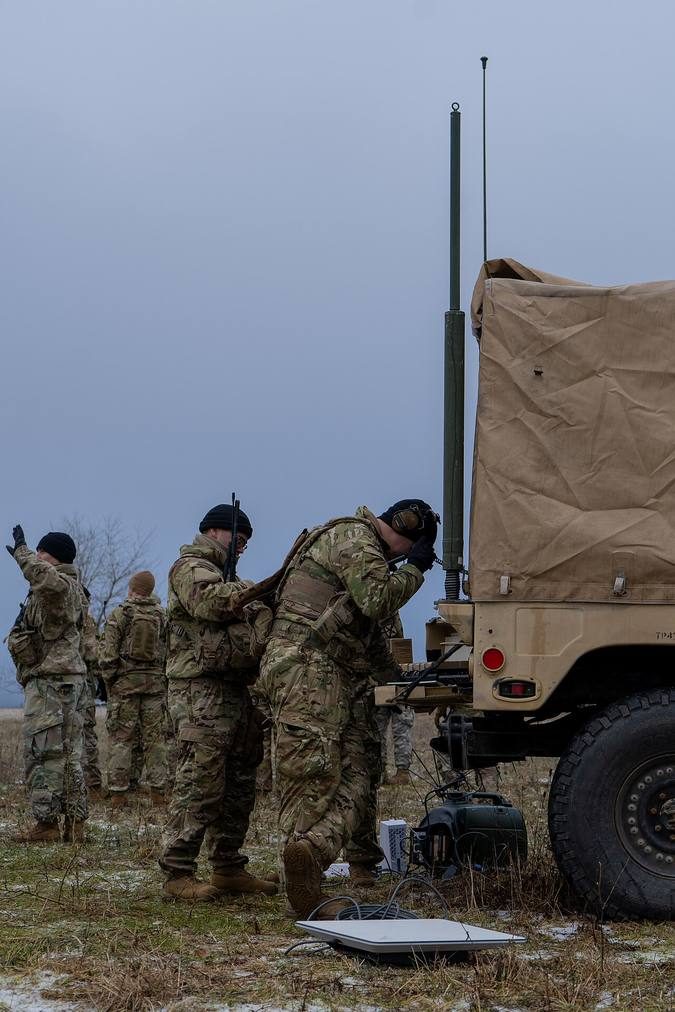
Ukraine's soldiers lean on this service every day. They use it to talk with each other and to fly drones over long distances. Drones are small aircraft with no pilot on board. Some of Ukraine's drones chase down Russian attack drones called Shaheds. Others strike Russian forces and supply lines.
Speed is the key. CBS News reported that regular Starlink stops working well on anything moving faster than 70 kilometers per hour, about 43 miles per hour. Starshield has no such cap. CBS said it works at 160 kilometers per hour, about 100 miles per hour, or more. Ukraine's fast strike drones fly at about that speed.

§ 4Two Rounds of Slowdowns
The trouble started in mid-October. On October 19, Ukrainian President Volodymyr Zelenskyy posted on social media about it. "Unfortunately, we have established that the equipment stops functioning at speeds of 130–161 kilometers per hour in various sectors of the front," he wrote, as quoted by Ars Technica. He said that was slowing supply runs and limiting drones, including ones that hunt the jet-powered Shaheds.
Ukrainian units told CBS News that some links dropped at speeds as low as 90 kilometers per hour. That made those drones useless. Dimko Zhluktenko, a drone pilot and analyst in Ukraine's army, estimated the slowdown cost Ukraine tens of millions of dollars in losses, CBS reported. That is his estimate, not an official number.
The Ukrainian news site Hromadske reported that the first round lasted from about October 14 to October 24. Then, in mid-November, Ukraine said a second round began. This time, Zelenskyy said, the limit was about 161 kilometers per hour, or 100 miles per hour. Ukrainian defense sources told Hromadske the limit applied over parts of Ukraine that Russia now holds, but not over areas Ukraine controls.
On Friday, Ukraine's top diplomat in the United States, Denys Sienik, told CNN that the new limits were still in place. He said Ukraine was talking with the Pentagon but had heard nothing back from SpaceX. CNN said the renewed limits had lasted more than a week.
§ 5Who Gave the Order? The Accounts Clash
This is the big open question. And the answers so far point in different directions.
In October, Reuters reported that the order came from inside the White House. It cited two U.S. officials and a Western official. A senior U.S. official answered that "no such request was ever made by the president," according to the Reuters report carried by CNBC.
A few days later, The Wall Street Journal reported something different. It said Musk himself ordered the slowdown. CBS News said its own sources backed that up. CBS said Musk had talked with Trump administration officials several times before the order. CBS also said it was not clear how the order was carried out.
Musk has said the opposite. "Any limits on speed or usage are decided by the US military and ultimately POTUS," he wrote on X in October. POTUS is short for President of the United States.
President Donald Trump said he wanted to know, too. "I don't know who it was, but I'd like to find out," he told reporters in October, CBS reported. Defense Secretary Pete Hegseth said the Pentagon had not changed anything. "We haven't pulled anything back," he said. He pointed to SpaceX's "terms of service," the rules users agree to, and said that is "where Starlink has the option to make those decisions."
CNN added more pieces on Friday. It said some Trump officials claimed Musk "went rogue." One U.S. official told CNN earlier, "Elon did it unilaterally." But CNN also reported that SpaceX leaders and defense officials have privately told some lawmakers the October decision first came from the White House. That came from one source familiar with those talks. A Pentagon official told CNN that Hegseth had "no idea it was happening."
So, to sum up what is confirmed: the slowdowns happened, Ukraine says they hurt, and nobody has publicly owned the decision. Who gave the order is still not confirmed.
§ 6Musk's Side of the Story
Musk spoke about this on Wednesday, November 18, at the New York Times DealBook Summit. He has long said Starlink and Starshield are two different things.
"From the beginning, I've said that Starlink is a civilian system," Musk told host Andrew Ross Sorkin, as reported by Engadget. "It is not meant to be used for offensive drone strikes that kill people." For that, he said, Ukraine should use Starshield, "which is a separate system that is controlled by the US government. But do not ask me as a private individual to make kill decisions."
Sorkin pointed out that Zelenskyy was talking about Starshield, not Starlink. "That's false," Musk said. "I don't want to blow your mind, but Zelensky is not always truthful." Musk said what Zelenskyy really wants is to use Starlink "for offensive military operations."
Musk also said Ukraine's military broke Starlink's terms of service by using it for attack drone strikes, Hromadske reported, citing CNBC. Ukraine has denied that. In late October, a Ukrainian official said earlier limits on the system made such strikes from Starlink "physically impossible," Engadget reported.
SpaceX, the company, has said little in public. When reporters asked about Ukraine's claims of failed missions, SpaceX answered, "That is false. There have been no changes," the Ukrainian outlet Media Visnyk reported. CNN and Newsweek both said they asked SpaceX for comment on the Himes letter. Neither had a reply in its report.

§ 7Zelenskyy Answers Back
Zelenskyy fired back in an interview with CNN that aired on Friday, November 20. Hromadske reported his words.
"When I said that Starshield doesn't work, it was 100% truth," he said. "So I'm not playing games with such things. We have very clear evidence from our soldiers." He asked, "What is the reason for me to say it doesn't work?"
He also aimed a line at powerful people in America. "We have to be very serious, not only very rich," he said. "These guys are very powerful in the United States. They have to know that not money decides everything."
Zelenskyy said service came back after he talked with U.S. Secretary of State Marco Rubio. He said he did not know who fixed it. The reports do not make clear whether that fix covered every area, since Ukraine's diplomat said the same day that limits over Russian-held land were still on. Zelenskyy also thanked SpaceX, the U.S. government and European partners for providing and paying for the service. "But if it doesn't work, it doesn't work," he said.
Some senior Ukrainian officials suspect the limits were meant to push Ukraine during peace talks, the Financial Times reported. That suspicion has not been confirmed.
§ 8Not Just a Democratic Worry
Republicans have raised alarms, too. In October, Representative Mike Turner of Ohio, a Republican on the House Armed Services Committee, called for an investigation. "People's lives are at risk, and lives are lost over these things," Turner told CBS's Face the Nation, according to Newsweek.
Republican Senator Kevin Cramer of North Dakota also backed an investigation. But Newsweek reported that he warned the problem might have been a technical glitch, not a choice someone made on purpose.
A group of nine senators from both parties asked the Pentagon's inspector general, its internal watchdog, to look into it. CNN reported that the watchdog said no and sent lawmakers to the military branches instead. On November 13, Democratic Senators Jeanne Shaheen of New Hampshire and Chris Coons of Delaware asked Musk to save all records about the limits, going back to September 1.
§ 9What Could Congress Actually Do?
CNN explained the main tool Himes could use. It is called "ring fencing." Every year, Congress passes a bill that sets rules for the spy agencies' money. Ring fencing lets the committee lock up money for certain projects in that bill until conditions are met. Himes could also work with the lawmakers who write spending bills to block or move money away from SpaceX systems.
The stakes are large. Ars Technica noted that the U.S. Space Force gave SpaceX a $2.29 billion contract earlier this year. That deal is to build a space data network for Golden Dome, the planned U.S. missile defense shield. SpaceX also builds spy satellites for the National Reconnaissance Office, the agency that runs America's spy satellites. Ars said those programs could face extra scrutiny.
But there are limits to that threat. Newsweek reported that no funding limits have been put in place. It also said it is not clear Himes would have enough votes to do it. Ars Technica wrote that it "seems unlikely" the government would cut ties with SpaceX, since no other U.S. company can match what it offers. CNN made a similar point. Holding back money for SpaceX systems could also hurt tools that America itself needs for defense.

§ 10What Comes Next
Several things are still unknown. SpaceX has not publicly said whether it will meet with Himes. The White House pointed Newsweek to Trump's earlier comments. Ukraine says it is still waiting for a clear answer.
The bigger fight may start in January. That is when Democrats take control of Congress and Himes is expected to take over the Intelligence Committee. CNN reported that looking into Musk's control over systems like Starshield will be one of his top goals. CNN also said the Senate Foreign Relations Committee plans its own investigation.
Here is where things stand. Ukraine says a SpaceX satellite service it counts on was slowed twice this fall, and that the second slowdown is still going on over Russian-held land. Musk says the U.S. government controls Starshield, and he calls Ukraine's account false. U.S. officials have blamed both Musk and the White House, and no one has proven who gave the order. Now a powerful lawmaker is tying SpaceX's future government money to getting that answer. What SpaceX says next could shape how far Congress trusts its biggest partner in space.
Watch & Listen
Hear this entry read aloud. Coming soon — the channels are not live yet.
Sources
- Letter from Rep. James A. Himes to Elon Musk, November 20, 2026 (House Permanent Select Committee on Intelligence, Democrats)
- CNN via KESQ: Top Democrat to Trump intel chief: No funding for Musk's SpaceX without answers on Ukraine Starshield slowdown (Nov 20, 2026)
- Ars Technica: SpaceX's Starshield troubles in Ukraine could threaten its broader military business (Nov 2026)
- Newsweek: Top Democrat Threatens SpaceX Funding Over Ukraine Satellite Dispute (Nov 2026)
- Quartz: Himes may withhold SpaceX funding over Ukraine Starshield slowdown (Nov 20, 2026)
- Hromadske: Zelenskyy responds to Musk over Starshield restrictions (Nov 21, 2026)
- Hromadske: Musk accuses Zelenskyy of lying over Starshield limits (Nov 2026)
- Engadget: Elon Musk accuses Ukraine of being 'untruthful' about Starshield disruptions (Nov 2026)
- Media Visnyk: Musk accuses Zelensky of lying about Starshield restrictions (Nov 2026)
- CBS News: Musk chose to restrict Ukraine's access to SpaceX satellite network, sources say (Oct 21, 2026)
- CNBC (Reuters): Order to limit Starshield for Ukraine came from inside White House, Reuters reports (Oct 16, 2026)
- Telecom Gazette: Musk challenges Zelenskyy's account of 161 km/h Starshield limits (Nov 2026)
Read next

More in SpaceX-Tesla
Tesla Rolls Out FSD v15 as Italy Says Yes to Its Assisted Driving
Tesla says the new software handles dangerous moments 25 times better and redraws the road like a video game. A day earlier, Italy became the biggest European country to approve the system, with a driver still in charge.
More in SpaceX-Tesla
SpaceX-Tesla Week in Review: A Caught Starship, Cybercabs in Dallas and a Down Week for the Stocks
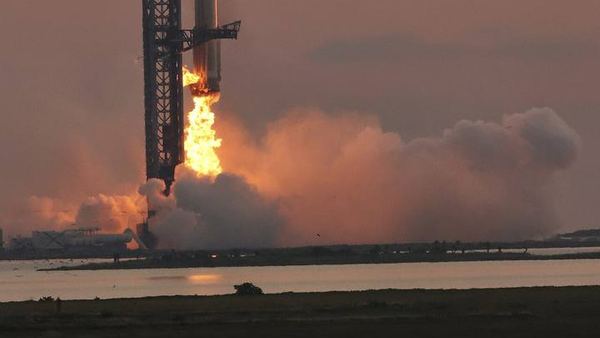
SpaceX spent the week showing off its first Starship catch while dealing with debris questions, a tax fight and a big chip loan. Tesla took its driverless Cybercab to a second city and won a new approval in Italy, but its stock slipped.
On the front page
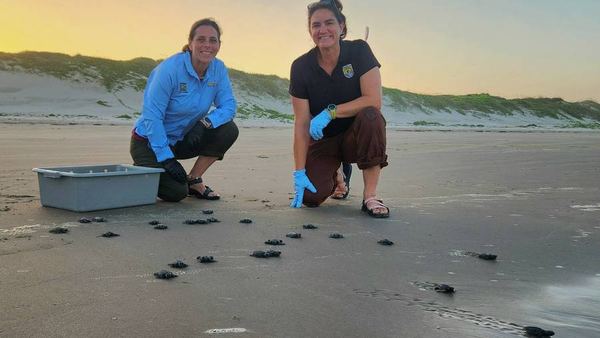
Texas Sets a Sea Turtle Record as the World's Most Endangered Sea Turtle Keeps Coming Back
The smallest and most endangered sea turtle in the world just had its best year ever on the Texas coast. Wildlife teams found 697 Kemp's ridley sea turtle nests on Texas beaches in 2026.