Science
Texas Sets a Sea Turtle Record as the World's Most Endangered Sea Turtle Keeps Coming Back
By Darrell Wallen
Would you prefer to listen?
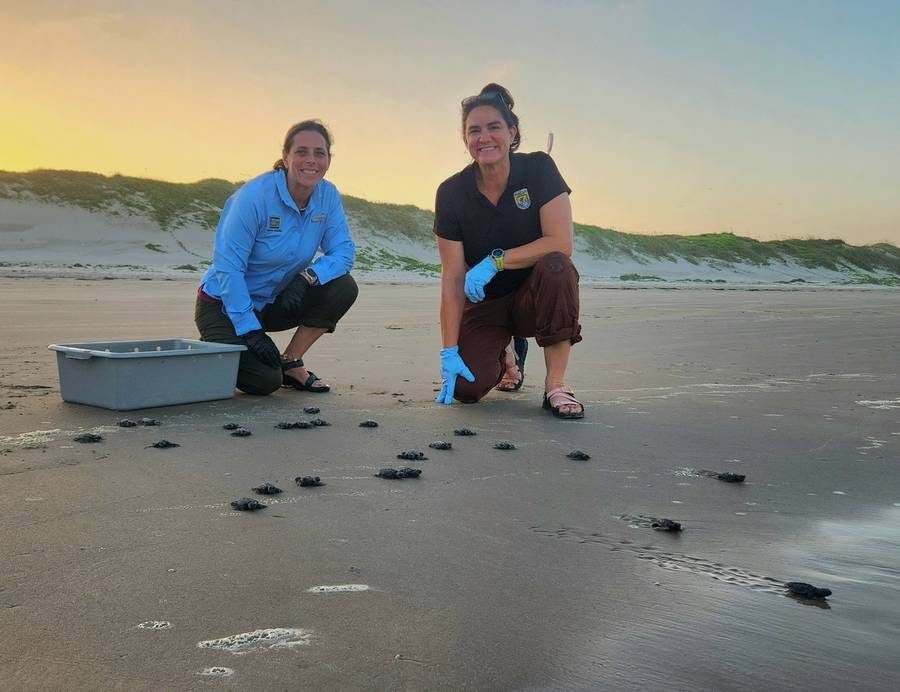
The smallest and most endangered sea turtle in the world just had its best year ever on the Texas coast. Wildlife teams found 697 Kemp's ridley sea turtle nests on Texas beaches in 2026. That is 55 percent more than the 449 nests found in 2025, which was itself a record. Forty-eight years ago, people in Texas were lucky to find one nest every few years.
The U.S. Fish and Wildlife Service and the National Park Service shared the count in a news release on November 9, 2026. The release came from Padre Island National Seashore, a national park on a long barrier island near Corpus Christi. Most of the nests were found there and on nearby beaches.
§ 1A Big Number for a Small Turtle
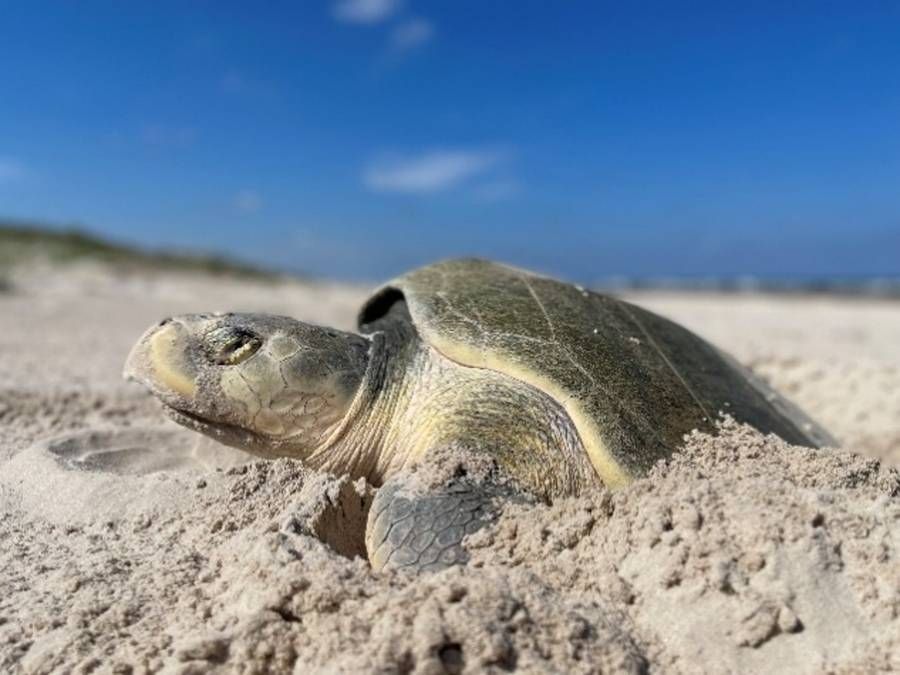
Kemp's ridleys are not big turtles. NOAA Fisheries says adults are about 2 feet long. They weigh about 70 to 100 pounds. That is about the size of a large dog, which is small for a sea turtle.
They are olive green on top and yellow underneath. The National Park Service says no other sea turtle has a shell as round.
They also do something no other sea turtle does. They nest in the daytime. Most sea turtles crawl ashore at night. The Park Service says daytime nesting may make it harder for night hunters, like raccoons, to follow a turtle's tracks to her eggs.
A mother turtle digs a hole in the sand with her back flippers. She lays about 100 eggs, covers them up and heads back to the sea. The eggs take six to eight weeks to hatch. A female can nest one to four times in a season, and she usually comes back every one to three years.
So 697 nests does not mean 697 turtles, since some mothers nest more than once. But at about 100 eggs a nest, that is tens of thousands of eggs on Texas sand in one summer.
§ 2Where the Nests Were Found
The Turtle Island Restoration Network posts a running nest count during the season. It uses numbers from Dr. Donna Shaver, the Texas nesting coordinator. The group's 2026 table shows how the nests spread out along the coast.
North Padre Island and Padre Island National Seashore led the state with 370 nests. South Padre Island had 208. Boca Chica Beach, at the southern tip of Texas, had 53, and Mustang Island had 40. A few turned up as far north as Galveston Island.
Most big beaches did better than in 2025. Padre Island and the national seashore went from 250 nests to 370. South Padre Island went from 122 to 208.
§ 3The Turtles That Nearly Vanished
To see why these numbers matter, you have to go back to 1947.
That year, a pilot flew over a beach called Rancho Nuevo, in the Mexican state of Tamaulipas. He had heard stories about huge numbers of turtles there, and he brought a movie camera. He landed and filmed what he saw. The National Park Service says scientists found the film in the 1960s. They studied it and estimated that about 40,000 female Kemp's ridleys came ashore on that beach in one day.
This kind of mass nesting is called an arribada. That is Spanish for "arrival." Thousands of females gather just offshore and then crawl onto the beach together. Scientists think it is a safety-in-numbers plan. There are simply too many eggs, and later too many babies, for crabs, birds and fish to eat them all.
Then the turtles almost disappeared. People dug up the eggs and killed nesting mothers. Many turtles drowned in fishing nets. The U.S. Fish and Wildlife Service says that by 1985, only 702 nests were found at Rancho Nuevo in a whole season. The Park Service says fewer than 300 females were nesting in Mexico that year. The Fish and Wildlife Service called it a 99.4 percent drop.
The United States listed the Kemp's ridley as endangered in 1970. Mexico had started protecting it in the 1960s, but the numbers kept falling. By the 1970s, almost all the nesting that was left took place on one beach, Rancho Nuevo. One bad storm there could have wiped out most of the species.
§ 4The 1978 Plan
In 1978, the United States joined Mexico in a bigger effort. Five agencies worked together. They were the U.S. Fish and Wildlife Service, the National Park Service, the National Marine Fisheries Service, the Texas Parks and Wildlife Department and Mexico's Instituto Nacional de Pesca, the country's fisheries institute.
One goal was to start a second nesting colony, a backup in case something went wrong at Rancho Nuevo. They picked Padre Island National Seashore. The Fish and Wildlife Service says the site was chosen because it is federally protected, its beaches are not built up, and it sits inside the turtle's natural nesting range.
The Park Service calls Padre Island the longest stretch of undeveloped barrier island beach in the United States. Kemp's ridley nesting was first recorded in both Texas and Mexico in the 1940s.
From 1978 to 1988, workers collected some of the eggs laid at Rancho Nuevo. They shipped them to Padre Island. There, the eggs hatched, and the babies were let go on the beach. The idea was for the hatchlings to "imprint," or learn the feel of that beach, so they would come back there to nest as grown-ups.
After a short swim, the babies were scooped back up. They went to a lab in Galveston and were raised until they were big enough to be tagged and set free. Scientists call this head-starting. It gives young turtles a safer first year of life.
§ 5The Long Wait
Then everyone waited. The Park Service says Kemp's ridleys start nesting at 10 to 16 years old. Every season, Park Service staff searched the beaches for the tagged turtles. In 1996, they found one. The first tagged Kemp's ridley had come back to Padre Island to nest. The Fish and Wildlife Service says only six nests were found in all of Texas that year.
The federal news release says this year's nesting turtles trace their family line back, in part, to those first turtles raised under the program.
"What began as a conservation emergency has become a remarkable success story," said Dr. Donna J. Shaver. She is Chief of the Division of Sea Turtle Science and Recovery at Padre Island National Seashore. "On the Texas coast, growing from about one nest every three years in 1978 to nearly 700 nests in 2026 would not have been possible without decades of partnership among thousands of people and organizations across the U.S. and Mexico."
§ 6The Escape Hatch in the Net
Saving eggs was only half the job. The other half was out at sea, where turtles kept drowning in shrimp nets.
In 1989, the United States began requiring shrimp boats and some other commercial fisheries to use turtle excluder devices. These are metal grids with a flap, fitted inside the neck of a trawl net. Shrimp slip between the bars and into the back of the net. A turtle bumps into the grid and swims out through the flap.
The Fish and Wildlife Service called these devices "a game changer" for Kemp's ridleys and other sea turtles in the Gulf of America, long known as the Gulf of Mexico. Texas Parks and Wildlife also pointed to the devices as one reason nests are rising, according to an AccuWeather report on the 2026 count.
The numbers turned around in the early 1990s. The Park Service says nesting grew 12 to 19 percent a year in Texas and Mexico starting in 1997. It peaked at nearly 20,000 nests in 2009.
§ 7Not a Straight Line
The comeback has had bumps, and scientists are open about that.
In 2010, the rapid growth suddenly stopped. NOAA Fisheries says the number of nests has gone up and down since then. The Park Service lists lower counts in 2010, 2013, 2014 and 2015, while 2011 and 2012 came in close to 2009 levels. The agency says scientists are still working to learn why the climb stalled. At least one explanation has been published, but no single answer has been settled.
Texas nesting has also tended to come in surges. In 2023, the Fish and Wildlife Service said surges generally showed up about every three years.
In 2017, Texas set a record of 353 nests. In 2025, the count reached 449, a new record. Then 2026 brought 697. Two big years in a row is a strong sign. But biologists will want many more seasons of data before they say the long-term trend has changed for good.
The species is still listed as endangered under the U.S. Endangered Species Act. NOAA Fisheries says getting caught in fishing gear is still the biggest threat. Other threats on its list include loss of nesting beaches, pollution and trash in the ocean, boat strikes, and predators that eat eggs and babies.
§ 8A Look at Mexico
Texas is still the backup. The main nesting grounds are in Mexico. The Park Service says about 95 percent of all Kemp's ridley nesting happens in Tamaulipas.
Mexico's National Commission of Natural Protected Areas, known as Conanp, reported a strong start to its own 2026 season. According to a Mexican news report on the agency's statement, about 7,000 turtles came ashore at Rancho Nuevo in about six hours on April 19, 2026. Workers counted close to 7,000 nests there. They moved 981 into fenced, guarded hatching pens and protected about 6,000 where they lay.
That one afternoon is nowhere near the 40,000 turtles caught on film in 1947. But it is a long way from the fewer than 300 nesting females of 1985.
§ 9Arribadas Return to Texas
There is a new hint of the old behavior in Texas, too.
In a July 30, 2026 story, the Fish and Wildlife Service said Kemp's ridleys "are beginning to show signs" of arribada nesting again in Texas. It did not say how large the groups were. The agency said these "early signs of renewed arribada-like nesting offer additional hope."
§ 10The Beach Next to the Rockets
Boca Chica Beach sits next to Starbase, the Texas city that is home to SpaceX's Starship rocket program. It had its own record.
AccuWeather reported that the City of Starbase called 2026 a record nesting season on Boca Chica Beach. The rescue group Sea Turtle Inc. protected 58 nests there from April to August, up from 16 the year before. Of those, 54 were Kemp's ridley nests.
"Thank you to their team for protecting these nests all season, to SpaceX for supporting their work and to everyone who helped keep nesting turtles and hatchlings safe on our beach," the city wrote on Facebook, according to AccuWeather.
The same report noted that SpaceX says it protects wildlife through science-based planning with federal agencies, and that bird groups have raised concerns about launches and nearby nesting birds.
§ 11Boys, Girls and Warm Sand
Sea turtles have an unusual way of becoming boys or girls. The temperature of the sand decides it. The Park Service explains that warmer eggs tend to hatch as females and cooler eggs as males. Even in one nest, the warmer eggs in the middle are more likely to become females, and the cooler eggs on the edges are more likely to become males.
The Fish and Wildlife Service lists the dangers that young turtles face on the beach today as predators, extreme heat, cars on the sand and high tides that can flood nests. That is one big reason trained workers move many eggs to protected hatching areas.
§ 12How the Eggs Are Saved
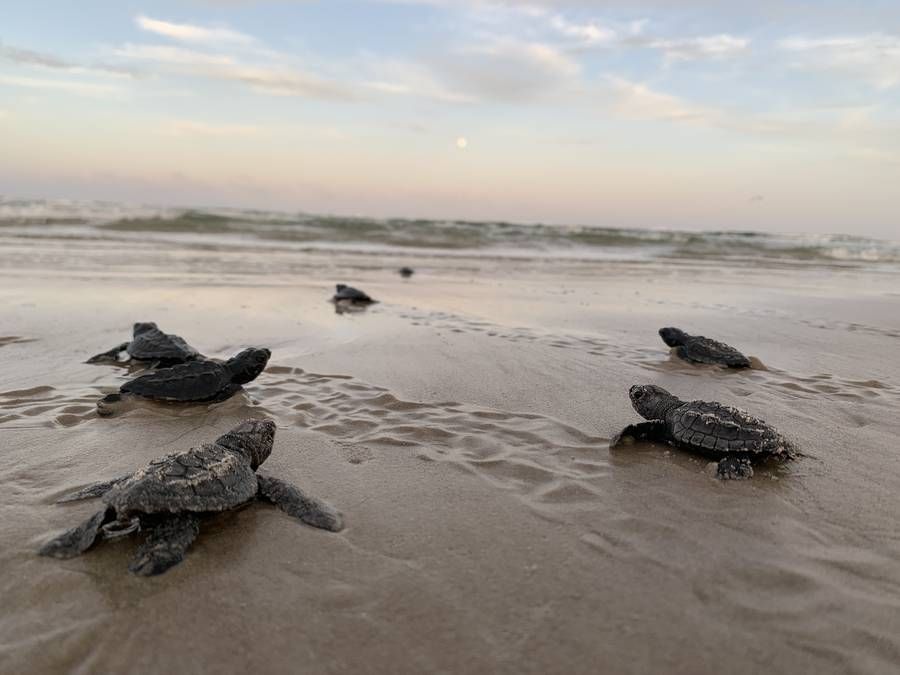
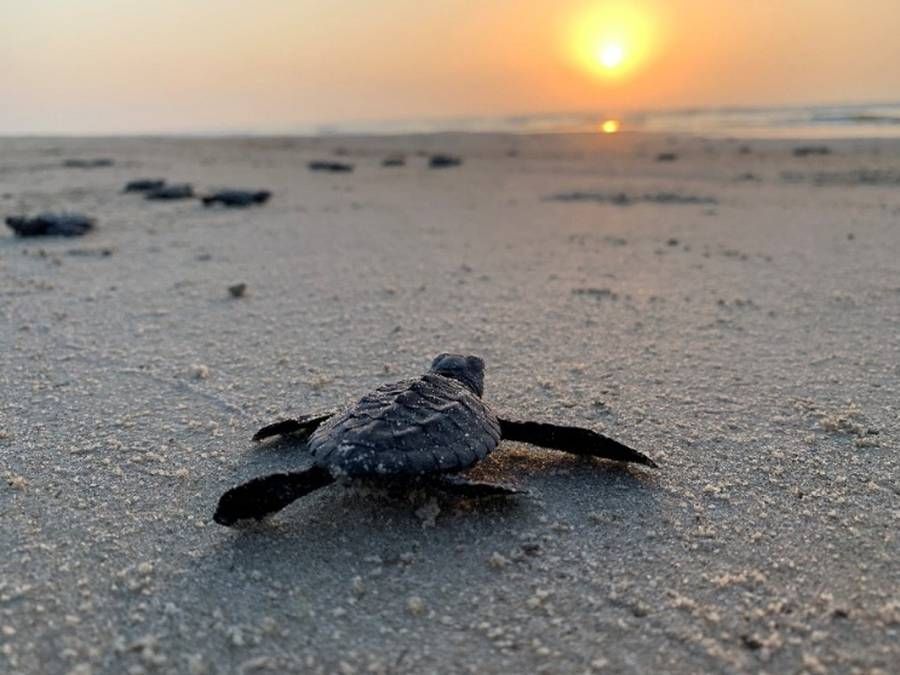
In Texas, teams patrol hundreds of miles of beach each nesting season. When they find a nest, trained staff move the eggs to protected areas and keep watch over them. When the babies hatch, they are released onto the beach and head into the Gulf.
Padre Island National Seashore invites the public to watch some of these releases when it is safe for the turtles. The Fish and Wildlife Service, citing the park, says these are the park's most popular programs. Hundreds to more than 1,000 people come to each public release.
In 2026, the Fish and Wildlife Service's Coastal Program sent extra staff for the busiest hatching weeks, joined by Texas Parks and Wildlife and the Texas General Land Office.
§ 13Thousands of Helpers
The people counting the nests say the comeback belongs to a crowd, not just to scientists.
"The Kemp's ridley's continued progress reflects the commitment of Texans who care deeply about our coast," said Alicia Walker. She is a Texas Parks and Wildlife Department biologist and state coordinator of the Sea Turtle Stranding and Salvage Network. "From practicing responsible fishing techniques to protecting vital beaches and nearshore habitats, Texans play a direct role in protecting these turtles."
Cynthia Rubio, a U.S. Fish and Wildlife Service biologist, said the agencies are "thrilled to see the community become more and more engaged in conserving these treasures of the Texas coast." She added, "Seeing a nesting turtle is an amazing life experience, and by reporting them you help ensure the species' future."
Texans have taken the turtle to heart. The Park Service notes that the legislature named it the Texas State Turtle, and coastal towns have painted it on water towers and murals.
§ 14What Beachgoers Can Do
Nesting season on the Texas coast runs from March to September. Officials ask people to drive slowly on beaches and stay at least 100 feet away from any turtle. They ask anyone who sees a nesting, stranded or hurt sea turtle, or a nest or turtle tracks, to call 1-866-TURTLE-5.
The help goes on in winter. Young Kemp's ridleys can get "cold-stunned," too weak to swim, when water drops below about 50 degrees Fahrenheit (10 degrees Celsius). The Fish and Wildlife Service says most turn up on Cape Cod in Massachusetts, and each winter it helps move hundreds to rescue centers to recover.
§ 15Looking Ahead
The goal is spelled out in the Binational Recovery Plan for the Kemp's Ridley Sea Turtle, written by the United States and Mexico. The plan's aim is to bring the species back far enough that it no longer needs Endangered Species Act protection.
The 2026 news release says biologists are "optimistic about the trajectory of the species" and its progress toward those goals.
In 2023, Mary Kay Skoruppa, then the Fish and Wildlife Service's sea turtle coordinator for Texas, summed up the effort. "Saving the Kemp's ridley sea turtle is one of the greatest ESA success stories of our time," she said. "While continued efforts are needed to fully recover the species, actions undertaken for the species in the last 50 years are paying off."
Here is what the record means. A turtle that was down to a few hundred nesting mothers in 1985 just laid 697 nests on Texas beaches, the most ever found there. It happened because two countries, five agencies and thousands of volunteers, fishermen and beachgoers kept at it for nearly half a century. The work is not finished, and the numbers may dip again. But this year, the smallest sea turtle in the world has something to be thankful for, and so do the people who refused to let it disappear.
Watch & Listen
Hear this entry read aloud. Coming soon — the channels are not live yet.
Sources
- 1. National Park Service, Padre Island National Seashore. "Kemp's Ridley Sea Turtle Nests Increase Across Texas Beaches in 2026." News release, November 9, 2026. nps.gov/pais/learn/news/kemps-ridley-sea-turtle-nests-2026.htm
- 2. National Park Service, Padre Island National Seashore. "Kemp's ridley sea turtles." nps.gov/pais/learn/nature/kridley.htm
- 3. U.S. Fish and Wildlife Service. "Renewed Hope for Kemp's Ridley Sea Turtles." By Adriana Leiva, July 30, 2026. fws.gov/story/2026-07/renewed-hope-kemps-ridley-sea-turtles
- 4. U.S. Fish and Wildlife Service. "Saving the Kemp's Ridley Sea Turtle." By Aubry Buzek, May 12, 2023. fws.gov/story/2023-05/saving-kemps-ridley-sea-turtle
- 5. NOAA Fisheries. "Kemp's Ridley Turtle" species page. fisheries.noaa.gov/species/kemps-ridley-turtle
- 6. Turtle Island Restoration Network. "Daily Sea Turtle Nest Counts on the Texas Coast" (preliminary counts courtesy of Dr. Donna Shaver). seaturtles.org/turtle-count-texas-coast/
- 7. AccuWeather. "Texas beaches see 55% jump in endangered sea turtle nests." By Chloe Bland, November 11, 2026. accuweather.com/en/weather-news/texas-beaches-see-55-jump-in-…
- 8. Peninsular México. "Llega primera arribada de tortuga lora al Santuario Playa Rancho Nuevo" (report on a Conanp statement), April 23, 2026. peninsularmx.com/llega-primera-arribada-de-tortuga-lora-al-sa…
- 9. U.S. Fish and Wildlife Service. Binational Recovery Plan for the Kemp's Ridley Sea Turtle (document page). fws.gov/node/68810
- 10. U.S. Fish and Wildlife Service. Action plan for restoration and enhancement of Atlantic ridley turtle populations, Rancho Nuevo and Padre Island National Seashore (document page). fws.gov/media/action-plan-restoration-enhancement-atlantic-ri…
Read next

More in Science
A Blood Test for CTE? Two New Studies Find a Warning Sign in the Blood
For the first time, scientists have found a sign of the brain disease CTE in blood taken from people while they were still alive.

More in Science
Scientists Find Giant Viruses Hiding in the Guts of Millions of People
Scientists have found a whole new group of giant viruses living in the human gut. The viruses are so common that the study projects they sit inside the digestive systems of roughly 180 million people around the world.

On the front page
Tesla Rolls Out FSD v15 as Italy Says Yes to Its Assisted Driving
Tesla says the new software handles dangerous moments 25 times better and redraws the road like a video game. A day earlier, Italy became the biggest European country to approve the system, with a driver still in charge.