UAP
Carl Sagan's Old House Will Watch the Sky: Galileo Project Plans a Radar-Guided UAP Observatory in Ithaca
By Darrell Wallen
Would you prefer to listen?
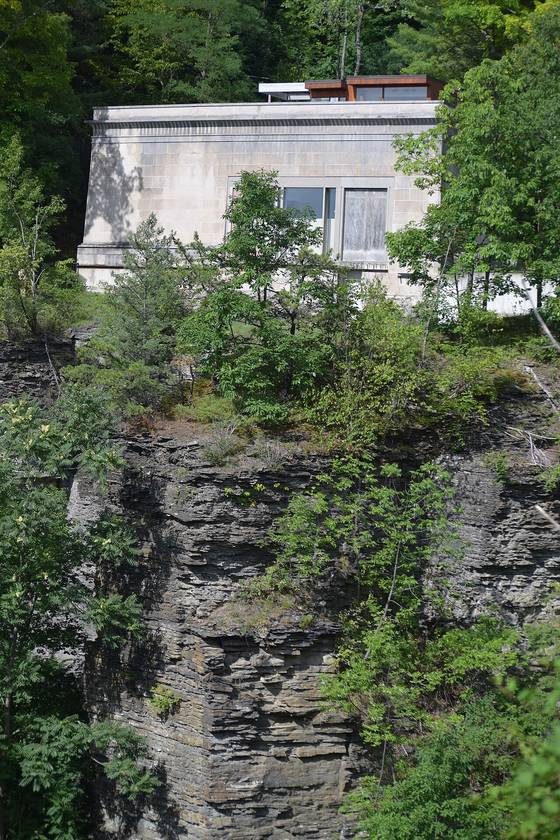
The cliffside house where astronomer Carl Sagan once lived and worked is getting a new job. Harvard astrophysicist Avi Loeb and businessman Adam Weitsman plan to turn it into an observatory that hunts for unexplained objects in the sky. The plan pairs a radar system with a large telescope that can take sharp pictures and read the light from whatever it finds. Construction is set to start this month, and the team says it should take about a year.
§ 1The Announcement
The news came in a press release dated November 5, 2026. Loeb posted the full release on his blog on November 10. Local outlets in central New York, including Syracuse.com, 607 News Now and Daily Ithaca, reported it over the next few days.
The observatory will sit at 900 Stewart Avenue in Ithaca, New York. That is the former home and workspace of Sagan and his wife and collaborator, Ann Druyan. Weitsman bought the property in 2024 and is paying for the project.
It will be the fourth observatory run by the Galileo Project, which Loeb leads. The project uses cameras, sensors and software to study unidentified anomalous phenomena, or UAP. That is the government's term for what most people call UFOs.
This is a plan, not a discovery. Nothing has been built or seen yet. But it is a new kind of tool for a question that has puzzled people for a very long time.
§ 2A Tomb on a Cliff
The building itself is part of the story. It was finished in 1926 as a meeting house for Sphinx Head, a secret society at Cornell University. It was built in the Egyptian Revival style, made to look like an ancient tomb, according to The Ithaca Voice.
The house sits on a ledge partway down a cliff. It looks out over the Fall Creek gorge near Ithaca Falls. From across the gorge, it looks a little like a stone box set into the rock.
The society sold the building in 1969 to its next-door neighbor, physicist Robert Wilson. He used it as a sculpture studio. Then architect and Cornell professor Steven Mensch owned it for a short time.
Sagan and Druyan bought it in 1981, as Sagan was finishing his TV series "Cosmos." They used it as a home and a study. They had it renovated in the early 1990s. After Sagan died in 1996, Druyan kept the property for nearly three decades.
§ 3A Businessman's Long Wish
On November 26, 2024, Druyan sold the house for $2 million, The Ithaca Voice reported. That was far above its assessed value of $585,000. The buyer was a company tied to Weitsman, who runs Upstate Shredding–Weitsman Recycling.
Weitsman told The Ithaca Voice in 2024 that he had long told local real estate brokers he would buy it if Druyan ever wanted to sell. When she was ready, her broker called him, and they made the deal over the phone. He said Druyan planned to give him something of Carl's to keep in the house. "Hopefully some of his intelligence can pass on to me," he said.
Now he says the observatory is the meaningful use he hoped to find. "When I purchased this property, I wanted to do something meaningful that would honor Carl Sagan and his incredible legacy," Weitsman said, as quoted by Syracuse.com. "He inspired generations to look at the universe with curiosity and wonder."
In the press release, he said he could not "think of a better way to celebrate Sagan's spirit of curiosity and discovery than to make new discoveries possible."
§ 4Sagan and the UFO Question
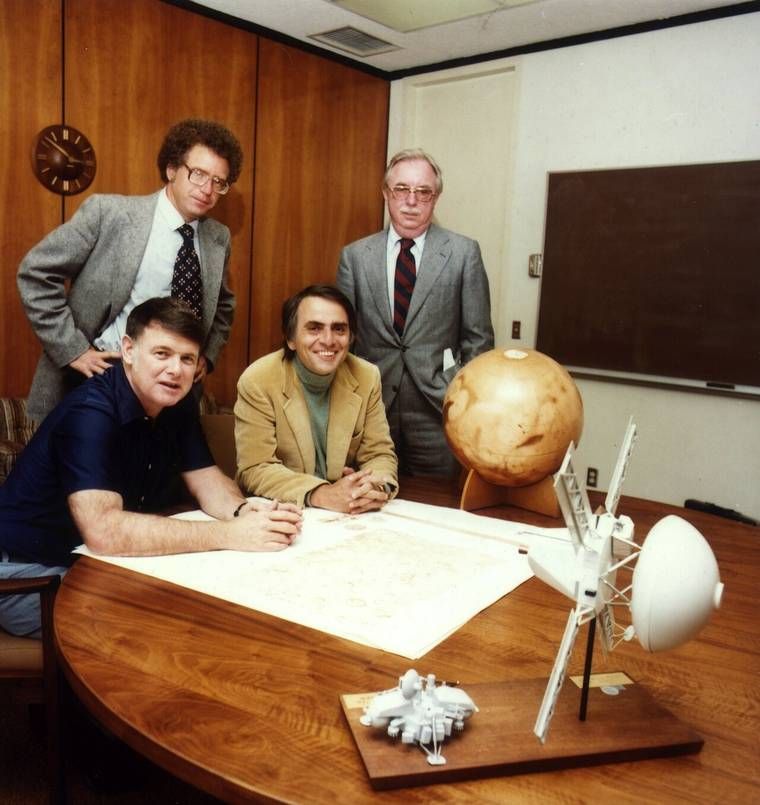
The Sagan link runs deeper than an address. Sagan spent much of his career on the question of life beyond Earth. He also took part in one of the most famous public debates about UFOs.
In December 1969, the American Association for the Advancement of Science, a leading science group, held a symposium on UFOs in Boston. Sagan and astronomer Thornton Page organized it, according to the Center for Inquiry. It brought together experts from many fields, including astronomy, physics, psychiatry and sociology.
The talks became a book in 1972, "UFO's: A Scientific Debate," edited by Sagan and Page. It was published by Cornell University Press in Ithaca, the same city where the new observatory will rise.
The book gave room to scientists with very different views. Its authors included astronomer J. Allen Hynek, who became known for urging serious study of UFO reports, and astronomer Donald Menzel, a well-known doubter. People still read the debate in different ways. The Center for Inquiry, a skeptics' group, says it showed how little scientific evidence there was for UFOs. Either way, Sagan helped make sure the question was argued out in public. Now his old house will collect the kind of data that debate was missing.
§ 5How the Observatory Will Work
The plan has three main parts. A radar finds things. Software sorts them. A telescope then takes a close look.
The first part is a passive radar. A normal radar sends out its own radio beam and listens for echoes. A passive radar does not send anything. Instead, it listens for radio waves from TV, radio or satellite signals that are already in the air and that bounce off objects. Loeb described this idea in a September 5 blog post that first laid out the concept.
The radar will watch the sky all the time. When it spots something, artificial intelligence software will help sort it out. The goal is to set aside known aircraft, satellites and other things that can be identified. Whatever is left is worth a closer look.
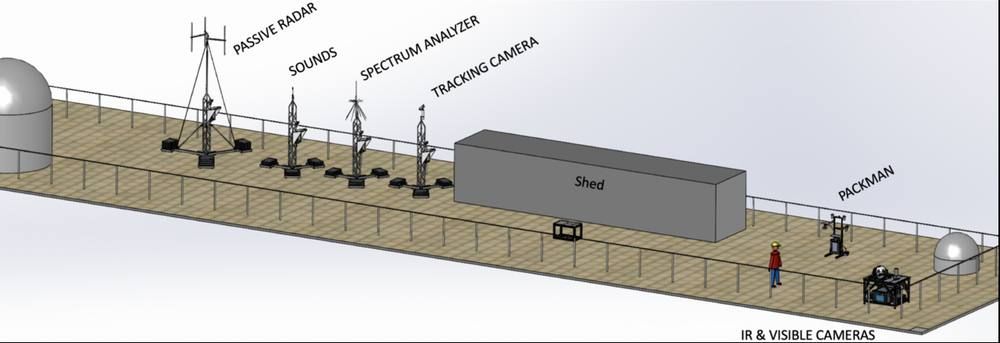
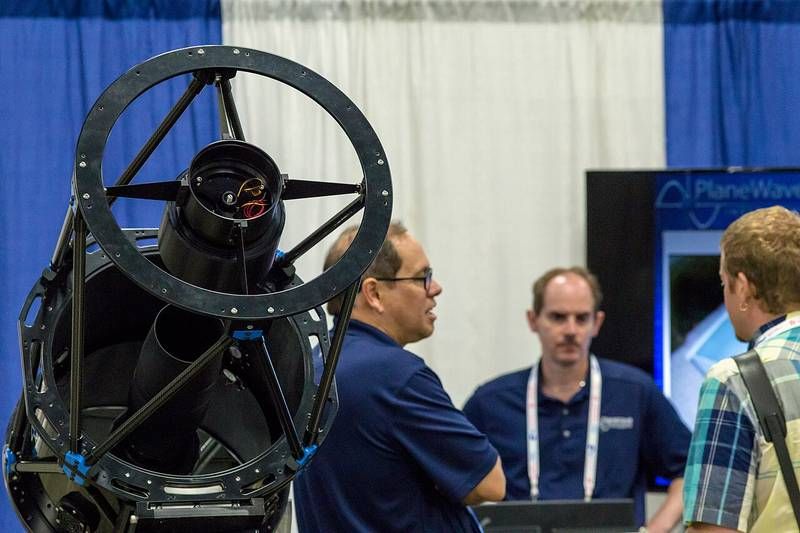
Then the system will turn a large telescope toward the object. The release names the telescope as a 0.7-meter PlaneWave CDK700. That means its main mirror is about 28 inches across.
§ 6The Telescope
PlaneWave Instruments, which makes the CDK700, lists it at $235,000 before shipping. The company says it weighs about 1,200 pounds. Its mirrors are made of a special glass that barely changes shape when the temperature shifts, which helps keep pictures sharp.
Speed matters for this job. Planes, drones and strange objects move fast across the sky. PlaneWave says the CDK700 can swing around at up to 50 degrees per second. That is fast enough to cross the whole sky in a few seconds. The company also notes that it can be used for tracking satellites.
Loeb's first concept called for an even bigger telescope, about one meter wide. In his September post, he said a telescope of that class could make out details about the size of a garden pea from about 2 kilometers away, or a little over a mile. The final plan uses the slightly smaller 0.7-meter model. In a later post, Loeb said the Ithaca telescope should be sharp enough to "see passengers through the windows of a commercial airplane."
§ 7Reading the Light
The second job of the telescope is spectroscopy. That is a way of splitting light into a rainbow of colors, like a prism does. Each chemical leaves its own pattern of bright or dark lines in that rainbow. By reading the pattern, scientists can tell what something is made of, or what kind of light it gives off.
Loeb gave an example in his September post. In 2012, scientists studying ordinary lightning happened to catch ball lightning on video with a spectrometer running. The light showed signs of silicon, iron and calcium, which are found in soil. That gave scientists a real measurement of a rare event that had mostly been known from eyewitness stories.
The Ithaca team hopes to do the same for UAP. A sharp picture could show shape and details. A spectrum could help tell a glowing drone from a balloon, a satellite or something new.
§ 8Why Orbs?
The release says the project has "a particular focus on unexplained orb-like objects." Loeb said the idea came from studying U.S. government reports that describe glowing orbs whose nature is still unknown.
"Over the past six months, the U.S. government has declassified data on numerous puzzling objects in our skies, whose nature is unknown," Loeb said in the release. "Rather than speculate on whether they represent natural atmospheric phenomena, birds, drones, balloons, aircraft or alien technologies of non-human origin, we should study them with state-of-the-art instruments."
The release is careful about one point. It says the Galileo Project "does not assume that unexplained objects are extraterrestrial in origin." Its goal is to gather the evidence needed to find out what they are. "We need more data on these mysterious objects," Loeb said.
§ 9What the Other Observatories Found
The Galileo Project already runs three observatories, in Massachusetts, Pennsylvania and Nevada. The release says those mostly use smaller cameras that watch the whole sky at once.
Those cameras have produced real results. In a 2025 paper, the team described five months of testing an array of eight infrared cameras, nicknamed "Dalek." The cameras tracked about 500,000 objects moving across the sky. A computer flagged about 80,000 as unusual. After people checked those by eye, 144 were still unexplained.
The researchers wrote that those 144 were "likely mundane objects." But they could not say for sure without more data, such as how far away the objects were. That is just the gap the Ithaca design aims to fill. A radar can measure distance, and a big telescope can get a close look.
§ 10Science in the Open
The team also wants the public involved. Plans call for posting the observatory's data online, according to the release and local reports. People could look at the images and follow along as researchers study objects in the sky.
The team is also thinking about letting the public suggest targets for the telescope. Other plans include educational videos, livestreamed talks and question-and-answer sessions with Loeb.
"Carl Sagan believed in sharing the excitement of scientific discovery with the public," Loeb said in a statement quoted by 607 News Now. "This observatory will honor that spirit by giving people an opportunity to engage with real scientific research, explore observations and experience the process of discovery firsthand."
§ 11What Comes Next
Construction is expected to begin in November 2026, the release says. It should be done in about a year. The release adds that the timing depends on construction, installing the equipment and testing it.
The house is also in a historic district. In 2024, The Ithaca Voice reported that the property is part of the Cornell Heights Historic District. Outside changes that can be seen from the street need approval from the city's Ithaca Landmarks Preservation Commission.
If the Ithaca design works, the release says, it could be copied at other sites. Loeb's blog post shows a drawing of the concept, but it is labeled as made by AI, so it is not a picture of the real building or equipment.
§ 12What It Means
A house that once held Carl Sagan's books and big questions is about to get a radar and a powerful telescope. The plan is to find odd objects in the sky, take sharp pictures of them and read their light. Nothing has been found yet, and the work is just starting. But if it runs as planned, anyone with an internet connection may soon be able to look over the scientists' shoulders and see what turns up.
Watch & Listen
Hear this entry read aloud. Coming soon — the channels are not live yet.
Sources
Books
UFO's: A Scientific Debate, by Carl Sagan and Thornton Page (editors). ISBN 9780801407406 (not on Bookshop)
Articles and documents
- Avi Loeb, "A New Galileo Project Observatory for High-Resolution Imaging and Spectroscopy of UAP," Medium, Nov. 10, 2026, including the Nov. 5, 2026 press release (returns 403 to automated checks, likely bot blocking): avi-loeb.medium.com
- Avi Loeb, "A New Observatory Concept for Imaging UAP Orbs," Medium, Sept. 5, 2026 (returns 403 to automated checks, likely bot blocking): avi-loeb.medium.com
- Avi Loeb, "Q&A About the Observable Universe," Medium, 2026 (returns 403 to automated checks, likely bot blocking): avi-loeb.medium.com
- Syracuse.com Express Desk, "Adam Weitsman plans research observatory at Carl Sagan's former Ithaca home," Nov. 11, 2026: syracuse.com
- Daily Ithaca, "Carl Sagan's former Ithaca home will become a research observatory," Nov. 12, 2026: dailyithaca.com
- 607 News Now (Joe Salzone), "Weitsman to transform Sagan house in Ithaca into observatory," Nov. 13, 2026: 607newsnow.com
- The Ithaca Voice, "Sagan House sold to billionaire scrap metal mogul," Dec. 2024: ithacavoice.org
- PlaneWave Instruments, CDK700 Telescope System product page and specifications: planewave.com
- Laura Domine and others (Galileo Project), "Commissioning an All-Sky Infrared Camera Array for Detection of Airborne Objects," Sensors, Jan. 2025 (preprint): arxiv.org
- Center for Inquiry, "The Thornton Page Papers at CFI": centerforinquiry.org
- Google Books, "UFO's--a Scientific Debate" (contents and contributors): books.google.com
- Library of Congress catalog record, "UFO's: A Scientific Debate," edited by Carl Sagan and Thornton Page (Cornell University Press, 1972), papers from the AAAS symposium held in Boston, Dec. 26 to 27, 1969: lccn.loc.gov
Read next
More in UAP
Judge Rules for Pentagon in David Grusch's Records Lawsuit
A federal judge in Virginia has ruled against UFO whistleblower David Grusch in his fight to get records from the Pentagon.

More in UAP
Three Close Calls, No Answers: What Britain's Air Safety Board Could Not Identify Near Its Airliners
Three airliner crews over England this summer saw strange objects flash past their planes at about 9,000 feet or higher.
On the front page
A 'Crypto-Wolf' at Skinwalker Ranch, and the Phones That Open Themselves
A biologist who works at Utah's Skinwalker Ranch made a striking claim this week. He says a dead wolf-like animal found on the land was mostly an unknown kind of wolf.