Science
A Blood Test for CTE? Two New Studies Find a Warning Sign in the Blood
By Darrell Wallen
Would you prefer to listen?
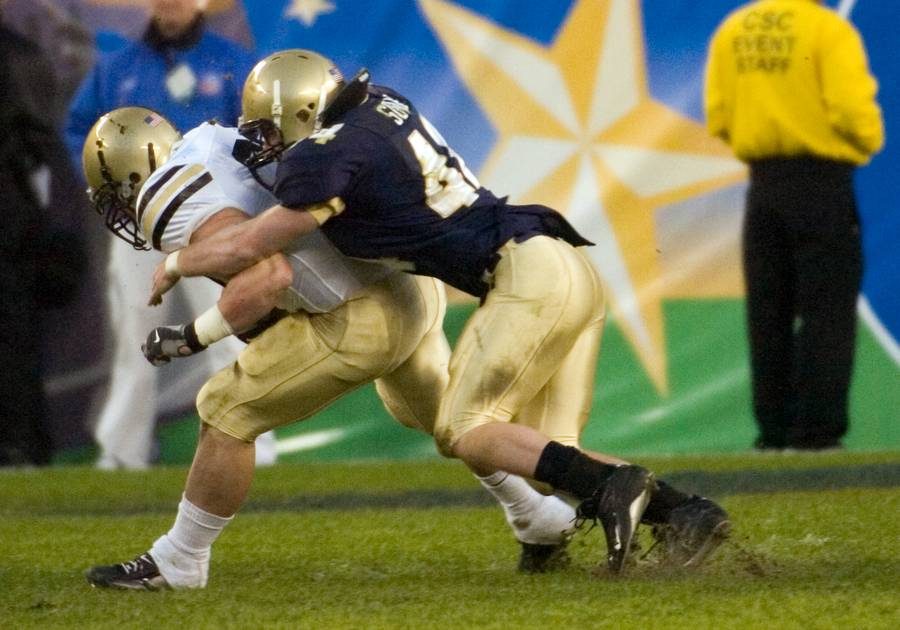
For the first time, scientists have found a sign of the brain disease CTE in blood taken from people while they were still alive. CTE is the brain disease linked to repeated hits to the head, and it has hit football players hard. Right now, doctors can only confirm it after a person dies. Two studies published in November 2026 in JAMA, one of the world's top medical journals, point to a protein in the blood that rises when the disease is advanced. The test is not ready for patients. But if bigger studies back it up, it could one day let doctors find CTE in living people and test treatments for it.
§ 1What the new study found
The main study was led by Boston University and Banner Health. It came out in JAMA on November 19, 2026. The team looked at 21 former American football players. All of them gave blood while they were alive, as part of research at Boston University. After they died, their families donated their brains to the BU CTE Center's brain bank.
That setup is what makes the study special. The scientists could compare each man's blood with his actual brain. That is the only way to know for sure who had CTE and who did not.
Of the 21 men, 18 had CTE when their brains were examined. Sixteen of them had the disease in its later, more severe stages. Two had it in its early stages. Three men had no CTE at all. Twelve of the men had played in the pros, seven in college and two only in high school.
The scientists tested the blood for a protein with a long name. It is called eMTBR-tau, short for "endogenously cleaved microtubule-binding region tau." In plain words, it is a small broken-off piece of tau. Tau is a protein that normally helps hold brain cells in shape. In some diseases, tau goes bad and clumps into tangles inside brain cells.
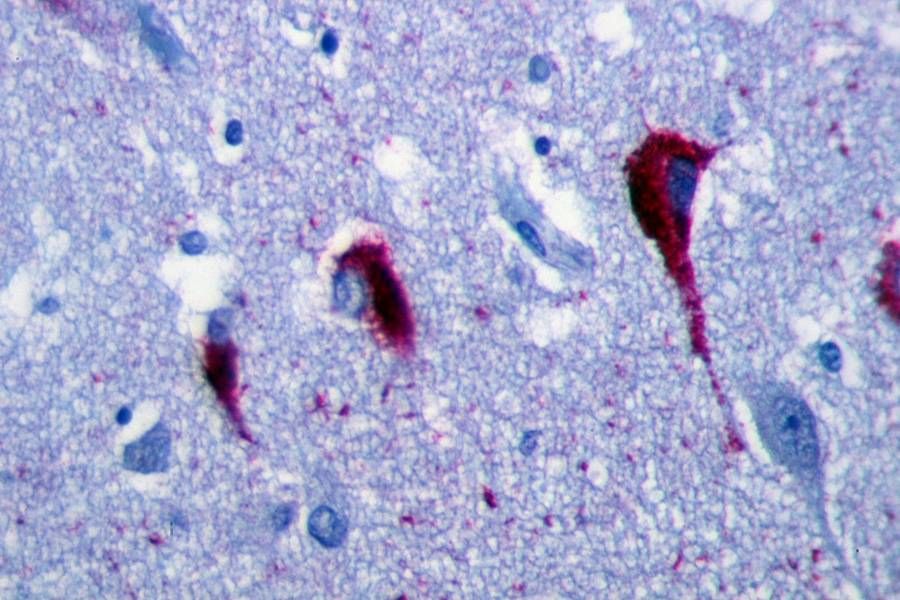
The result was clear for the later stages. Men with advanced CTE had much higher levels of this tau piece in their blood than men with early CTE or no CTE. The more tau damage the scientists later found across 11 parts of the brain, the higher the blood level tended to be. The difference held up even when the team set aside men who also had Alzheimer's disease.
"This is a game changer," said Michael Alosco, a lead author and co-director of clinical research at the BU CTE Center, in a Boston University statement. "We are still in the discovery phase and it's a small sample size, but if future studies validate these findings, this blood test will allow us to detect CTE with a high level of accuracy and open the doors to clinical trials and treatment."
§ 2A second team found the same signal
The Boston study did not stand alone. A separate team, led by Washington University School of Medicine in St. Louis, published its own study in JAMA. WashU said that paper came out on November 13. That team worked with researchers at the University of California, San Francisco.
The WashU team was not even looking for CTE at first. They were testing the same kind of tau piece, which they call eMTBR-tau243, in more than 80 people whose brain diseases were confirmed after death. The goal was to see whether the marker showed up only in Alzheimer's or in other tau diseases too.
Then one person stood out. This patient had no signs of Alzheimer's, but the blood level was strangely high. Researcher Kanta Horie went back through the autopsy records and found the answer. That person's brain showed advanced CTE.
The team then tested blood from 11 people whose CTE was confirmed after death. Levels were higher than in healthy people. They also went up as the disease got worse. In all, the WashU study included 229 people from several research collections.
The two teams used different patients and different lab methods. Boston University said that finding the same signal both ways "provides robust support" for the link between the blood marker and CTE. That is the universities' view. Outside experts say more proof is still needed.
§ 3Why this matters so much
CTE stands for chronic traumatic encephalopathy. That is a long way of saying a slow, worsening brain disease caused by repeated injury. According to the BU CTE Center, it shows up in people with a history of many hits to the head. That includes football and hockey players, boxers, soldiers and first responders.
The hits do not have to be big ones. The BU CTE Center says both concussions and smaller hits that cause no symptoms can play a part. Nobody yet knows how many hits it takes. Genes may matter too, because not everyone with a long history of head hits gets the disease.
The disease has been known in boxers since the 1920s, when people called it "punch drunk syndrome." Over time, CTE builds up tau in a special pattern in the brain. That pattern is different from Alzheimer's and other brain diseases. Symptoms can start years or even decades after the last hit.
In its early stages, CTE can bring mood and behavior changes, according to UCSF. Later it can bring memory and thinking problems, along with trouble with movement.
Here is the hard part. Doctors cannot confirm CTE in a living person. There is no brain scan that can do it. There has been no blood or spinal fluid test either. The only sure way is to study the brain after death.
That causes real problems. Families are left guessing about a loved one who is struggling. And drug companies cannot easily run trials, because they cannot pick out the right patients. "This is what we ultimately need to really kind of launch clinical trials," Alosco told WBUR, Boston's public radio station.
§ 4How common is CTE?
That question is hard to answer, and it shows why a blood test would help. Boston University says its CTE Center holds more than 1,800 donated brains. BU said a study it published in October found the disease in nearly 75 percent of NFL players who died between 2008 and 2023.
That number needs care. Brain banks mostly get brains from families who were worried about a loved one. That means brain bank numbers may not show how common CTE is among all players. The new JAMA paper says the same kind of thing about itself. It calls its 21 men a "convenience sample," meaning the people who happened to be available. It says the results may not apply to women or to people hurt outside of football.
A reliable blood test could fix that problem over time. Scientists could test large groups of living people, not just those who donated their brains.
§ 5A link to Alzheimer's
The new findings tie into one of the biggest stories in brain medicine. Alzheimer's disease also involves tangles of tau. In recent years, blood tests for Alzheimer's have moved into real use.
In fact, WashU has licensed its method for measuring this tau piece to C2N Diagnostics. That is a company started at WashU. It already makes a blood test cleared by the U.S. Food and Drug Administration to help diagnose Alzheimer's. WashU noted that the school and some of the scientists own a stake in C2N or may earn money from the license. The CTE use has not been checked or approved.
There is a catch. The same tau piece is high in Alzheimer's too. In the Boston study, five of the men with CTE also had Alzheimer's changes in their brains. Their blood levels were the highest of all.
So the Boston team also checked a second blood marker called p-tau217. It is a well-known sign of Alzheimer's. In this study, p-tau217 went up only in men who had Alzheimer's. It did not track with CTE.
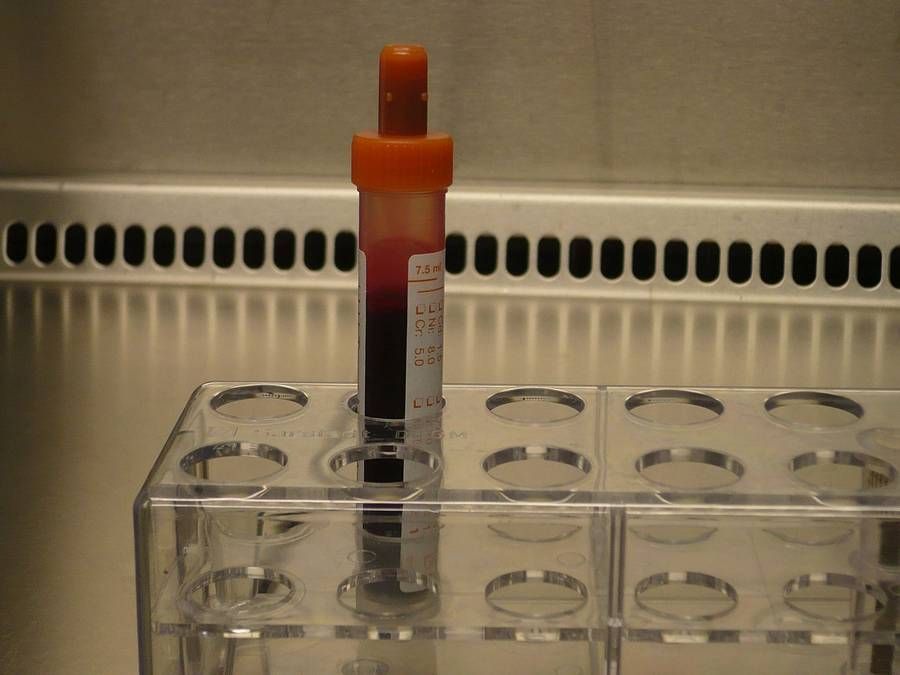
That gives scientists an idea. If the results hold up, the two tests might be used together. UCSF explained it this way. A high eMTBR-tau with a low p-tau217 might point toward CTE. High levels of both might mean Alzheimer's is there as well.
"This is not going to be a standalone biomarker," said Chihiro Sato, a co-senior author of the WashU study. "But if someone has a history of repeated head injury, tests negative for Alzheimer's, and this biomarker comes up, it might be CTE."
§ 6What the test cannot do yet
The researchers themselves are the loudest voices of caution. And there are real limits.
First, the test only worked for advanced CTE. In the Boston study, men with early CTE had about the same low levels as men with no CTE. WashU reported the same thing. That matters, because doctors would most like to catch the disease early.
Second, the Boston study was small. It had only 21 men, and just three of them had no CTE. Only two men had early CTE. UCSF said the study was "too small to establish the test's diagnostic accuracy in individual patients." In plain words, it cannot yet tell a doctor how often the test would be right or wrong for one person.
Third, the groups were not well matched by age. The men with CTE had their blood drawn at a median, or middle, age of 68. For the men without CTE, it was 49. Boston University named this lack of age-matched comparisons as one of the study's limits.
An editorial that ran in JAMA with the studies made the same point. It noted that all the patients were men picked through research and brain donation. The editorial said the marker is "best viewed as a promising candidate biomarker." It added that "it is not a validated diagnostic test for CTE."
Most of all, nobody can get this test for CTE today. "It is important for the public to know that the blood test is not currently FDA-approved, nor is it available to the public and should not be used or attempted to be used to make diagnostic decisions about CTE until validation studies are completed," said Annalise Miner, the study's first author and a PhD student in Alosco's lab.
§ 7Hype check
Boston University's own news release says the team "for the first time has discovered a way to accurately detect" CTE using only a blood test. That goes further than the paper itself. The paper says larger studies are still needed to show how accurate the test really is.
What is confirmed is this. In two small, peer-reviewed studies, a tau piece in the blood was higher in people with advanced CTE. Peer-reviewed means other experts checked the work before it was published.
What is not confirmed is whether the test can reliably diagnose CTE in one living person. It also has not been shown to catch the disease early. It is not approved, and it is not for sale for CTE. A summary of the story trending on X also said the work appeared in JAMA Neurology. Both studies actually appeared in JAMA, the main journal.
Even the "game changer" line comes with a condition. Alosco tied it to future studies backing up the results.
§ 8The players behind the science
The study only happened because of the men who gave blood and then donated their brains. One of the faces of that effort is Matt Hasselbeck, who played quarterback in the NFL for 18 seasons. He spent 10 of them with the Seattle Seahawks.
Hasselbeck pledged in 2020 to donate his brain to Boston University after his death. His father, former New England Patriot Don Hasselbeck, made the same pledge before he died in 2025. Matt Hasselbeck is now an ambassador for BU's DIAGNOSE CTE Research Project. That study gives former players detailed medical and brain exams.
He called CTE an "invisible injury" in an interview with Boston University's news site. He said it is harder to deal with than a broken arm or a torn knee ligament, because nobody can see it.
"I'm so grateful for the guys, my dad's era, who went before us," Hasselbeck said. He was talking about "the 21 guys who gave blood and also donated their brains."
§ 9What comes next
The next step is a much bigger test. According to UCSF, researchers have started signing up people for a larger study. It is running at UCSF, Boston University, Mayo Clinic Scottsdale, the University of Florida and UT Health San Antonio.
That study plans to include up to 225 former football players. It will also include 75 healthy people and 50 people with Alzheimer's. The scientists want to see whether the blood test matches up with head-hit history, symptoms and brain scans.
Gil Rabinovici, a UCSF brain expert who worked on the Boston study, called the results "very preliminary." But he sees a clear use if they hold up. "In the right clinical context, a positive blood test could be used as an inclusion criterion for testing new drugs," he said. In plain words, the test could help pick the right people for drug trials. Several drugs that target tau are now being developed for Alzheimer's and other dementias.
Alosco told WBUR that, if the finding holds up, a blood test might move toward FDA approval within about five years. That is his estimate, not a promise.
§ 10What it means
For decades, CTE has been a disease you could only confirm after death. These two studies offer the first real sign that may change. A small piece of tau in the blood seems to rise when the disease is advanced, and two separate teams found it. But the studies were small, the test misses early disease, and it is not ready for any doctor's office. For now, it is a promising lead. If bigger studies agree, former players, veterans and their families may one day get answers while there is still time to act.
Watch & Listen
Hear this entry read aloud. Coming soon — the channels are not live yet.
Sources
- Miner, A. E., Ashton, N. J., Alosco, M. L., et al. "Plasma eMTBR-tau as a Biomarker for Chronic Traumatic Encephalopathy Tau Tangle Neuropathology." JAMA, published online November 19, 2026. DOI: 10.1001/jama.2026.24780. jamanetwork.com/journals/jama/fullarticle/2857054
- JAMA Network media release for the Boston University study, November 19, 2026. media.jamanetwork.com/media-releases/10.1001/jama.2026.24780
- Horie, K., Koppisetti, R. K., VandeVrede, L., et al., Sato, C. "Fluid eMTBR-tau243 as a biomarker of 3-repeat/4-repeat mixed tau pathology." JAMA, November 13, 2026. DOI: 10.1001/jama.2026.24689. doi.org/10.1001/jama.2026.24689
- "Plasma eMTBR-Tau as a Potential Biomarker Across Tauopathies." JAMA (editorial), published online November 19, 2026. DOI: 10.1001/jama.2026.24588. jamanetwork.com/journals/jama/fullarticle/2857055
- Boston University Chobanian & Avedisian School of Medicine. "New Study Identifies Blood Test that May Detect CTE During Life." November 19, 2026. bumc.bu.edu/camed/news-events/articles/2026/new-study-identif…
- Holt, S. "Boston University–Led Study Identifies Blood Test That May Detect Brain Disease CTE in Life." The Brink, Boston University, November 19, 2026. bu.edu/articles/2026/blood-test-detect-cte-in-life/
- Ballard, S. "Progress toward a blood test for CTE." WashU Medicine, November 13, 2026. medicine.washu.edu/news/progress-toward-a-blood-test-for-dise…
- Leigh, S. "Can This Blood Test Reveal a Grim Brain Disease in Living Patients?" University of California, San Francisco, November 19, 2026. ucsf.edu/news/2026/11/433011/can-blood-test-reveal-grim-brain…
- "Boston University study points toward a potential blood test for CTE." WBUR News, November 19, 2026. wbur.org/news/2026/11/19/boston-university-study-biomarker-cte
- Boston University CTE Center. "Frequently Asked Questions." bu.edu/cte/about/frequently-asked-questions/
Read next
More in Science
Texas Sets a Sea Turtle Record as the World's Most Endangered Sea Turtle Keeps Coming Back
The smallest and most endangered sea turtle in the world just had its best year ever on the Texas coast. Wildlife teams found 697 Kemp's ridley sea turtle nests on Texas beaches in 2026.
More in Science
Scientists Find Giant Viruses Hiding in the Guts of Millions of People
Scientists have found a whole new group of giant viruses living in the human gut. The viruses are so common that the study projects they sit inside the digestive systems of roughly 180 million people around the world.

On the front page
Tesla Rolls Out FSD v15 as Italy Says Yes to Its Assisted Driving
Tesla says the new software handles dangerous moments 25 times better and redraws the road like a video game. A day earlier, Italy became the biggest European country to approve the system, with a driver still in charge.