Space
NASA Asks Industry How to Save Hubble Before It Falls
By Darrell Wallen
Would you prefer to listen?
NASA wants to know if a private company can save the Hubble Space Telescope. On October 29, 2026, the agency asked companies how they might catch Hubble, push it higher, fix it, or guide it safely down into the atmosphere. Answers are due at 3 p.m. Eastern on Monday, November 30. NASA is not buying a mission yet. It wants to learn what companies can do and what it might cost. Hubble is slowly sinking, and NASA says any rescue would need to fly by 2032.
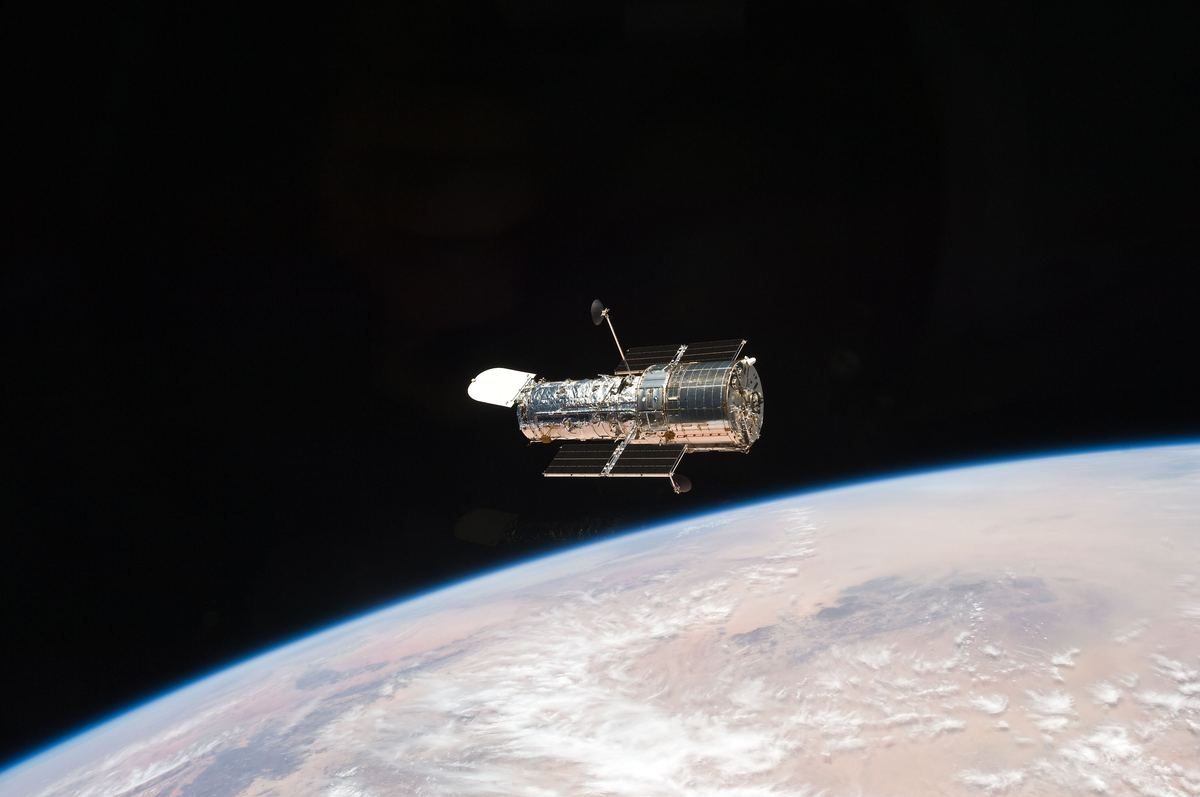
That is the news. The rest of this story explains why Hubble still matters, how it got into trouble, what NASA is asking for, and what is still unknown.
§ 1What NASA put on the table
NASA's formal request is called a Request for Information. It is posted on SAM.gov, the government's contracting website, under notice number 80GSFC27RFIHSTS. NASA's Goddard Space Flight Center put it out to gather facts and plan. It is not an order to buy anything. The notice stays open into mid-December.
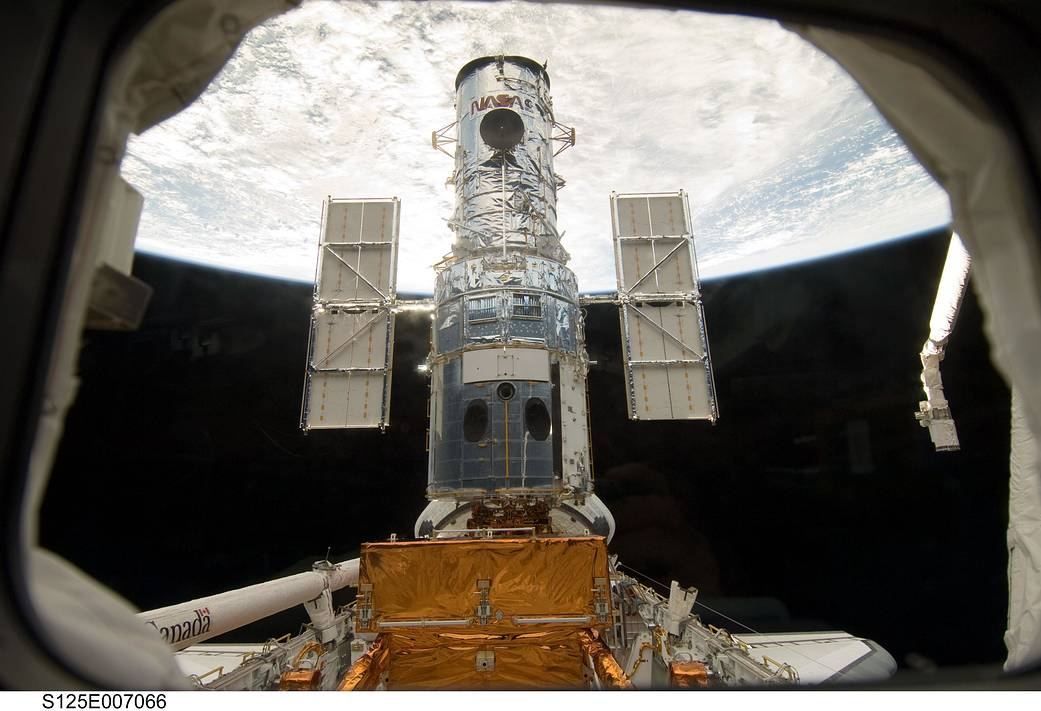
NASA's public statement on October 30 lays out three choices. The first is a mission to catch Hubble and lift it to at least 600 kilometers, about 373 miles, above Earth. The second is servicing in space, meaning repairs or upgrades that would help the telescope work better or last longer. The third is a controlled fall into the atmosphere, or another safe way to retire it when its work is done. NASA says any lift or repair flight must not harm Hubble, and that the work is expected by 2032.
Under NASA's plan, Goddard would share technical facts about the telescope and help plan the operation. The company would supply everything else. That means the rocket, the spacecraft, mission control and a crew, if one is needed.
NASA wants companies to answer some hard questions. How would they steer Hubble once it is attached to their craft? How high could they lift it? How low could Hubble sink before a lift to 600 kilometers stops being possible? What risks do they see to the telescope? And how soon could they fly?
NASA Administrator Jared Isaacman explained why. "Hubble still has important science ahead of it, and we should be looking at every reasonable opportunity to keep it delivering for as long as possible," he said in NASA's October 30 statement. He said that if there are new, low-cost ways to make Hubble last longer, NASA owes it to taxpayers and scientists to look at them.
Nicky Fox leads NASA's science work. "Hubble is a national icon that has fundamentally changed how humanity views our universe for more than 35 years," she said. She said NASA is eager to explore ways to lift Hubble higher while it builds the next big telescope.
That next big telescope is the Habitable Worlds Observatory. It is still years away from launch. NASA's request says no Hubble replacement is expected before about 2040. Until then, nothing else in space sees ultraviolet and visible light the way Hubble does.
§ 2Why altitude is the clock
Hubble has no engines of its own. Very high up, Earth's air is thin, but it is not gone. That thin air drags on every satellite in low orbit and slowly pulls it down. When the Sun is active, it heats the upper air and makes it puff up, so the drag gets stronger.
Space shuttle astronauts last raised Hubble's orbit in 2002. The final shuttle repair trip, in 2009, did not lift it. The shuttles retired in 2011, and nothing has pushed Hubble higher since.
NASA's October statement says Hubble will likely fall back into the atmosphere around 2033 or 2034 if nothing changes. A July 2026 study cited in the notice gives the odds. It says there is a 10 percent chance Hubble falls by September 2032, and a 50 percent chance by December 2033. Those odds can shift if the Sun gets more or less active. They are chances, not a countdown to a fixed day.
The news site Ars Technica reported on October 30 that Hubble has already sunk a long way. It was about 362 miles up after the 2002 lift. Today it is roughly 292 miles up. That is a drop of about 70 miles in 24 years. Ars Technica said a climb back to NASA's 373-mile goal could buy decades of extra life. That estimate depends on what the Sun does, and it is not a NASA promise.
§ 3Still busy after 36 years
Hubble launched on April 24, 1990, aboard the space shuttle Discovery. It is a partnership between NASA and the European Space Agency. Goddard runs the telescope, with help from the company Lockheed Martin Space. The Space Telescope Science Institute in Baltimore runs the science program for NASA. A group called the Association of Universities for Research in Astronomy operates the institute.
Scientists still line up to use Hubble. NASA's notice says requests for telescope time outnumber the time available by more than seven to one. Hubble work still produces more than 1,000 science papers a year, and that number is growing.
Other sources give slightly different numbers. Space.com wrote on November 3 that astronomers ask for about seven times as much time as Hubble has each year. It said NASA gave that figure in September. NASA's own science page puts the usual rate a little lower, at five to six times. That page also counts more than 23,000 reviewed science papers and more than 1.7 million observations over the whole mission. Either way, the waiting line is long.
Hubble studies almost every corner of astronomy. NASA's request lists planets in our solar system, planets around other stars and the air around those planets. It also lists explosions across the universe, the chemistry of galaxies, and how stars are born and die. Hubble often teams up with other telescopes. Sometimes a star explodes or something hits a planet. When that happens, Hubble is still one of the few telescopes that can quickly look in ultraviolet light.
Hubble's specialty is ultraviolet and visible light. Ultraviolet is light just beyond violet that our eyes cannot see. The James Webb Space Telescope and the coming Nancy Grace Roman Space Telescope work mainly in infrared, light just beyond red. They are partners, not swaps. Without a lift or a careful retirement plan, Hubble's special ultraviolet view would go dark years before the Habitable Worlds Observatory is ready.
§ 4From flawed mirror to five house calls
Hubble's early years were rough. After launch, engineers found that its main mirror had been ground to the wrong shape. Its pictures came out blurry. In December 1993, astronauts on Servicing Mission 1 added parts to correct the flaw, along with new instruments. After that, Hubble became one of the most productive science tools ever flown.
Astronauts went back four more times. Servicing Mission 2 flew in February 1997. Servicing Mission 3A launched in December 1999, an emergency trip after the telescope's gyroscopes failed. Gyroscopes are spinning parts that help Hubble sense how it is turning. Servicing Mission 3B followed in March 2002 and included the last lift to a higher orbit.
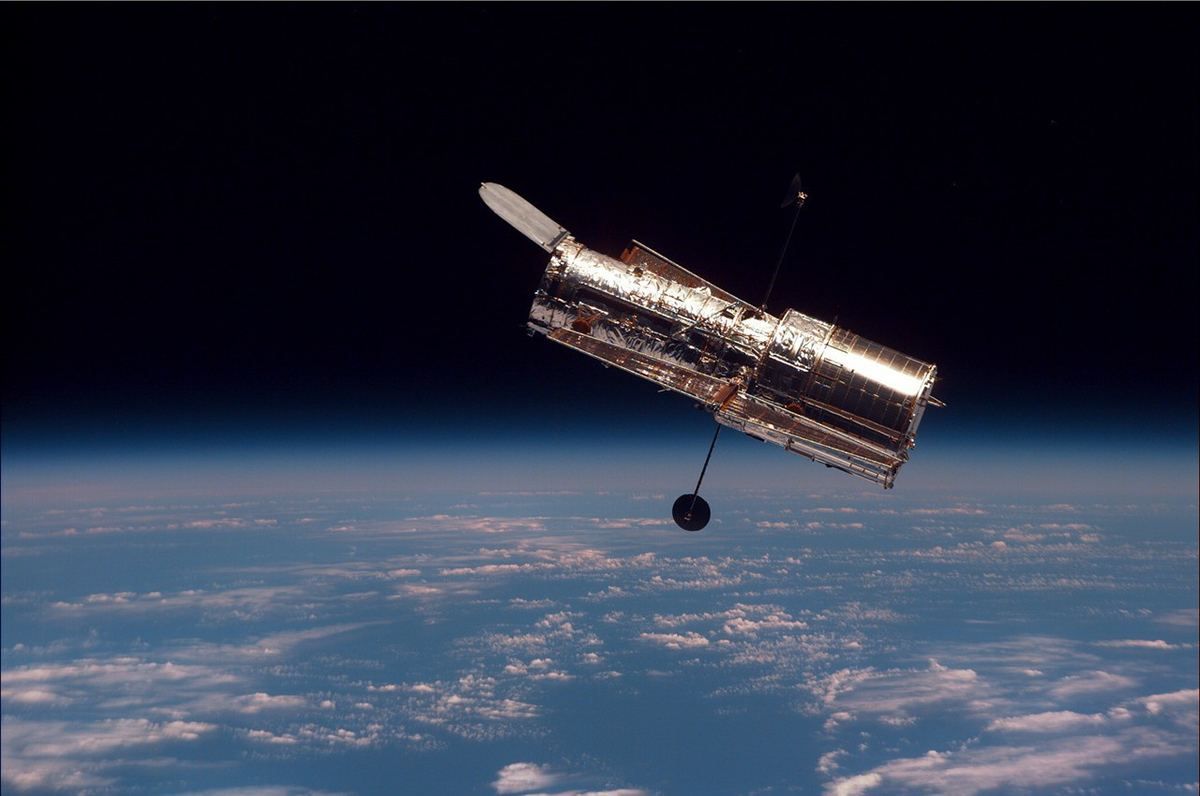
Servicing Mission 4, shuttle flight STS-125, came in May 2009. It was the last visit. Over five spacewalks, the crew added two new instruments, the Cosmic Origins Spectrograph and Wide Field Camera 3. They fixed two broken instruments and replaced all six gyroscopes. They also swapped batteries and a science computer. And they attached a docking ring meant to help a future craft grab Hubble and guide it down.
NASA expected that last visit to add about five years of life. Hubble has already lasted more than three times that long.
§ 5Gyros, one-gyro mode, and a smaller safety margin
Hubble's sinking orbit gets the headlines, but its aim is a quieter problem. Hubble needs gyroscopes to know how fast it is turning and to hold still on a target. The six gyros installed in 2009 have been failing one by one.
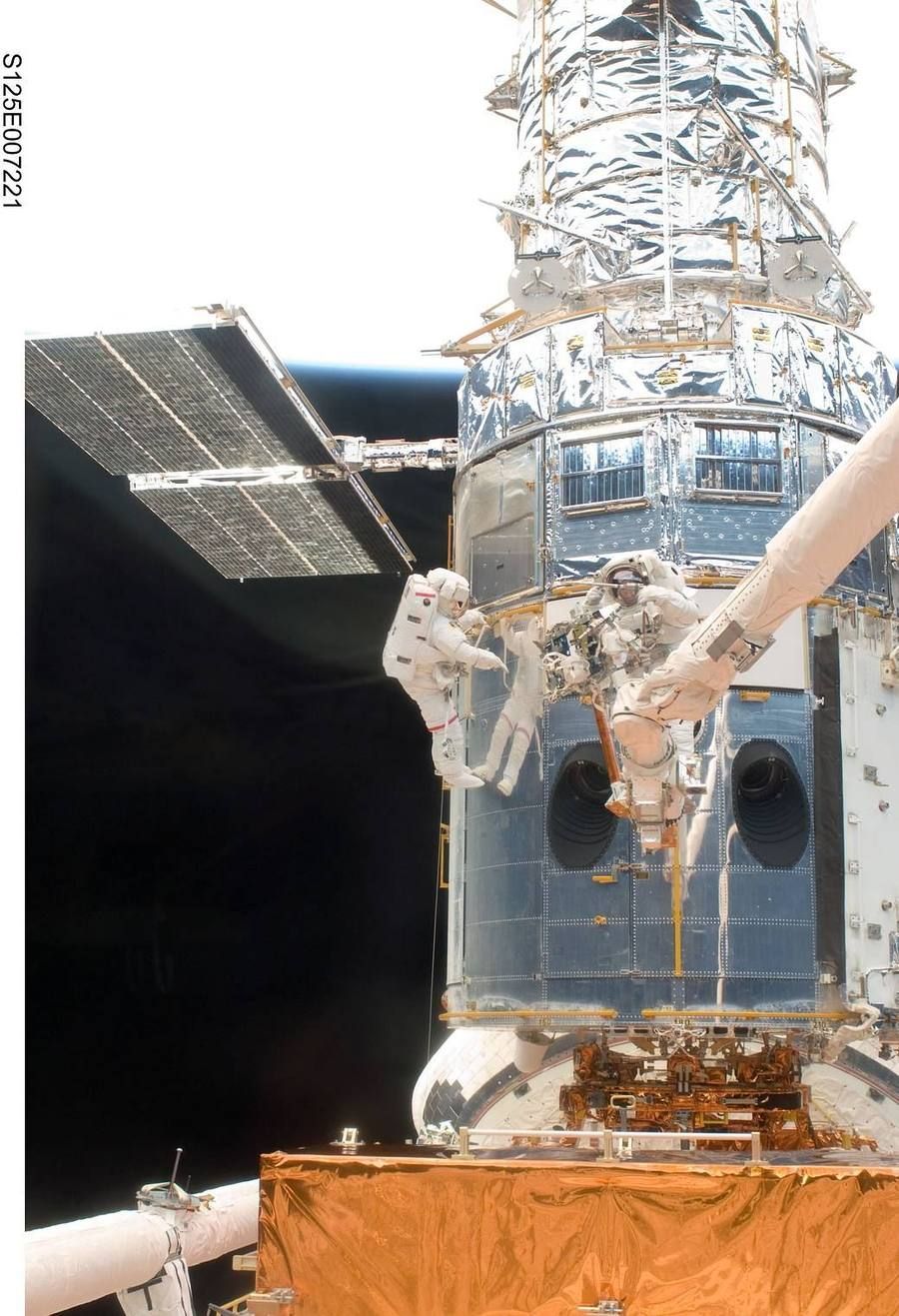
In June 2024, one gyro kept giving bad readings, and the telescope shut down its science work to protect itself. NASA then switched Hubble to using just one gyro. It kept a second working gyro in reserve.
NASA says most observations still work this way, but there are costs. Hubble needs more time to turn and lock onto a target. It cannot track objects closer than Mars as well as it once could. It has less freedom to chase sudden events. NASA says turning alone is about 12 percent less efficient. Counting all the limits, the full science program can lose about 20 to 25 percent.
The science goes on, but there is less room for hardware trouble than there was after 2009. A future repair flight could, in theory, replace aging parts again. NASA's new request invites that idea. It does not promise it.
§ 6Swift's fall, and why Hubble is different
The Hubble request comes right after another NASA telescope was lost. The Neil Gehrels Swift Observatory fell back into Earth's atmosphere on Wednesday, November 4, 2026. It came down at 7:39 a.m. Eastern over North Sumatra, Indonesia. The U.S. Space Force confirmed the time and place.
NASA said most of Swift was expected to burn up, though some pieces may have survived. Swift was built to last two years. It flew for almost 22. It hunted gamma-ray bursts, huge blasts of energy from deep space, and many other sudden events.
NASA had tried to save Swift. A private rescue craft launched on a short schedule and got within miles of it. Then it could not finish the catch because of power and control problems.
Reports on the Hubble request said the Swift attempt showed two things. A repair flight does not have to cost billions of dollars, and a small team can reach a dying satellite on short notice. But it also showed how little time is left once the Sun speeds up the drag and the clock runs out.
Hubble is a different problem. It is heavier and more valuable, and it is still higher than Swift was in its last months. A bad catch could end the very science NASA is trying to save. That is why NASA insists that any mission must not harm the telescope. It is also why NASA is surveying companies before it spends money.
News reports say NASA does not have money set aside yet to buy a Hubble lift or repair flight. This request is the step before any such decision. NASA wants to learn who can do the job, how soon, and at what price.
§ 7What is confirmed, and what is not
NASA and its posted request confirm the main facts. The request went out October 29, 2026, and answers are due November 30 at 3 p.m. Eastern. The choices are a lift to at least 600 kilometers, repairs, or a controlled fall. Any mission is expected by 2032. Hubble has no engines.
NASA also confirms the July 2026 odds: a 10 percent chance Hubble falls by September 2032, and a 50 percent chance by December 2033. Demand for Hubble is still many times the time it has, and it still produces more than 1,000 papers a year. No matching replacement is expected before about 2040. Isaacman and Fox made the statements quoted above. Swift fell on November 4, 2026, at 7:39 a.m. Eastern over North Sumatra.
Much is not confirmed. We do not know if NASA will pay for any mission, or which company, if any, would fly it. We do not know if the flight would carry astronauts, use robots, or both. We do not know what it would cost, or whether a repair would replace gyros or instruments. We also do not know the exact date Hubble would fall if nothing is done, because the Sun keeps changing the forecast. A Request for Information is a survey, not a contract.
For now, Hubble keeps watching the sky. NASA has asked one simple question. Can someone reach Hubble in time, without hurting it, before the atmosphere finishes what the shuttle once put off?
Watch & Listen
Hear this entry read aloud. Coming soon — the channels are not live yet.
Sources
NASA and the RFI
- NASA Science, "NASA Explores Potential Commercial Servicing for Hubble Telescope" (Oct. 30, 2026): science.nasa.gov/missions/hubble/nasa-explores-potential-comm…
- SAM.gov, Notice ID 80GSFC27RFIHSTS, "Hubble Space Telescope (HST) Servicing" (posted Oct. 29, 2026; responses due Nov. 30, 2026, 3:00 p.m. EST): sam.gov/workspace/contract/opp/2ecd9dbf4a3946b4968cc0ebaa75d0…
- NASA Science, Hubble mission overview: science.nasa.gov/mission/hubble/
- NASA, Hubble portal: nasa.gov/hubble
Coverage of the request
- Ars Technica, Stephen Clark, "Once again, NASA is asking for ideas to rescue Hubble from certain death" (Oct. 30, 2026): arstechnica.com/space/2026/10/think-you-can-save-the-hubble-s… (automated fetch returned 403; page loaded via browser-class fetch)
- Space.com, Elizabeth Howell, "NASA asks industry for ideas about saving Hubble Space Telescope" (Nov. 3, 2026): space.com/astronomy/hubble-space-telescope/nasa-asks-industry…
Hubble history, gyros, and operations
- NASA Science, "NASA to Change How It Points Hubble Space Telescope" (June 4, 2024): science.nasa.gov/missions/hubble/nasa-to-change-how-it-points…
- NASA Science, "Operating Hubble with Only One Gyroscope": science.nasa.gov/mission/hubble/observatory/design/hubble-one…
- NASA Science, Servicing Mission 4 (SM4 / STS-125): science.nasa.gov/mission/hubble/observatory/missions-to-hubbl…
- NASA History, "15 Years Ago: STS-125, the Final Hubble Servicing Mission": nasa.gov/history/15-years-ago-sts-125-the-final-hubble-servic…
- NASA Science, Hubble science operations: science.nasa.gov/mission/hubble/observatory/science-operations/
Swift reentry
- NASA Science, "NASA's Swift Observatory Re-Entered Atmosphere" (updated Nov. 4, 2026): science.nasa.gov/blogs/swift/2026/11/02/nasas-swift-observato…
- Space.com, "NASA's Swift space telescope crashes back to Earth after failed rescue attempt" (Nov. 4, 2026): space.com/space-exploration/missions/nasa-swift-space-telesco…
Read next
More in Space
ULA's Vulcan Rocket Fails on Its First Amazon Launch, and 40 Satellites Are Lost
A Vulcan rocket built by United Launch Alliance failed on Sunday, November 15, 2026, about 10 minutes after it left Florida.
More in Space
Voyager 1 Will Reach One Light-Day From Earth on November 18
NASA's Voyager 1 spacecraft is about to reach a distance that no human-made object has ever reached. On Wednesday, November 18, 2026, at 5:16:07 a.m. Eastern Time, the probe will be one light-day from Earth. That is how far light can travel in 24 hours: 16.094 billion miles, or 25.902 billion kilometers. A radio message sent from Earth will take a full day to arrive, and the spacecraft's reply will take another day to come home.
On the front page
Frozen Inca Mummies Reveal What Children Were Given Before Mountaintop Sacrifices
More than 500 years ago, Inca priests led children up some of the highest volcanoes in the Andes. There, the children were sacrificed to the mountain gods. Now, a new lab study of eight frozen mummies shows what those children were given in their final weeks. Every hair sample tested held traces of coca, the sacred leaf. Some children also drank alcohol. One famous girl, known as Juanita, carried a chemical tied to ayahuasca, a drink made from an Amazon vine. The results suggest the ritual was not the same everywhere. Each mountain may have had its own recipe.