Space
ULA's Vulcan Rocket Fails on Its First Amazon Launch, and 40 Satellites Are Lost
By Darrell Wallen
Would you prefer to listen?
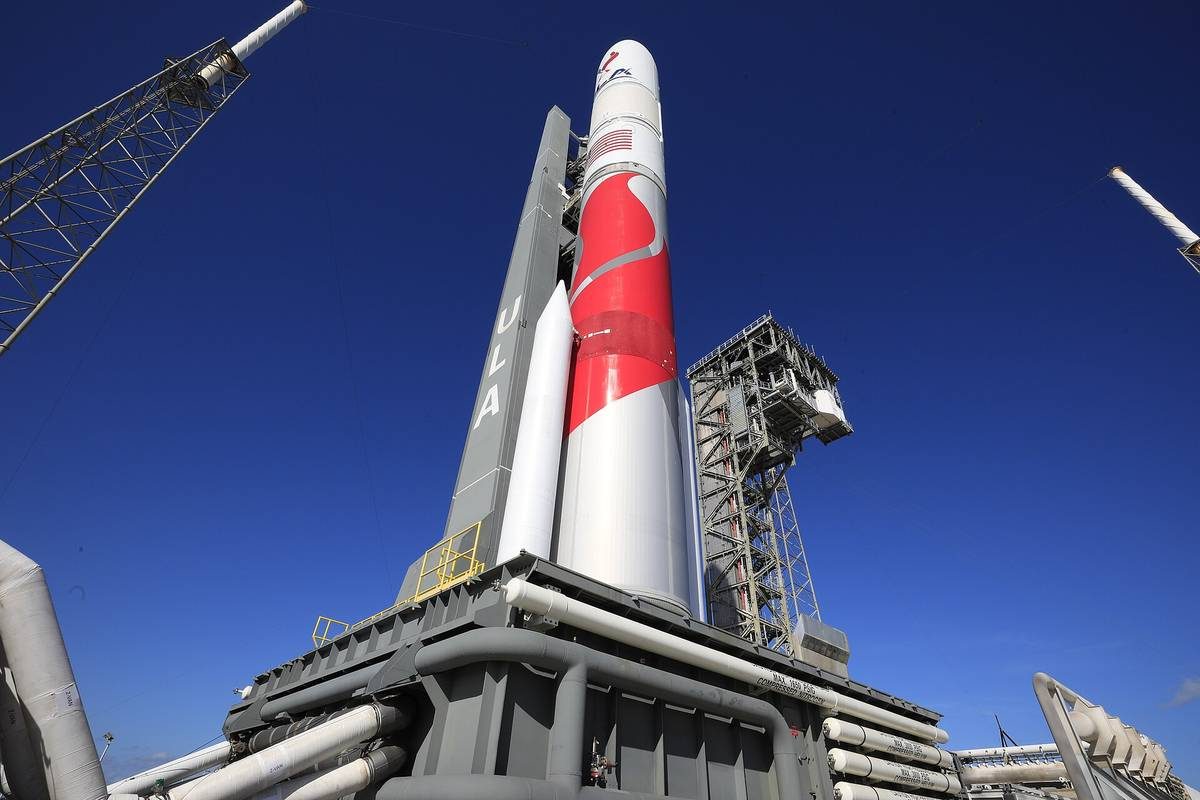
A Vulcan rocket built by United Launch Alliance failed on Sunday, November 15, 2026, about 10 minutes after it left Florida. All 40 Amazon Leo internet satellites on board were lost. It was the first full mission failure for ULA since the company was formed 20 years ago, Reuters reported. The cause is not yet known. The loss could keep one of America's biggest rockets on the ground for months, at a time when the country is already short on rides to space.
§ 1What Happened on Sunday
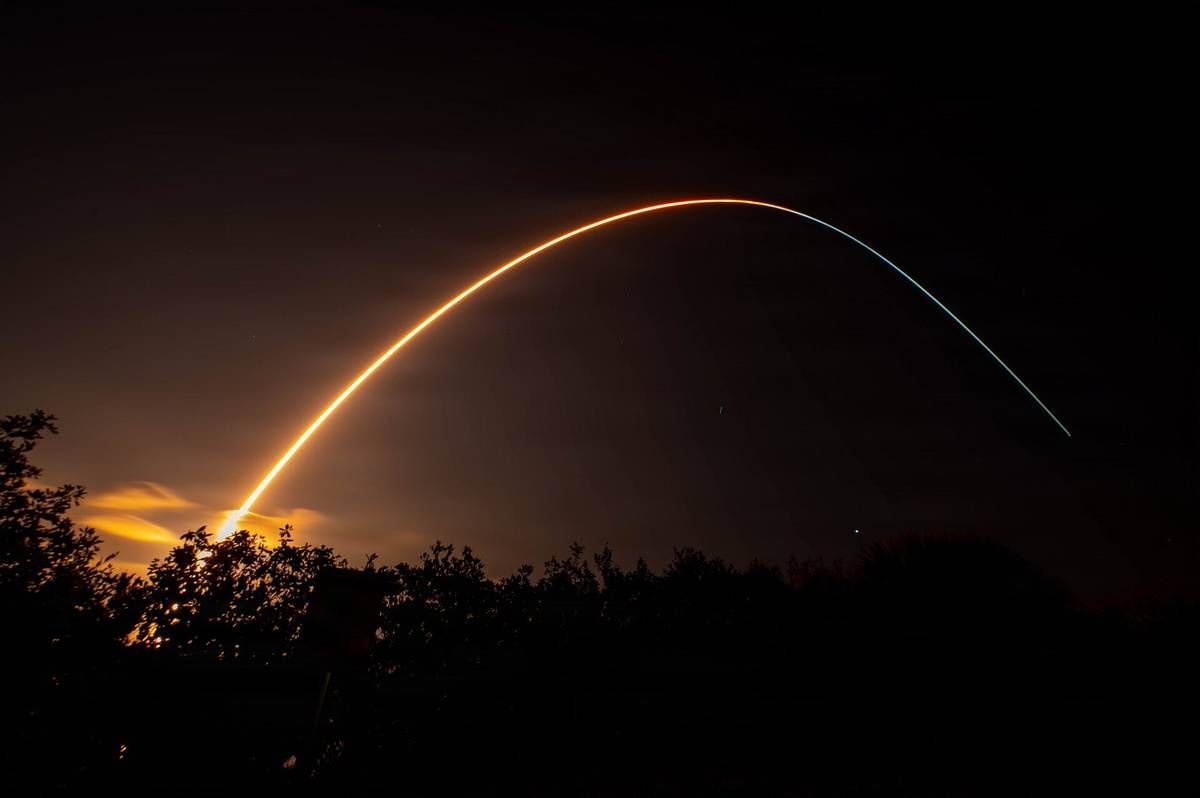
The rocket lifted off at 12:40 p.m. Eastern Time from Space Launch Complex 41, or SLC-41, at Cape Canaveral Space Force Station in Florida. ULA had listed a launch window from 12:11 to 12:40 p.m. The rocket left at the very last minute of it.
The flight was called LV-01, short for Leo Vulcan 1. ULA flew the rocket in its most powerful setup, called VC6L. That means six solid rocket boosters were strapped to the sides. A solid rocket booster is a big tube packed with solid fuel that gives extra push at liftoff. The "L" stands for a new version of the Centaur V upper stage, the top part of the rocket, built for low orbits close to Earth.
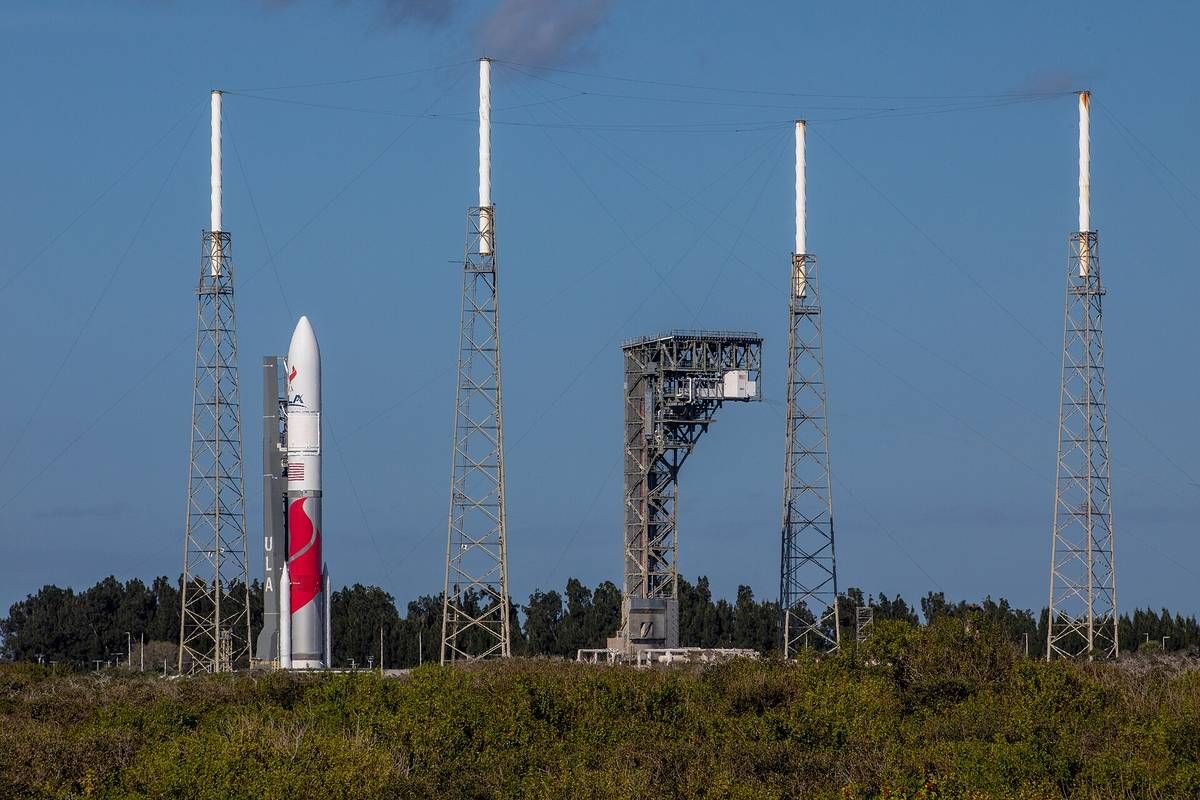
The launch had already slipped twice. A power problem at a nitrogen plant that serves several launch companies scrubbed Friday's try, Spaceflight Now reported. A network problem between the rocket and ground systems stopped Saturday's try. On Sunday, controllers held the countdown at 20 seconds before liftoff because of a technical issue. They fixed it in time to launch at the end of the window.
At first, the flight looked normal. The six side boosters burned out and dropped away about a minute and 40 seconds after liftoff, Spaceflight Now said. The main booster then kept climbing on its two BE-4 engines. Those engines burn methane, the main part of natural gas, with liquid oxygen. The upper stage then split off and lit its own two engines, Via Satellite reported.
The live broadcast seemed on track at about nine and a half minutes, Via Satellite said. Then the broadcast ended without any word of trouble.
About 50 minutes after liftoff, ULA posted a statement. "Based on data received by our Launch Director, we confirm that the Vulcan vehicle launched from Space Launch Complex 41 suffered an anomaly 10 minutes into the flight and failed to deliver the Amazon mission to orbit," the company said. In rocket talk, an anomaly is anything that goes wrong in flight.
No source has said the rocket blew up. ULA and the news reports describe an anomaly and a failure to reach orbit. Ars Technica reported that the rocket and its 40 satellites fell back to Earth.
§ 2Clues From the Launch Broadcast
ULA has not said what broke. But reporters who watched closely spotted some odd signs. These are early clues, not findings.
The main booster's BE-4 engines were supposed to shut off just before the five-minute mark. Ars Technica reported that they kept firing for at least 30 more seconds. Spaceflight Now also said the first stage seemed to burn longer than ULA's timeline called for. A longer burn can be a sign that a stage is weaker than planned and is trying to make up for it, Ars said.
The rocket also seemed to start spinning right after the booster engines shut down, Ars reported. That came from a mission animation on ULA's webcast. The animation runs on live data from the rocket. The spin kept going as the upper stage split away. The upper stage's two RL10 engines lit. The animation then showed them steering hard, in what Ars called an apparent try to get the rocket back on course.
Reports differ on where the problem started. ULA's timing puts the anomaly during the upper stage's first long engine burn, which was planned to last more than 12 minutes. Spaceflight Now and SpaceWireDaily described it that way. But Ars Technica said several unnamed sources told it the trouble began in the booster stage, not in the Centaur V upper stage or the side boosters. Ars said it could not tell yet whether the BE-4 engines were to blame, some other part of the booster that feeds them fuel, or something else.
These are reports and early signs. The official investigation will decide the cause.
§ 3What ULA, Amazon and Others Said
ULA said it did not have answers yet. "Every flight generates data, and every flight teaches us something," the company said, as CNBC reported. "Since the anomaly just occurred, we don't have any specific data yet to understand what occurred today."
The company also admitted it had fallen short. "ULA exists to provide assured access to space for our nation and for the customers who depend on us," it said, according to Ars Technica. "That purpose is why we take on some of the hardest missions in spaceflight, and why we hold ourselves to the standard of mission success. Today, we did not meet that standard."
ULA promised to "find the cause, determine the appropriate corrective action and return to flight as quickly as possible." It said its customers would be able to watch the investigation as it moves forward.
Amazon was calm in its reply. "There is risk with any launch, and that's especially true for inaugural missions like LV-01," the company said in a statement reported by Reuters. "ULA has been a trusted partner for Amazon, and we believe they'll learn from this mission and deliver on their long-term plans for Vulcan."
Northrop Grumman builds Vulcan's side boosters. "The preliminary data shows the GEM 63XL boosters performed as expected and successfully separated from the Vulcan launch vehicle before today's anomaly," the company said, according to Via Satellite.
NASA Administrator Jared Isaacman offered help on X. "Appreciate you quickly keeping the public and your partners informed," he wrote, as Spaceflight Now and Ars Technica reported. "The team at NASA is available to assist in all matters related to the investigation and remediation effort. Artemis, Moon Base, and the nation need ULA. We are in your corner and here to help."
§ 4A Proud Record Ends
ULA formed in 2006. It joined Boeing's Delta rockets and Lockheed Martin's Atlas rockets under one roof. Since then, the company had a 100% mission success record, Reuters reported. Before the merger, the Delta and Atlas rockets had only a handful of failures over many decades, Reuters said.
Sunday ended that streak. Spaceflight Now called it the first outright failure of a ULA rocket.
Vulcan is ULA's newest rocket. It is meant to replace the older Atlas V. When fully stacked, it stands about 215 feet tall, according to USA Today and Spaceflight Now. That is about as tall as a 20-story building.
§ 5A Rocket With a Bumpy Start
Vulcan first flew in January 2024. Sunday was only its fifth flight, and its first in nine months, Reuters reported.
Two of the earlier flights had booster trouble, though both still reached orbit. In October 2024, a nozzle fell off one of the side boosters on Vulcan's second test flight, Spaceflight Now reported. A nozzle is the bell-shaped opening at the bottom where the hot gas comes out. ULA later blamed a factory defect in a part inside the nozzle.
The Pentagon certified Vulcan for national security missions in March 2025, USA Today reported. Then, on February 12, 2026, during a Space Force mission called USSF-87, a booster nozzle appeared to burn through about 20 seconds after liftoff, Spaceflight Now said. The rocket made up for it, and the military payloads still reached their planned orbit.
But it was the second nozzle problem in four flights. The Space Force paused Vulcan for national security launches. "Until this anomaly is solved, we will not be launching Vulcan missions," said Col. Eric Zarybnisky, the Space Force's portfolio acquisition executive for assured access to space, according to Spaceflight Now.
ULA, Northrop Grumman, the Space Force and other agencies studied the problem. They found three likely causes and changed both the nozzle design and how it is made, Spaceflight Now reported. ULA has not said what the causes were. Northrop test-fired a changed booster in April, SpaceWireDaily said.
Sunday's flight was the first with the new nozzle. The side boosters seemed to work fine this time. Even so, USA Today counted Sunday as Vulcan's third anomaly in five flights, and its first complete failure.
The flight carried other firsts too. It was Vulcan's first flight in its most powerful setup, with six side boosters, and the first real mission for the low-orbit Centaur V, SpaceWireDaily reported. It was also the first Vulcan launch for Amazon. It carried 40 satellites, the most on any Amazon Leo launch so far, Via Satellite said.
§ 6The Engine Question
Vulcan's main engines are BE-4s. They are built by Blue Origin, the rocket company owned by Amazon founder Jeff Bezos.
Blue Origin uses BE-4 engines on its own big rocket, New Glenn. In May, a New Glenn exploded on the launch pad during a ground test, Reuters and Ars Technica reported. Investigators traced it to a faulty oxygen valve on one of its BE-4 engines, Spaceflight Now said. That New Glenn was supposed to launch Amazon Leo satellites days later. The satellites were not on the rocket at the time, Ars said.
After that, Blue Origin changed the engines it sends to ULA, a ULA spokesperson told Reuters in August. ULA chief executive Mark Peller told Aviation Week before the launch that Blue Origin crews had put a "retrofit" kit on the engines for this flight, Spaceflight Now reported.
It is not clear whether the BE-4 engines played any role on Sunday, Reuters said. Blue Origin is working with ULA on the investigation, according to a person familiar with the matter who spoke to Reuters on condition of anonymity. If a BE-4 turns out to be at fault, Ars Technica said, it could also slow New Glenn's return to flight early next year.
§ 7What It Means for Amazon
Amazon is building Amazon Leo, a network of satellites in low orbit that beam internet to homes and businesses. It is meant to compete with SpaceX's Starlink, which has more than 11,000 satellites and millions of customers, Reuters said.
Sunday's launch was the first of 38 Vulcan launches Amazon has booked with ULA, according to ULA's mission page. ULA had already launched eight Amazon Leo missions on its older Atlas V rocket.
So far, Amazon has put about 400 Leo satellites in space, Reuters and Ars Technica reported. That is only about one-eighth of the more than 3,200 the company needs for its first full network. Sunday's flight would have raised the total launched to 436, Spaceflight Now said.
Amazon has built far more satellites than it has been able to launch. The company recently made its 1,000th satellite, Ars Technica reported. That means more than half of them are sitting in storage, waiting for a ride.
Amazon also faces a deadline. It got an extension from the Federal Communications Commission in June that gives it until July 30, 2029, to finish the network, SpaceWireDaily reported.
Amazon has other rockets lined up. It has launches booked on Europe's Ariane 6 and on Blue Origin's New Glenn, Ars Technica reported. It also has 10 more launches left on SpaceX's Falcon 9. Even so, Ars said the loss of the satellites matters less than losing Amazon's main launch provider for a while.
§ 8America's Launch Bottleneck
The failure lands at a hard time for American spaceflight. Reuters said the long investigation ahead could deepen a "US launch bottleneck." That means more satellites need rides to space than there are working rockets to carry them.
Several things are squeezing the supply. New Glenn is still grounded after its May explosion. Vulcan was already paused for military missions. And SpaceX, the busiest launch company, is moving away from its Falcon 9. Reuters reported that SpaceX is no longer taking new bookings for the Falcon 9, the world's most active rocket.
SpaceX is shifting to its giant Starship. But SpaceX has not shared plans to certify Starship for national security launches, Ars Technica said. That process would take years.
The military feels this most. Vulcan is under contract to launch roughly half of the US military's national security space missions over the next few years, Ars Technica reported. Before Sunday, the Pentagon had not yet cleared Vulcan to fly those missions again. It was waiting to see how this Amazon flight went, Reuters said.
Vulcan's earlier delays already led the Space Force to move six national security launches from ULA to SpaceX, Ars said. Ars expects more of those swaps now.
NASA could feel it too. The agency recently picked a version of ULA's Centaur upper stage for future flights of its Space Launch System rocket, which carries astronauts toward the Moon, Ars reported. NASA will want to rule out a Centaur V problem from Sunday's flight.
§ 9What Comes Next
ULA and its partners now have to find out what went wrong. Reuters reported that the investigation is expected to keep Vulcan off the market for months. No return date has been set.
The investigation will dig through the data the rocket sent home during its 10 minutes of flight. Engineers will check the BE-4 engines, the rest of the booster, the Centaur V upper stage and the side boosters. The Space Force will also have to decide when Vulcan can carry military payloads again.
For now, the facts are simple. A brand-new version of an important rocket flew for the first time in nine months and failed to reach orbit. Forty satellites were lost, and ULA's 20-year record of success is over. The cause is still unknown. Until it is found and fixed, the United States has one fewer heavy rocket at a time when it badly needs more of them.
Watch & Listen
Hear this entry read aloud. Coming soon — the channels are not live yet.
Sources
- ULA: Vulcan Leo 1 mission page (Nov 15, 2026)
- Reuters: Rocket from Boeing-Lockheed firm fails mid-flight, destroys payload of Amazon satellites (Nov 15, 2026)
- SpaceNews: Vulcan launch of Amazon Leo satellites fails (Nov 15, 2026)
- CNBC (Reuters): Rocket from Boeing-Lockheed firm fails mid-flight, destroys payload of Amazon satellites (Nov 16, 2026)
- USA Today: ULA Vulcan rocket fails on 1st of 38 missions to deploy Amazon satellites (Nov 16, 2026; sometimes returns 402 to automated checks, likely bot blocking)
- SpaceWireDaily: ULA's Vulcan suffers anomaly on return to flight with first Amazon Leo payload (Nov 16, 2026)
- Ars Technica: Vulcan rocket fails during launch, dealing major blow to SpaceX competitors (Nov 15, 2026)
- Spaceflight Now: ULA suffers first outright failure with loss of Vulcan rocket carrying 40 Amazon Leo satellites (Nov 15, 2026)
- Spaceflight Now: ULA delays to Sunday Vulcan rocket launch of 40 Leo satellites for Amazon (Nov 13, 2026)
- Via Satellite: ULA Vulcan rocket suffers anomaly during first Amazon Leo launch (Nov 15, 2026)
Read next
More in Space
NASA Asks Industry How to Save Hubble Before It Falls
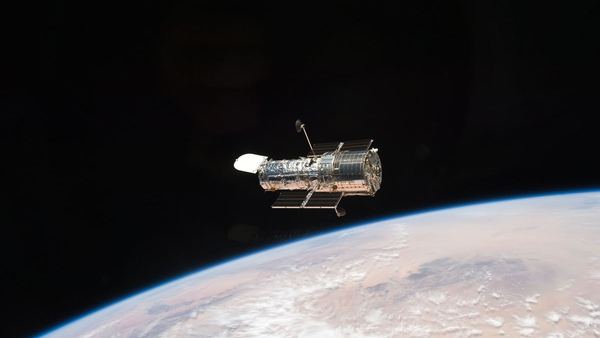
NASA wants to know if a private company can save the Hubble Space Telescope. On October 29, 2026, the agency asked companies how they might catch Hubble, push it higher, fix it, or guide it safely down into the atmosphere. Answers are due at 3 p.m. Eastern on Monday, November 30. NASA is not buying a mission yet. It wants to learn what companies can do and what it might cost. Hubble is slowly sinking, and NASA says any rescue would need to fly by 2032.
More in Space
Voyager 1 Will Reach One Light-Day From Earth on November 18
NASA's Voyager 1 spacecraft is about to reach a distance that no human-made object has ever reached. On Wednesday, November 18, 2026, at 5:16:07 a.m. Eastern Time, the probe will be one light-day from Earth. That is how far light can travel in 24 hours: 16.094 billion miles, or 25.902 billion kilometers. A radio message sent from Earth will take a full day to arrive, and the spacecraft's reply will take another day to come home.
On the front page
Frozen Inca Mummies Reveal What Children Were Given Before Mountaintop Sacrifices
More than 500 years ago, Inca priests led children up some of the highest volcanoes in the Andes. There, the children were sacrificed to the mountain gods. Now, a new lab study of eight frozen mummies shows what those children were given in their final weeks. Every hair sample tested held traces of coca, the sacred leaf. Some children also drank alcohol. One famous girl, known as Juanita, carried a chemical tied to ayahuasca, a drink made from an Amazon vine. The results suggest the ritual was not the same everywhere. Each mountain may have had its own recipe.